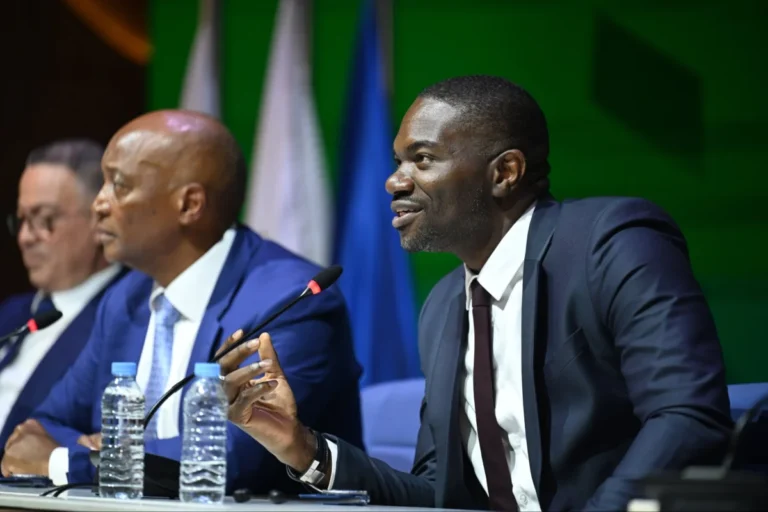
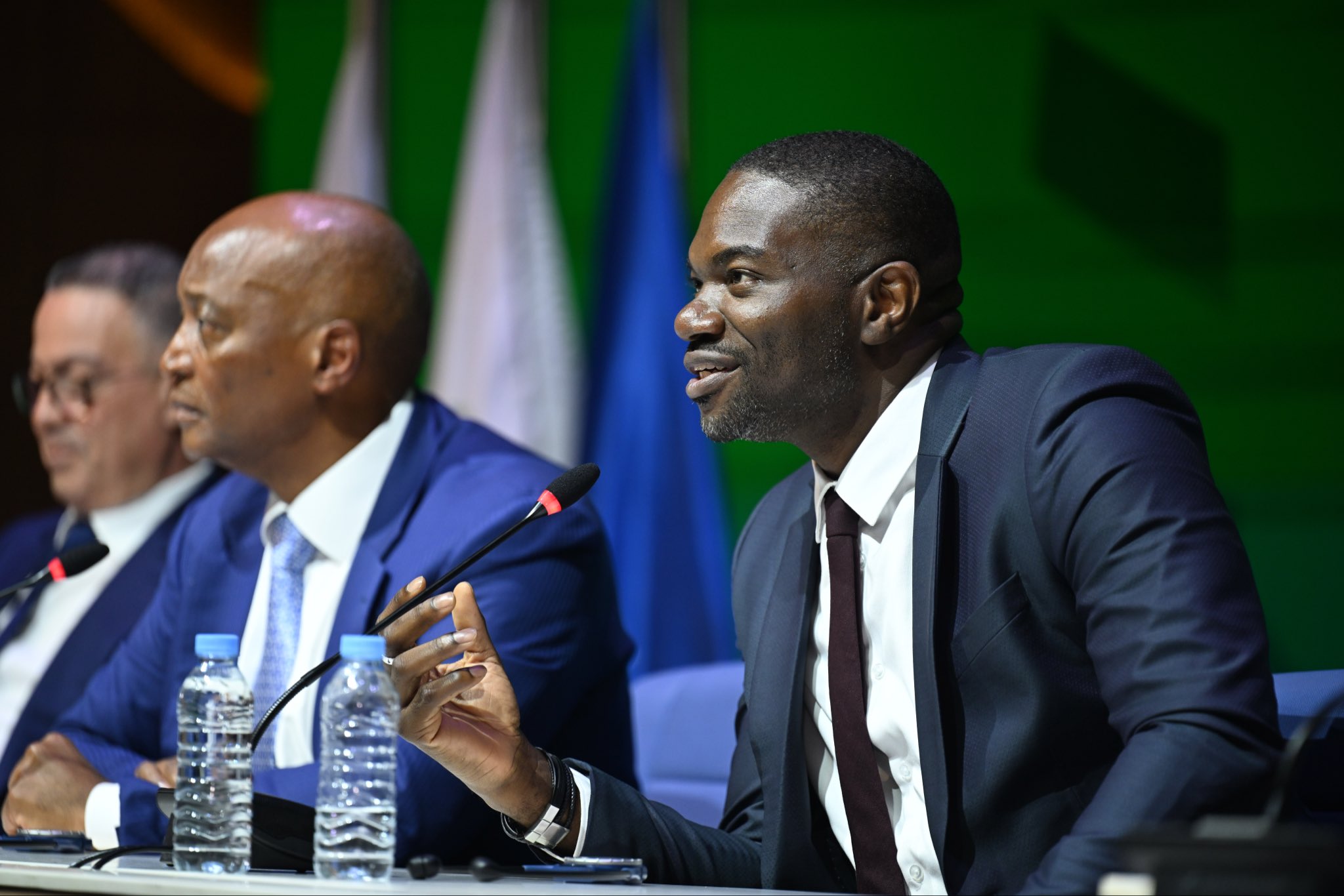
In a landmark development for continental football governance, Samson Adamu has been officially confirmed as the substantive General Secretary of the Confederation of African Football (CAF). This appointment marks a historic watershed moment, as Mr. Adamu becomes the first Nigerian to occupy this high-ranking executive position in the 70-year history of the Cairo-based organization. The confirmation, announced on Thursday, concludes a period of interim leadership and places a seasoned Nigerian administrator at the helm of the administrative machinery that oversees the world’s fastest-growing football confederation.
The Nigeria Football Federation (NFF) was among the first to acknowledge the significance of the appointment, hailing it as a testament to the quality of Nigerian expertise in the global sports arena. Emmanuel Ikpeme, the acting General Secretary of the NFF, framed the promotion as a validation of Nigeria’s growing influence within the corridors of international football governance.
A Career Built on Competence and Progression
Samson Adamu’s elevation to the substantive General Secretary role is the culmination of a deliberate and steady climb through the ranks of CAF. Before assuming his current responsibilities, Adamu served as the Director of Competitions at CAF, where he was instrumental in overseeing the technical and logistical frameworks of major African tournaments. His expertise was further utilized when he transitioned to the role of Director of Tournaments and Events, a position that demanded a granular understanding of host nation requirements, infrastructure development, and the complexities of managing pan-African sports properties.
His ascent gained momentum on 29 March, when he was appointed as the acting General Secretary following the resignation of his predecessor, Veron Mosengo-Omba, a Swiss-Congolese administrator who had steered the organization through a period of significant structural transition. During his time in the acting role, Adamu reportedly demonstrated the institutional stability required to manage the day-to-day operations of an organization that governs 54 member associations and manages multi-million dollar broadcast and sponsorship portfolios.
Institutional Context: The Significance of the General Secretary
The role of the General Secretary at CAF is arguably the most critical operational position within the confederation. While the President provides political direction and represents the body on the global stage, the General Secretary functions as the Chief Executive Officer (CEO). The office is responsible for implementing the decisions of the CAF Executive Committee, managing the secretariat staff, overseeing the financial health of the organization, and ensuring that all regulatory frameworks align with FIFA statutes.
For decades, the administrative leadership of CAF was dominated by figures from North and Francophone Africa. The appointment of a Nigerian to this seat represents a shift in the perceived power dynamics of the organization. It signals a broader acceptance of diverse professional backgrounds within the upper echelons of the secretariat, moving away from legacy structures toward a more meritocratic recruitment approach.
NFF Response and the Diplomatic Dimension
The NFF’s reaction to the news was characterized by both professional pride and a commitment to collaborative governance. Emmanuel Ikpeme, reflecting on the appointment, highlighted Adamu’s reputation as a "highly knowledgeable individual" who has consistently pursued professional self-improvement.
"This is, indeed, very good news. I am so happy for Samson Adamu on his confirmation, and I know he is going to make Nigeria and Africa proud," Ikpeme stated during an interview. He further noted that Adamu’s "well-rounded" experience in the business of football administration—spanning from grassroots logistics to the complexities of international tournament delivery—makes him uniquely qualified to handle the pressures of the secretariat.
The NFF has pledged its full support to the new General Secretary, emphasizing that as a member association, Nigeria is prepared to work closely with the CAF secretariat to foster the growth of football across the continent. This pledge suggests a strategic move to strengthen diplomatic ties between the Nigerian federation and the continental body, potentially paving the way for more Nigerians to serve in various standing committees and executive departments within CAF.
The Challenges Ahead
The incoming General Secretary inherits a complex organizational landscape. CAF is currently navigating several pressing issues that will define Adamu’s tenure. These include the ongoing optimization of the Africa Cup of Nations (AFCON) commercial value, the implementation of the African Football League (AFL), and the rigorous enforcement of club licensing requirements across member nations.
Furthermore, the organization faces the perennial challenge of infrastructure development. Many African nations struggle to meet the strict venue standards required for international fixtures, forcing teams to play "home" matches in neutral countries. As the former Director of Tournaments, Adamu is intimately familiar with these hurdles. His ability to bridge the gap between CAF’s regulatory standards and the reality of infrastructure limitations in member states will be a critical metric of his success.
Historical Perspective: Nigeria’s Influence in CAF
Nigeria’s involvement in CAF has historically been focused on political representation, with figures like Dr. Amos Adamu (no relation) and Amaju Pinnick holding significant positions within the Executive Committee and as CAF Vice Presidents. However, the appointment of Samson Adamu to the office of General Secretary is distinct; it is a professional, non-elected role that requires deep technical expertise rather than political consensus.
This distinction is crucial. While elected positions are often subject to the shifting tides of regional politics, the General Secretary position requires a high degree of continuity, administrative neutrality, and technical proficiency. By placing a Nigerian in this specific role, CAF is prioritizing operational continuity over purely geopolitical considerations.

Implications for the Future of African Football
The appointment of an English-speaking administrator to the top of the CAF bureaucracy is expected to have a tangible impact on the organization’s communication and operational outreach. With football in West Africa—a predominantly Anglophone region—representing a massive share of the continent’s talent pool and viewership, Adamu’s background may facilitate a more streamlined dialogue between the secretariat and the various leagues in the region.
Moreover, the global football industry is currently witnessing a push toward greater commercialization. The success of the recent AFCON editions has attracted increased interest from international broadcasters and private equity investors. The General Secretary’s office will be the primary point of contact for these stakeholders. Adamu’s experience in events management will likely be leveraged to modernize the way tournaments are delivered, potentially leading to more efficient revenue distribution and improved fan experiences.
A New Era for the Secretariat
As Samson Adamu settles into his permanent office in Cairo, the focus will shift to his immediate agenda. Industry observers suggest that his first priorities will likely involve a comprehensive audit of current tournament operations and a review of the secretariat’s organizational efficiency.
His appointment also sets a precedent for younger African administrators. It demonstrates that a career path exists within the international football ecosystem that is not solely reliant on local political appointments but on international experience, technical specialization, and administrative rigor. By rising through the ranks from a Director level to the office of the General Secretary, Adamu has provided a blueprint for other professionals in the continent’s football landscape.
In conclusion, the confirmation of Samson Adamu as the substantive General Secretary of CAF is a milestone that transcends national boundaries. While it is a moment of pride for Nigeria, it is also a strategic move for the Confederation of African Football. By entrusting the day-to-day management of the organization to an administrator with a proven track record in competition management and event logistics, CAF is signaling a commitment to stability and professional excellence. As the continent continues to demand higher standards from its football governing body, Adamu’s tenure will be closely watched by stakeholders, member associations, and global partners alike. The road ahead is fraught with the complex realities of African football, but for the first time in 70 years, the person holding the map is a Nigerian, tasked with navigating the organization toward a more efficient and commercially viable future.