
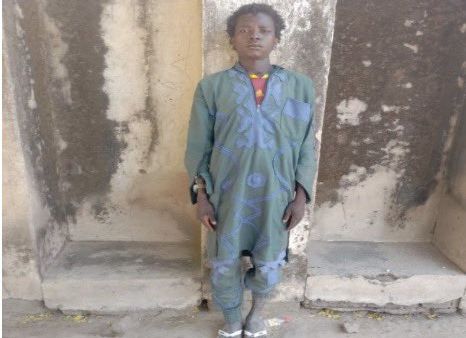
In a significant development reflecting the ongoing erosion of insurgent capabilities in Northeast Nigeria, a suspected fighter affiliated with the Jama’atu Ahlis Sunna Lidda’awati wal-Jihad (JAS)—commonly known as Boko Haram—surrendered to Nigerian Army personnel on October 28, 2026. The incident, which occurred along the BOCOBS axis in Borno State, underscores the efficacy of the military’s dual-pronged approach of kinetic operations and the encouragement of voluntary defections among mid-to-low-level insurgents.
According to security reports confirmed on November 1, 2026, by intelligence analyst Zagazola Makama, the individual was intercepted by troops belonging to the 202 Battalion, operating under the 21 Special Armoured Brigade. The encounter took place at approximately 12:40 p.m. while the military unit was engaged in a routine patrol mission designed to secure the critical Bama corridor.
The Circumstances of the Surrender
Preliminary debriefings conducted by military intelligence officers suggest that the suspect managed to escape from a clandestine Boko Haram enclave situated in the vicinity of Bula Daloye, located within the Bama Local Government Area. Unlike previous instances where surrendering fighters have occasionally attempted to negotiate their entry into military zones while armed, this individual reportedly fled his position without a rifle.
Military observers note that the absence of a weapon often serves as a key indicator of a genuine desire to defect, as it suggests the fighter chose to abandon the insurgency at great personal risk to his own security within the extremist hierarchy. The suspect is currently being held in military custody, where he is undergoing rigorous screening and profiling. This process is standard procedure, designed to ascertain the individual’s rank, history of involvement in combat operations, and to extract actionable intelligence regarding the current disposition and operational vulnerabilities of remaining cells in the Bama enclave.
Chronology of Insurgent Attrition
The surrender on October 28 is not an isolated event but rather part of a broader, long-term trend observed throughout the 2026 calendar year. To understand the significance of this surrender, it is necessary to examine the operational theater of Borno State:
- Q1 2026: Military operations across the Sambisa Forest and the Mandara Mountains intensified, disrupting supply lines for Boko Haram and the Islamic State West Africa Province (ISWAP).
- June 2026: The Nigerian military reported a surge in "mass surrenders," attributing the trend to internal leadership disputes within the terrorist factions and the debilitating effects of sustained aerial surveillance and artillery strikes.
- September 2026: Increased patrolling along the BOCOBS axis was mandated by the Theatre Command of Operation Hadin Kai to prevent the infiltration of fighters into settled communities.
- October 28, 2026: The specific incident involving the 202 Battalion occurred, marking a tactical success for the 21 Special Armoured Brigade.
The BOCOBS axis has historically been a volatile corridor. Its strategic importance lies in its proximity to the border regions and the dense vegetation that provided natural cover for insurgents for over a decade. The successful interception of this fighter demonstrates that the Nigerian Army’s current strategy of "denial of space" is forcing combatants into situations where their only viable options are continued starvation and attrition, or surrender.
Strategic Implications and Military Data
The ongoing conflict in Northeast Nigeria, which has spanned nearly two decades, has resulted in the displacement of millions and the deaths of tens of thousands. However, the nature of the war has shifted significantly since 2023. Military data indicates that the traditional, large-scale offensive capabilities of Boko Haram have been severely degraded.
Modern military strategy in the region relies heavily on the "Safe Corridor" concept, which facilitates the rehabilitation and reintegration of fighters who have renounced violence. While critics often raise concerns regarding the vetting processes for these individuals, military spokespersons consistently maintain that such surrenders are vital for "degrading the adversary from within."
Data from the Theatre Command of Operation Hadin Kai suggests that since the beginning of 2026, the number of fighters surrendering to the military has increased by approximately 15% compared to the same period in 2025. This increase is often attributed to three primary factors:
- Economic Hardship: The systematic destruction of insurgent logistics hubs has left many rank-and-file fighters without access to food, medicine, or ammunition.
- Internal Purges: Factional infighting between JAS and ISWAP has created a climate of paranoia, driving many fighters to seek safety under the protection of the Nigerian state.
- Psychological Operations: The military’s use of psychological operations, including radio broadcasts and leaflets dropped in remote areas, has effectively communicated the benefits of surrender over continued combat.
Official Responses and Security Analysis
While the Nigerian Army maintains a disciplined approach to these surrenders, the broader security community remains cautious. Security analyst Zagazola Makama, who has provided extensive coverage of the insurgency, often emphasizes that the surrender of individual fighters does not equate to the total collapse of the insurgent infrastructure.
"The surrender of a single fighter is a microcosm of a much larger systemic failure within the insurgent group," one security expert noted. "However, the military must ensure that these individuals are properly processed to prevent the infiltration of ‘sleepers’ who might use the surrender process to gather intelligence on military installations."
The Nigerian government, through the Office of the National Security Adviser, continues to coordinate with regional partners—including Cameroon, Chad, and Niger—to ensure that the surrender process is synchronized. The objective remains the complete neutralization of the threat posed by these groups, with a preference for surrenders that provide intelligence leading to the eventual dismantling of remaining terrorist cells.
Broader Impact on the Lake Chad Region
The surrender in Bama is a localized event with regional consequences. The Lake Chad Basin Commission and the Multinational Joint Task Force (MNJTF) have frequently cited the reduction in the number of active insurgents as a prerequisite for the resettlement of internally displaced persons (IDPs).
For the people of Borno State, each surrender represents a incremental step toward normalcy. As fighters abandon their posts, the threat of ambush on trade routes diminishes, and the potential for agricultural recovery in the Bama and Konduga regions improves. However, analysts warn that the final phase of this conflict is likely to be the most protracted. As insurgent groups become smaller, they become more elusive, shifting from conventional territorial control to asymmetric warfare and guerrilla-style attacks.
Looking Ahead
The current military posture in Borno State indicates a commitment to long-term containment. By maintaining a constant presence in areas like the BOCOBS axis, the 21 Special Armoured Brigade is effectively narrowing the operational window for remaining insurgents.
The individual who surrendered on October 28 will now undergo a multi-stage process:
- Initial Interrogation: Focused on immediate tactical information, such as the location of weapons caches, the identity of field commanders, and potential booby traps.
- Profiling and Biometrics: Ensuring the individual is entered into the national security database to track future movements.
- Deradicalization: Transitioning the individual through rehabilitation programs managed by federal agencies.
As the situation evolves, the Nigerian military is expected to continue its current operational tempo. While the surrender of one fighter may seem minor in the context of a decade-long war, it serves as a tangible metric of the success of the current counter-insurgency strategy. The military’s ability to turn a combatant into a source of intelligence is perhaps the most significant outcome of this encounter, providing a roadmap for future operations in the ongoing effort to secure the Lake Chad region.
Ultimately, the events of October 28 highlight the changing dynamics of the war. With insurgent ranks thinning and the pressure from the Nigerian Armed Forces showing no signs of abating, the prospect of more such surrenders remains high. The task ahead for the military and the Nigerian state is to manage these defections effectively, ensuring that they contribute to a lasting peace rather than providing a temporary reprieve in a volatile security environment.