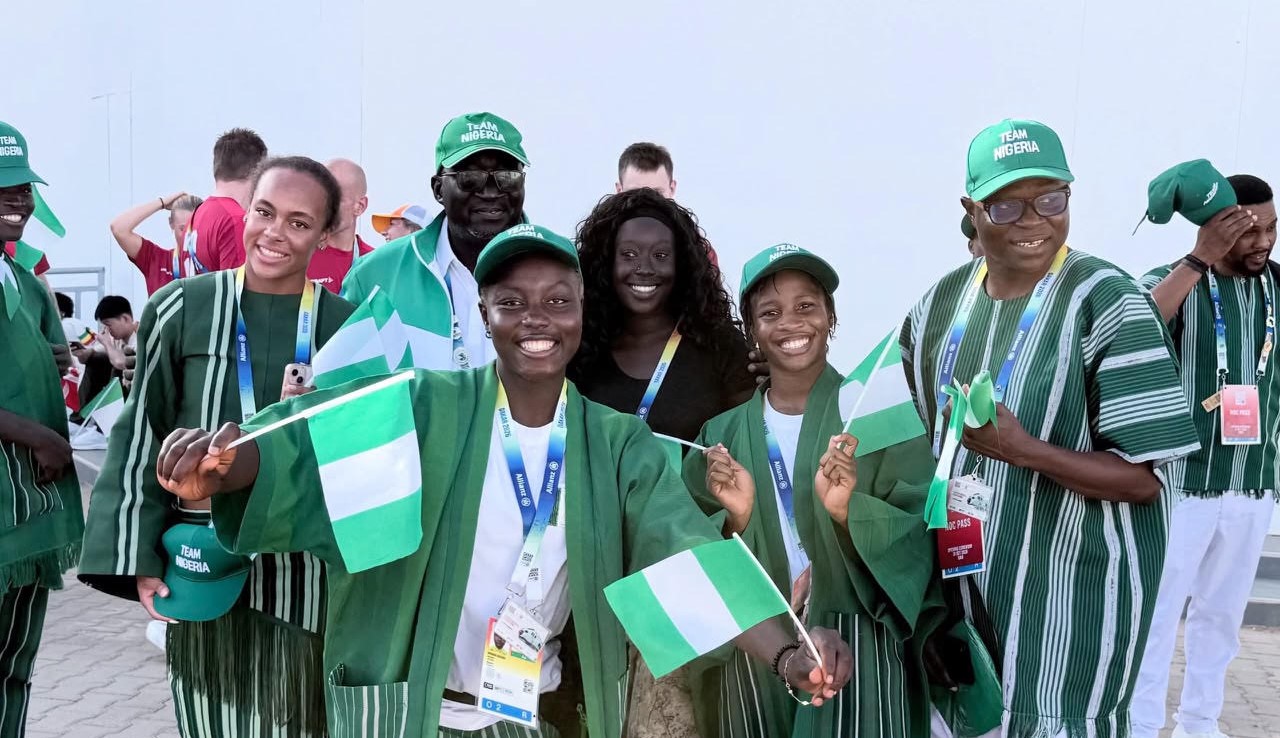
The Abdoulaye Wade Stadium in Diamniadio transformed into a vibrant tapestry of African heritage and global youth ambition this Saturday as the Dakar 2026 Youth Olympic Games (YOG) officially commenced. This historic opening ceremony marked the first time in the history of the Olympic movement that an African nation has hosted an Olympic-sanctioned sporting event, signaling a watershed moment for the continent’s role in international athletics. Among the thousands of athletes gathered to celebrate this milestone was Team Nigeria, a 19-member contingent representing the nation’s aspirations for future global sporting dominance.
Led by their flagbearer, the talented sprinter Rosemary Chigozie Nwankwo, the Nigerian athletes marched into the arena with pride, joining representatives from across the globe. The ceremony was a meticulously choreographed display of Senegalese hospitality, featuring an immersive fusion of traditional music, modern dance, and cultural narratives that highlighted the spirit of “Teranga”—the Senegalese concept of hospitality and solidarity.
A Historic Milestone for Africa
The significance of Dakar 2026 cannot be overstated. Since the inception of the modern Olympic Games in 1896, Africa has remained the only continent never to have hosted an Olympic event. The International Olympic Committee (IOC) awarded these games to Senegal in 2018, viewing it as a strategic investment in the continent’s burgeoning youth demographic.
For Senegal, the journey to this day involved years of infrastructure development, particularly in the city of Diamniadio, which serves as a centerpiece for the games alongside the capital, Dakar, and the coastal city of Saly. The arrival of the Youth Olympic flame, which had traveled through all 14 of Senegal’s administrative regions over a 45-day relay, served as the emotional climax of the evening. As the flame reached the stadium and ignited the cauldron, it signaled more than just the start of 13 days of competition; it served as a symbolic bridge between the legacy of the Olympic movement and the future of African sports.
Team Nigeria: Composition and Ambition
Nigeria’s participation in the Dakar 2026 Games is part of a broader strategy by the National Sports Commission (NSC) to foster development among young athletes. The contingent consists of 12 female and seven male athletes, showcasing a strong commitment to gender parity within the national sports development framework.
The team will compete across six distinct disciplines: athletics, boxing, road cycling, swimming, table tennis, and beach volleyball. For many of these athletes, the Youth Olympic Games represent the most significant international stage they have encountered thus far.
Rosemary Chigozie Nwankwo, in her capacity as flagbearer, carries the hopes of a nation eager for medal success. Competing in the women’s 100-meter sprint, she is widely considered one of the primary podium prospects for the country. Her presence at the front of the Nigerian delegation is indicative of the emphasis the nation is placing on track and field, a discipline that has historically provided Nigeria with its most consistent Olympic successes.

Chronology of the Dakar 2026 Games
The path to the opening ceremony has been a long-term project for the organizers and the IOC:
- October 2018: The IOC Session in Buenos Aires formally selects Senegal as the host for the 2022 Youth Olympic Games.
- July 2020: Due to the global impact of the COVID-19 pandemic and its subsequent effect on the Olympic calendar, the IOC and the Senegalese government mutually agree to postpone the Games to 2026.
- September 2026: The official launch of the final preparation phases and the initiation of the nationwide torch relay.
- November 2026: The culmination of the 45-day torch relay, covering over 14 regions of Senegal, ending in the opening ceremony at the Abdoulaye Wade Stadium.
Supporting Data and Statistical Context
The Youth Olympic Games are designed as a multi-sport, multi-cultural educational event. Unlike the senior Olympic Games, the YOG prioritizes the "Culture and Education Program" (CEP), which encourages athletes to learn about Olympic values, the importance of sportsmanship, and the role of sustainability in modern athletics.
Data from the event organizers indicates that Dakar 2026 will host over 4,000 athletes between the ages of 14 and 18. The inclusion of sports like beach volleyball and road cycling reflects a modern shift in youth sports, focusing on high-energy, spectator-friendly events that appeal to younger demographics. Nigeria’s diverse participation across these six sports highlights an effort to diversify the country’s athletic portfolio, moving beyond traditional strengths into technical and endurance-based disciplines.
Official Perspectives and Institutional Significance
While the Games are focused on youth, the implications are clearly institutional. For the Nigerian government, the performance of the team in Dakar is viewed as a litmus test for the effectiveness of local grassroots sports programs.

"Our presence in Dakar is a testament to the talent that exists within our youth population," a representative from the Nigerian sports delegation noted during the pre-event briefing. "By competing on this international stage, these young men and women are not just seeking medals; they are gaining the psychological and technical experience necessary to compete at the senior level in the future."
The IOC has also emphasized that the success of these games is vital for the future of the Olympic movement in Africa. If the Dakar edition proves that the continent can successfully manage the logistics, security, and infrastructure demands of a major international sporting event, it could theoretically open the door for future bids by African cities for the senior Summer Olympic Games.
Broader Impact and Future Implications
The implications of Dakar 2026 extend far beyond the podium. For the athletes, it is a career-defining moment. For the continent, it is an exercise in soft power and economic development. The investment in venues such as the Abdoulaye Wade Stadium is expected to have a lasting impact on local sports infrastructure, providing facilities that can be used by the Senegalese public for decades to come.
From a sociological perspective, the Games are fostering a sense of Pan-African unity. By gathering youth from across the continent to compete alongside international peers, the event promotes a narrative of collaboration. For Team Nigeria, the challenges of the next 13 days—the heat, the pressure of international competition, and the necessity of elite-level performance—will serve as a crucible for their development.

As the competitions shift from the pageantry of the opening ceremony to the intensity of the track, the pool, and the boxing ring, all eyes will be on the performance of the young athletes. The success of these games will be measured not only by the medal tallies of countries like Nigeria, the United States, or China, but by the legacy of infrastructure and inspiration left behind in the Senegalese capital.
In conclusion, as the Games move into full swing, the focus for the Nigerian delegation remains clear: to capitalize on the opportunity for international exposure and to demonstrate the resilience and competitive spirit of the nation’s youth. Whether or not these athletes return home with medals, their participation in this historic event is already a significant chapter in the ongoing evolution of African sports on the global stage. The Dakar 2026 Youth Olympic Games have officially begun, and with them, a new era for Olympic sport in Africa.