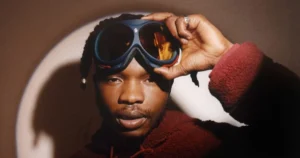
The debate regarding the commercial viability of Nigerian superstar Tems headlining London’s prestigious O2 Arena has reached a crescendo, prompting an official response from her management team. As the singer-songwriter continues to solidify her position as a dominant force in the global alternative R&B and Afrobeats landscape, industry observers and fans have engaged in vigorous discourse concerning her current capacity to draw the 20,000-strong crowd required to fill one of the United Kingdom’s most iconic music venues.
Donovan, the manager representing Tems, intervened in the online speculation by providing concrete evidence of her recent ticketing performance. By highlighting the velocity at which her most recent London dates were exhausted, he aimed to provide a data-driven rebuttal to skeptics who have questioned whether her current fan base has reached the critical mass necessary for a successful O2 Arena engagement.
The Metrics Behind the Momentum
The focal point of the recent management response centers on the overwhelming demand for Tems’ performances at the Eventim Apollo in London. According to figures shared by Donovan, the artist successfully sold out back-to-back shows, accounting for a total of 10,000 tickets. Crucially, this sell-out status was achieved within a single day of the tickets being released to the general public.
Perhaps more telling of the latent demand for her live performances is the supplementary data provided by her team: following the total depletion of available inventory, an additional 8,000 individuals remained on the official waiting list. This figure suggests that even with the capacity of the Apollo fully utilized, the demand for her live show significantly exceeds the current venue’s availability. In his statement addressing the skepticism, Donovan remarked, "We sold out the Apollo back to back. 10,000 tickets, with another 8,000 people on the waiting list after selling out. All this within a day. Hope these metrics help."
A Trajectory of Global Dominance
Tems, born Temilade Openiyi, has navigated a meteoric rise that has seen her evolve from a Lagos-based independent artist to a Grammy-winning global sensation. Her ascent has been marked by a consistent string of critically acclaimed releases that have bridged the gap between African markets and the international mainstream.
Her breakthrough was punctuated by her contribution to Wizkid’s global smash hit "Essence," which served as an inflection point for the global explosion of the Afrobeats genre. Following this, her collaboration with Future and Drake on "Wait for U" further cemented her status in the North American market, earning her widespread recognition and prestigious industry accolades.
Her solo catalog, featuring tracks such as "Free Mind," "Me & U," and "Love Me JeJe," has demonstrated remarkable longevity on streaming platforms. "Free Mind," in particular, made history by remaining on the Billboard Hot 100 for an extended period, showcasing an appeal that transcends regional boundaries. This sustained success is the bedrock upon which her management team justifies the argument for larger-scale arena tours.
Chronology of the Arena Debate
The conversation regarding Tems’ potential to headline the O2 Arena did not emerge in a vacuum; it is part of a broader trend of African artists moving into major international concert venues. Historically, only a select group of African performers—including Burna Boy, Wizkid, and Davido—have successfully sold out the O2 Arena.
The discourse gained traction throughout 2024 as Tems’ international touring profile grew. Fans and music industry analysts began to track her ticket sales at mid-sized venues as a barometer for her future arena potential. The timeline of this specific debate reached a peak in late October 2024, when social media users began questioning whether the singer’s "niche" appeal in the alternative R&B space could translate into the mass-market volume required for the 20,000-seat O2.
The swift sell-out of the Apollo dates provided the primary counter-argument to these claims. By releasing the specific figures of the 10,000 tickets sold and the 8,000-person waiting list, management signaled that the "niche" argument is effectively obsolete, positioning her instead as an artist with high-volume, high-conversion ticket sales.
The Economics of Arena Touring
For an artist to justify an O2 Arena booking, the financial threshold is significantly higher than that of traditional mid-sized theaters. Promoters require not only high ticket sales but also a high "sell-through" rate to ensure the economic viability of such a massive production.
The data provided by Donovan serves as a "proof of concept." In the live music industry, a waiting list of 8,000 people is a powerful metric for promoters. It indicates that if Tems were to move from a 5,000-capacity venue to a 20,000-capacity venue, the existing pool of "high-intent" buyers would likely cover a significant portion of the larger arena’s capacity. From a risk-management perspective, this makes an O2 Arena date not only a possibility but a logical next step in her touring strategy.
Broader Implications for African Artists
The debate surrounding Tems reflects a wider industry transition. As African music continues to experience unprecedented global consumption, the live performance infrastructure is struggling to keep pace with the demand. Historically, international touring for African acts was centered around smaller club circuits. Today, the demand has shifted toward major arenas and stadium-adjacent venues.
This transition brings new pressures. Artists are now judged by their ability to sell out major venues in markets where they are not necessarily indigenous. Tems’ ability to sell out the Apollo—a venue synonymous with legacy acts and high-profile residencies—demonstrates that her audience is deeply engaged and willing to commit to the ticket-buying process.
Furthermore, this conversation underscores the changing perception of the Afrobeats and African alternative genres. They are no longer viewed as secondary or regional movements; they are central to the global pop zeitgeist. The pressure on artists like Tems to "prove" their ability to sell out major venues is, in many ways, a testament to the high expectations set by the success of her peers.
Industry Analysis and Future Outlook
While skeptics may argue that there is a vast difference between selling out 10,000 tickets in a high-demand, multi-night engagement and moving 20,000 tickets for a single night at the O2, the metrics provided by her team suggest that the momentum is clearly in her favor.
The industry will likely watch her next tour announcements with increased scrutiny. If she continues to utilize the "multi-night residency" strategy at smaller venues, she may be able to maximize revenue and minimize the risks associated with larger, singular-night arena shows. However, the data suggests that she is already operating at an "arena-ready" level.
The role of management in this context—that of Donovan—is to curate the artist’s growth in a way that protects their brand while capitalizing on peak demand. By engaging directly with the discourse, the management team has successfully redirected the conversation from one of doubt to one of anticipation.
As the international music landscape continues to flatten, with artists from Nigeria, South Africa, and Ghana taking center stage in London, New York, and Paris, the debate surrounding Tems serves as a case study in the modern music business. It highlights the importance of transparency in performance metrics and the evolving criteria for what constitutes a "global superstar" in the 21st century.
With her current trajectory, the question of whether Tems can sell out the O2 Arena may soon transition from a topic of debate to an inevitability. As she continues to build her catalog and maintain her presence on global stages, the evidence strongly suggests that her capacity to headline the world’s largest venues is not only possible but likely imminent. Her team’s decision to release these specific figures acts as a clear indicator of confidence, signaling to the industry that Tems is prepared for the next tier of live performance, and that her audience is ready to follow her there.