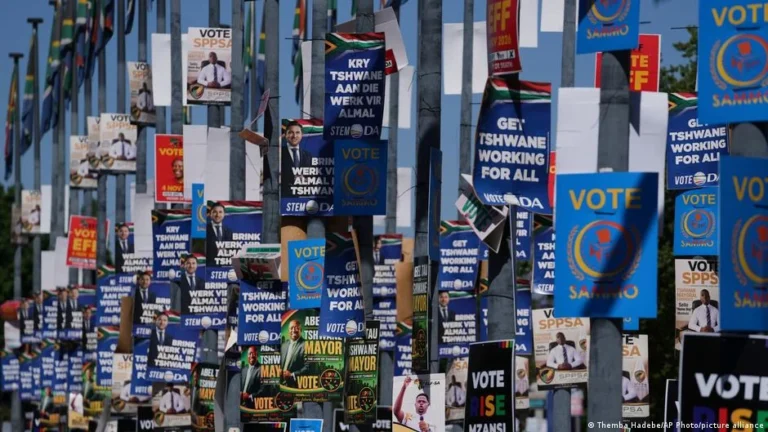
The mood in the townships of Ekurhuleni, on the periphery of Johannesburg, is a volatile mix of apathy and desperate hope. For residents like Vatiswa Zoya, the prospect of heading to the polls is an exercise in futility. "We’ve decided not to vote. At all," Zoya says, reflecting a growing segment of the population that feels disconnected from the political establishment. "What is the point? We will still sleep hungry." This sentiment of profound disillusionment contrasts sharply with the perspective of younger voters like 22-year-old Lindokuhle Mbandazayo. For Mbandazayo, the ballot box remains a reluctant instrument for potential change, even as she remains undecided. "When we vote for councilors, we ask them to fix the area," she explains, pointing to the persistent reality of regular power outages and sewage-choked streets.
This "embedded frustration," as described by Sanusha Naidu of the Institute for Global Dialogue, serves as the defining narrative of these municipal elections. As South Africans prepare to cast their votes, the stakes extend far beyond local administration; the outcome will likely signal the future trajectory of the African National Congress (ANC) and the viability of the coalition-led governance model that has increasingly come to define South African politics.
A Chronology of Declining Hegemony
The current electoral landscape is the culmination of a decade-long decline in the ANC’s political dominance. Historically, the party of Nelson Mandela held an iron grip on municipal councils, viewed as the natural home of the liberation struggle. However, the 2016 local elections marked a turning point, with the party’s share of the national vote falling to 53.91%. By 2021, that support dipped further to 45.59%, forcing the party into precarious power-sharing agreements in key metropolitan areas.
The timeline of this erosion is punctuated by recurring service delivery protests, allegations of state capture, and the widening gap between governmental rhetoric and the material reality of the urban poor. If market projections from firms like Ipsos prove accurate, the ANC could see its support plummet to approximately 30% in these upcoming elections, a historic low that would effectively signal the end of the post-apartheid era of single-party dominance in local governance.
The Water Crisis as a Bellwether
Central to the voter’s dilemma is the collapse of municipal utility services, specifically water. Ferrial Adam, executive director of the water rights NGO WaterCAN, describes a systemic failure that has reached crisis proportions. "Almost 70% of our wastewater treatment works are in a critical state and spewing sewage into rivers and streams across the country," Adam notes. In major hubs like Johannesburg, water rationing has become a permanent fixture of daily life, forcing residents to contend with supply cuts that last for weeks.
The incident in Tshwane, where a failed water treatment plant left over 400 residents hospitalized with waterborne illnesses, serves as a grim warning of the public health consequences of deferred maintenance. Analysts argue that while political candidates prioritize "transactional" promises—pledging to fix pipes and restore flow—they largely fail to engage with the structural budget deficits and technical mismanagement that have rendered these promises hollow. Without a credible plan to address the massive backlog in infrastructure investment, the promise of "clean water for all" remains a distant aspiration rather than a policy platform.
The Immigration Debate in the Campaign
As the electoral contest heats up, migration has surfaced as a contentious wedge issue. Political parties, including Action SA, the MK Party, and the Patriotic Alliance, have increasingly centered their campaigns on the regulation of immigration and the protection of national borders. This shift in rhetoric mirrors global populist trends, where economic anxiety is channeled into anti-migrant sentiment.
Aldu Cornelissen of Murmur Intelligence suggests that while this platform might capture only 6% to 8% of the electorate, in a fragmented political environment, these margins are decisive. "They make a clear argument that we need to get rid of illegal immigrants," Cornelissen observes. This discourse, however, has exacerbated social tensions, leading to nationwide protests and heightened scrutiny of the asylum process. The focus on migration acts as a displacement of deeper anxieties regarding unemployment and competition for scarce public resources, providing a convenient target for parties looking to mobilize disenchanted voters.
Disinformation and the Integrity of the Ballot
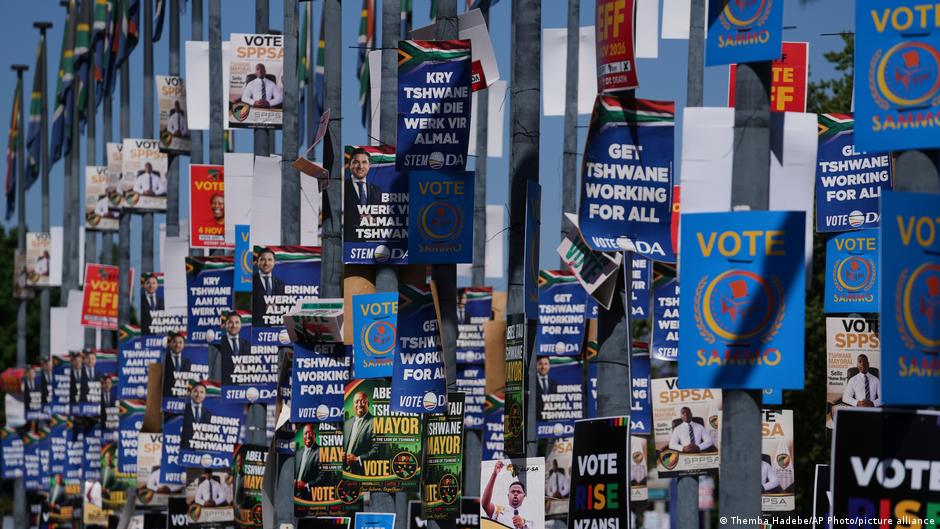
The election has also been marked by a surge in digital disinformation, with the Independent Electoral Commission (IEC) tasked with investigating over 700 complaints. AI-generated content and false claims—such as the unsubstantiated rumor that the ANC intends to mobilize asylum seekers to vote—have permeated social media platforms.
William Bird, director of the media monitoring agency Moxii Africa, characterizes this as an inevitable feature of the modern electoral cycle. "What we see with disinformation is that it always picks up on whatever the hot-button news issues are," Bird explains. Despite the vitriol online, the IEC remains one of the most respected electoral management bodies globally. Analysts emphasize that the threat of disinformation is not that it will successfully "rig" the election, but that it breeds a corrosive cynicism that keeps voters away from the polls, thereby undermining the democratic process itself.
Structural Implications and Voter Turnout
The shift toward a proportional representation (PR) system in South African municipal governance means that turnout is no longer just a metric of civic engagement; it is a mathematical imperative for political survival. With half of all council seats allocated via the PR vote, parties are aggressively lobbying citizens to participate, aware that every percentage point of turnout directly correlates to their legislative influence.
Historically, municipal turnout has been significantly lower than national participation, with 2021 seeing a turnout of just 45.87%. The current environment, characterized by high living costs, chronic electricity shedding, and a perceived lack of accountability, suggests that the "embedded frustration" could lead to either record-low turnout or a surge of protest voting.
The broader implication of this election is the normalization of coalition governments. In the past, the ANC’s majority allowed for streamlined, if often inefficient, policy implementation. A future of permanent coalitions necessitates a new form of political maturity—one where parties must negotiate budgets, infrastructure projects, and service delivery on a case-by-case basis. If these parties cannot manage these partnerships effectively, the result will likely be a continued paralysis of local government.
Looking Toward the Future
As Wednesday approaches, the question for South Africans is not merely which party will control the council, but whether the current system of local governance can be salvaged. The frustration expressed by citizens like Zoya and Mbandazayo is not directed at the concept of democracy, but at the perceived failure of the democratic machinery to improve their standard of living.
Experts suggest that the real work will begin the day after the election. Regardless of the victors, the incoming councilors will face a daunting reality: a crumbling water network, an unstable power grid, and a citizenry that is increasingly intolerant of empty promises. For the South African municipal project to survive, the incoming leadership must move beyond the transactional nature of campaign rhetoric and embark on a comprehensive, long-term rehabilitation of the country’s municipal infrastructure. The alternative is a deepening cycle of urban decay and political instability that will further alienate a population already pushed to the brink.
Ultimately, the 2026 municipal elections serve as a stress test for South African democracy. Whether the electorate chooses to withdraw into apathy or to engage in a messy, contested transition toward coalition politics, the outcome will define the social contract for a generation. The path forward remains unclear, but the urgency of the moment is undeniable. As the nation goes to the polls, the focus must shift from the tactical maneuvers of political parties to the fundamental requirements of a functioning society: reliable water, consistent energy, and a government that answers to the needs of its people rather than the interests of the political elite.