A brutal ambush orchestrated by a coalition of Tuareg separatists and Al-Qaeda-linked jihadists has resulted in the deaths of at least 50 Malian soldiers and the capture of dozens more, marking one of the deadliest attacks on the Malian armed forces in recent years. The devastating assault occurred on Saturday as a military convoy departed the strategically vital northern town of Anefis, a region that has witnessed intense fighting for control in recent weeks. The attack, claimed by the Front de Libération de l’Azawad (FLA) and the Group for the Support of Islam and Muslims (JNIM), underscores the escalating security crisis in Mali and casts a stark light on the persistent challenges faced by the ruling military junta in its protracted battle against insurgent forces.
The Deadly Ambush Near Anefis
The meticulously planned attack unfolded on Saturday, October 7, 2023, targeting a Malian army convoy leaving Anefis, a town positioned between Gao and Kidal in northern Mali. According to initial reports and accounts from local officials, the ambush was swift and overwhelming, catching the soldiers off guard. A local elected official, speaking anonymously due to the sensitivity of the situation and their close ties to the ruling junta, described the provisional toll as "extremely heavy," confirming "more than 50 soldiers killed and at least 24 prisoners." This official further emphasized the gravity of the event, stating it was the "deadliest attack suffered by the Malian army in years."
Disturbing details emerged from a source within the Malian army, who corroborated the severity of the assault and hinted at potential war crimes. "Some of our men were simply executed," the source stated, indicating a ruthless approach by the attackers. An investigation has reportedly been launched to ascertain any tactical failures that might have rendered the soldiers so vulnerable. "We are trying to see what could really have made our men so vulnerable," the source added, highlighting concerns about intelligence, preparedness, and operational execution.
Crucially, sources also clarified the absence of Russian paramilitaries, reportedly from the "Africa Corps" (widely understood to be the Wagner Group), from the immediate vicinity of the ambush. These foreign fighters, who have been supporting the Malian army in its counter-insurgency operations, had already reached their destination in Gao when the attack occurred, thus suffering no losses. A community leader from the Gao region confirmed this, stating, "No Russians were killed. The dead are from the army and the state-backed militias." This detail underscores the direct impact on Malian national forces and the complex dynamics of the coalition fighting in the region. On Saturday, before specific casualty figures were released, the Malian army had issued a statement acknowledging that its convoy had "fallen into an ambush laid by terrorist armed groups," without providing a detailed account of the losses.
A Strategic Battlefield: The Significance of Anefis
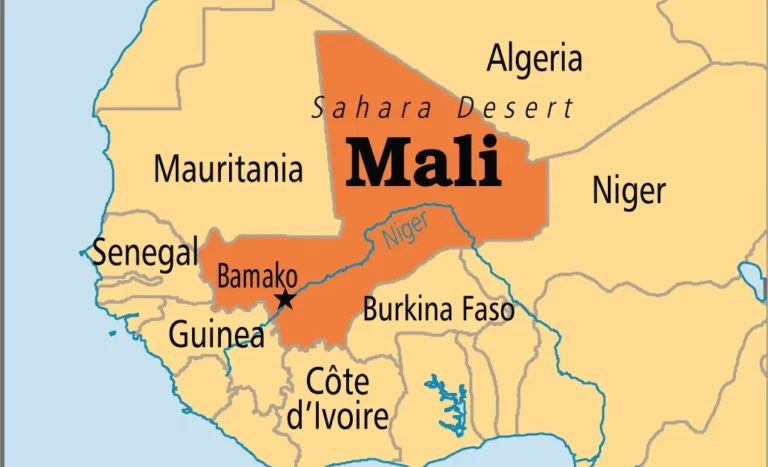
The town of Anefis holds significant strategic importance in northern Mali, a region characterized by vast, arid landscapes and critical transit routes. Located approximately 120 kilometers south of Kidal, a historical stronghold of Tuareg separatist movements, and roughly 200 kilometers north of Gao, a major administrative and military hub, Anefis serves as a crucial crossroads. Its control offers leverage over key supply lines and routes connecting the central and northern parts of Mali, making it a persistent flashpoint in the conflict.
The recent ambush near Anefis did not occur in isolation but followed weeks of intense combat for control of the town. In early July, fighters from the FLA and JNIM successfully captured Anefis, briefly encircling a military base used by the Malian army and the Russian paramilitaries. This temporary seizure demonstrated the insurgents’ growing operational capabilities and their coordinated efforts to challenge the state’s authority in the north. The Malian forces, with the support of their Russian allies, subsequently retook the town, but the seesaw battle for Anefis highlights its enduring tactical value and the determined resistance of the combined separatist and jihadist forces. The repeated contest for Anefis reflects a broader struggle for dominance over northern Mali, a region historically contested by various armed groups and central to the country’s ongoing instability.
The Evolving Conflict in Mali: A Decade of Instability
Mali has been embroiled in a multifaceted crisis since 2012, a complex tapestry woven from long-standing ethnic grievances, political instability, and the rise of extremist ideologies. The initial catalyst was a Tuareg rebellion in the north, which quickly spiraled out of control as jihadist groups, including Ansar Dine and Al-Qaeda in the Islamic Maghreb (AQIM), exploited the power vacuum to seize vast swathes of territory. A French-led military intervention, Operation Serval (later expanded into Operation Barkhane), in 2013 pushed back the jihadists, preventing a complete collapse of the Malian state. However, the underlying issues remained unaddressed, and the conflict metastasized.
The Rise of Jihadist Power
Over the past decade, the jihadist threat has evolved dramatically. The Al-Qaeda-affiliated Group for the Support of Islam and Muslims (JNIM), formed in 2017 through the merger of Ansar Dine, Al-Mourabitoun, the Macina Liberation Front, and the Saharan branch of AQIM, has become a formidable force. JNIM operates across central and northern Mali, extending its reach into Burkina Faso and Niger, and is responsible for numerous attacks on civilians and military personnel. Its strategy involves a mix of direct combat, ambushes, improvised explosive devices (IEDs), and the exploitation of local grievances to recruit and establish parallel governance structures. Their growing sophistication and coordination with other groups, as evidenced in the Anefis attack, pose a significant challenge to regional security. The Islamic State in the Greater Sahara (ISGS), a rival jihadist group, also maintains a strong presence, particularly in the tri-border area of Mali, Niger, and Burkina Faso, further complicating the security landscape.
Tuareg Separatism: A Persistent Dimension
The Tuareg separatist movement, rooted in historical claims for an independent state called Azawad, remains a critical, albeit complex, dimension of the Malian crisis. While many Tuareg groups signed the Algiers Accord peace agreement in 2015, aimed at decentralization and integration, its implementation has been painstakingly slow, leading to persistent frustration and renewed hostilities. The Front de Libération de l’Azawad (FLA), one of the groups involved in the Anefis ambush, represents a faction of the broader Tuareg movements, which include the Coordination of Azawad Movements (CMA) and other self-defense groups. The FLA’s involvement alongside JNIM highlights the opportunistic and often fluid alliances that characterize the conflict, where ideological differences can sometimes be overshadowed by tactical expediency against a common enemy – the Malian state. These alliances, however, are often fragile and can shift based on local dynamics and strategic imperatives.
Mali’s Military Junta and the Quest for Security
Mali’s political landscape has been dominated by military rule since August 2020, when a coup d’état overthrew President Ibrahim Boubacar Keïta amidst widespread discontent over the government’s handling of the security crisis, corruption, and economic stagnation. A second coup in May 2021 further solidified military control, led by Colonel Assimi Goïta, who subsequently declared himself interim president. The junta came to power promising to restore security and stabilize the nation, vowing a more robust approach to counter-insurgency. However, the recent attack near Anefis, among others, starkly demonstrates the immense difficulties in delivering on these pledges.
Shift in Alliances: The Pivot to Russia
Following the coups, Mali’s relations with its traditional Western partners, particularly France and the European Union, deteriorated sharply. Accusations of human rights abuses, delayed democratic transitions, and the junta’s perceived recalcitrance led to a progressive withdrawal of French forces (Operation Barkhane concluded in August 2022) and the EU’s Takuba Task Force. In their place, the Malian junta has increasingly turned to Russia for military cooperation and support. This pivot has seen the deployment of military advisors and, more controversially, private military contractors from the Wagner Group, now rebranded under the "Africa Corps" umbrella.
The Role of "Africa Corps" (Wagner Group)
The presence of Russian paramilitaries in Mali, initially denied by the junta but widely reported by international observers, marks a significant shift in the conflict’s dynamics. These contractors are reportedly involved in training Malian forces, providing security for high-value assets, and participating in direct combat operations. While the exact number of "Africa Corps" personnel in Mali remains unclear, estimates range from several hundred to over a thousand. Their deployment has been met with significant criticism from human rights organizations and Western governments, who allege a pattern of abuses against civilians and an exacerbation of the humanitarian situation. Despite the reported influx of Russian support, the Malian armed forces (FAMa) continue to face severe challenges. These include inadequate training, outdated equipment, logistical constraints, intelligence gaps, and issues with command and control. The high casualty count in the Anefis ambush suggests that even with foreign assistance, the FAMa’s vulnerabilities persist, underscoring the formidable nature of the adversary and the complexities of fighting an entrenched insurgency across vast, challenging terrain.
Claims of Responsibility and Tactical Analysis
The swift claims of responsibility by JNIM and the FLA following the Anefis ambush underscore their coordination and propaganda capabilities. Such claims serve not only to publicize their operational success but also to sow fear among the populace and undermine the Malian government’s authority. The joint nature of the attack, combining elements of Tuareg separatism with global jihadist ideology, highlights a troubling tactical convergence.
From a military perspective, the ambush near Anefis reveals several critical vulnerabilities. Convoys, especially those operating in hostile territories, are inherently susceptible to such attacks if not adequately protected by intelligence, aerial reconnaissance, and robust escort forces. The terrain in northern Mali, characterized by flat plains interspersed with rocky outcrops and wadis, offers ample cover for ambushers. The reported "execution" of some soldiers, if confirmed, points to a deliberate tactic by the perpetrators, raising serious concerns under international humanitarian law regarding the treatment of prisoners of war and non-combatants. Such actions not only constitute war crimes but also aim to demoralize the opposing forces and instill terror. The Malian army’s internal investigation into "tactical failures" is a necessary step to understand how such a devastating ambush could occur and to implement measures to prevent future occurrences, focusing on intelligence gathering, route security, and rapid response protocols.
Broader Implications and Regional Instability
The Anefis ambush carries profound implications for Mali’s internal stability, the legitimacy of its military government, and the broader security landscape of the Sahel region.
Impact on Junta’s Legitimacy
The military junta came to power on a promise to improve security and restore state authority, particularly in the embattled north. Attacks of this scale severely undermine public confidence in the junta’s ability to fulfill this fundamental obligation. Each major security setback erodes the junta’s domestic legitimacy and fuels popular discontent, potentially leading to further political instability. The narrative of effective counter-terrorism is difficult to maintain when such significant losses are incurred.
Humanitarian Crisis
The ongoing conflict exacerbates an already dire humanitarian situation. Millions of Malians have been displaced, food insecurity is rampant, and access to basic services remains severely limited in conflict-affected areas. Increased violence often leads to further displacement and disrupts humanitarian aid efforts, pushing vulnerable populations to the brink. The Sahel region as a whole is grappling with one of the world’s fastest-growing humanitarian crises, with Mali at its epicenter.
Future of Russian-Malian Cooperation
The incident also places renewed scrutiny on the effectiveness of Russian military assistance. While the "Africa Corps" was not directly involved in the ambush, its presence is meant to bolster the Malian army’s capabilities. A major defeat like Anefis raises questions about the strategic and tactical guidance provided by Russian partners and their ability to fundamentally alter the course of the conflict. The cost of this partnership, both financial and in terms of human rights concerns, will continue to be weighed against its tangible results.
Regional Security Landscape
Mali is a critical component of the Sahel’s stability. The continued deterioration of security in Mali has spillover effects on its neighbors, including Niger, Burkina Faso, and Mauritania, all of whom face their own challenges with jihadist insurgencies and political instability. The Sahel has become a global hotspot for extremist groups, and the lack of effective governance and security in one nation can easily destabilize the entire region, creating fertile ground for recruitment and expansion for these non-state actors. International bodies, including the United Nations (UN), the Economic Community of West African States (ECOWAS), and the African Union, continue to express deep concern over the escalating violence and the implications for regional peace and security. While direct statements on the Anefis attack from these bodies may not be immediate, the event will undoubtedly feed into broader discussions about peacekeeping mandates, humanitarian aid, and diplomatic efforts to encourage a return to constitutional rule and stability in Mali.
The Road Ahead: A Precarious Future for Mali
The devastating ambush near Anefis serves as a grim reminder of the profound and multifaceted challenges confronting Mali. The nation remains trapped in a vicious cycle of violence, political instability, and humanitarian crisis. For the Malian military junta, the incident represents a significant setback, highlighting the enduring strength of the insurgent forces and the persistent vulnerabilities within the national army. The path forward for Mali is fraught with uncertainty. A comprehensive approach that addresses not only the immediate security threats but also the underlying socio-economic grievances, governance deficits, and ethnic tensions will be crucial. Without a clear and sustainable strategy, supported by both national and international efforts, the prospect of lasting peace and stability in Mali, and indeed the wider Sahel, remains precariously distant. The international community, while often critical of the junta, faces the dilemma of how to support the Malian people without legitimizing military rule, all while a humanitarian catastrophe continues to unfold and regional security remains under severe threat.