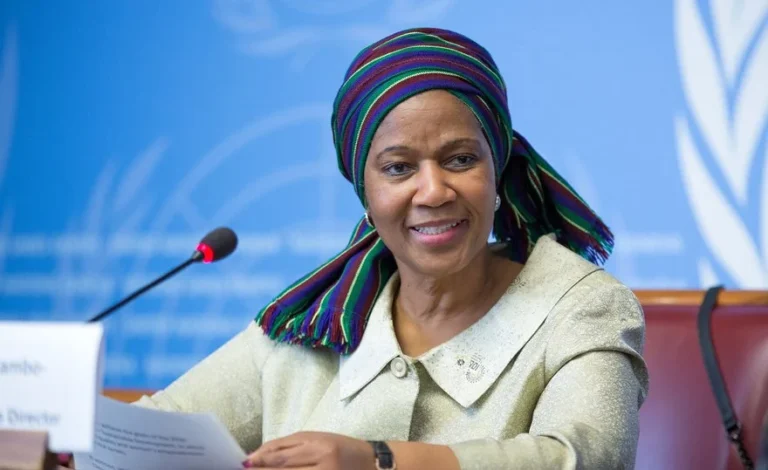
The international community is in mourning following the announcement that Dr. Phumzile Mlambo-Ngcuka, a seminal figure in global governance, women’s rights, and the HIV/AIDS response, has passed away at the age of 71. Her death marks the loss of one of the most influential political figures of the post-apartheid era in South Africa and a transformative executive on the global stage. As the first woman to serve as Deputy President of South Africa and the former Executive Director of UN Women, Dr. Mlambo-Ngcuka’s legacy is defined by her relentless commitment to dismantling structural inequalities and her pivotal role in professionalizing the HIV/AIDS response in Southern Africa.
A Life of Service and Political Leadership
Born in 1955 in Clermont, KwaZulu-Natal, Dr. Mlambo-Ngcuka’s career was characterized by a rapid ascent through the ranks of the African National Congress (ANC) following the end of apartheid. Her tenure as a Member of Parliament began in 1994, marking the dawn of South Africa’s democratic dispensation. She subsequently served as the Deputy Minister of Trade and Industry, then as the Minister of Minerals and Energy, before being appointed as the Deputy President in 2005.
Her time as Deputy President was defined by her focus on economic growth and the integration of marginalized communities into the formal economy. However, her most profound contribution to the public good was arguably her leadership in the health sector, particularly at a time when South Africa faced one of the world’s most severe HIV epidemics.
Chronology of a Defining Public Health Mandate
Dr. Mlambo-Ngcuka’s engagement with the global health architecture was both local and international. Her leadership trajectory provides a window into the evolution of the HIV/AIDS response:
- 2005–2008: Serving as Deputy President, she was tasked with chairing the South African National AIDS Council (SANAC). This period was a watershed moment for the country, as it required a shift from skepticism and fragmented approaches to a unified, science-led strategy.
- 2007: She spearheaded the formal restructuring of SANAC. This move was critical; it bridged the divide between government departments, civil society organizations, the business sector, and labor unions. The result was the endorsement of the National Strategic Plan for HIV, AIDS, and STIs (2007–2011), which laid the foundation for the massive rollout of antiretroviral treatment that followed.
- 2013–2021: Dr. Mlambo-Ngcuka served as the Executive Director of UN Women. During this tenure, she became a permanent member of the UNAIDS Committee of Cosponsoring Organizations. She used this platform to forcefully argue that the HIV epidemic could not be addressed in isolation from the broader struggle for gender equality and the protection of human rights.
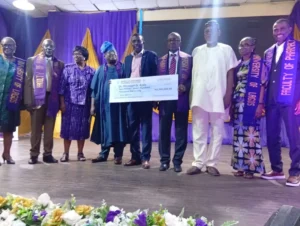
- 2021–2024: Following her departure from the UN, she continued her public service as the Chancellor of the University of Johannesburg, mentoring the next generation of leaders and focusing on social justice and education.
The Intersection of HIV/AIDS and Gender Inequality
Dr. Mlambo-Ngcuka’s analytical framework—that HIV is as much a crisis of inequality as it is a health crisis—was grounded in stark statistical realities. During her tenure at UN Women, the global data consistently demonstrated that adolescent girls and young women in sub-Saharan Africa were disproportionately affected by HIV.
Data from the period indicated that, in some regions of sub-Saharan Africa, young women were twice as likely to be infected with HIV as their male counterparts. Dr. Mlambo-Ngcuka championed the understanding that gender-based violence (GBV) acted as a primary driver of the epidemic. She successfully lobbied for the integration of the "16 Days of Activism for No Violence Against Women and Children" into the core of the national and international HIV response, arguing that safety and bodily autonomy were prerequisites for health.
Official Reactions and Global Tributes
The reaction to her passing has been widespread, reflecting her influence across multiple sectors of society. Winnie Byanyima, the Executive Director of UNAIDS, issued a statement reflecting on the personal and professional void left by her death.
"I have lost a sister and a comrade, and the world has lost a fearless feminist leader," Byanyima stated. "Phumzile never let us forget that AIDS is not only a health crisis. It is a crisis of inequality, and the women and girls who carry its heaviest burden must be at the centre of the response."
The United Nations system, of which she was a key architect for nearly a decade, has recognized her as a visionary. Colleagues recall her ability to bridge the gap between high-level diplomatic policy and the lived realities of women in local communities. Her work at the University of Johannesburg was equally lauded, with the institution noting that her influence as Chancellor helped align academic research with the urgent social needs of the South African state.
The Long-Term Implications of Her Work
The death of Dr. Mlambo-Ngcuka comes at a critical juncture for the global AIDS response. While global mortality rates have significantly declined since the early 2000s, the progress toward the "95-95-95" targets—where 95% of people living with HIV know their status, 95% are on treatment, and 95% of those on treatment are virally suppressed—remains uneven.
Her legacy serves as a strategic roadmap for policymakers. By insisting on the "ownership" of the HIV response by all South Africans, she effectively shifted the discourse from a "top-down" government approach to a collaborative, multi-stakeholder movement. This model is now considered the gold standard for pandemic preparedness and response. Her insistence on including civil society and people living with HIV in decision-making roles is now a cornerstone of the Global AIDS Strategy 2021–2026.
A Legacy of Institutional Strength
Beyond her specific health initiatives, Dr. Mlambo-Ngcuka is remembered for her role in institutionalizing gender equality. As the leader of UN Women, she oversaw the organization’s response to the COVID-19 pandemic, which saw a global surge in domestic violence. Her advocacy for "Generation Equality" forums served to re-energize the Beijing Declaration and Platform for Action, ensuring that the rights of women remained on the global agenda even during times of acute global crisis.
In South Africa, her legacy is embedded in the very structure of the government’s approach to social equity. By bridging the divide between labor, business, and government, she demonstrated that the most effective way to combat structural societal issues—be it HIV or poverty—is through inclusive, data-driven, and transparent governance.
Conclusion and Condolences
UNAIDS and the broader international community have extended their deepest condolences to her husband, Mr. Bulelani Ngcuka, her children, and her wider family. Her death represents the end of an era for those who worked alongside her during the difficult years of the mid-2000s, but her work lives on in the millions of lives saved through the policies she helped shape and the institutional frameworks she helped build.
As the world continues to grapple with the intersections of health, inequality, and gender, the strategies and principles championed by Dr. Phumzile Mlambo-Ngcuka remain as relevant as ever. Her life’s work serves as a testament to the power of principled, courageous, and collaborative leadership. The global health community remains committed to the goal she articulated so clearly: ending AIDS by addressing the deep-seated injustices that drive it. May her soul rest in peace.