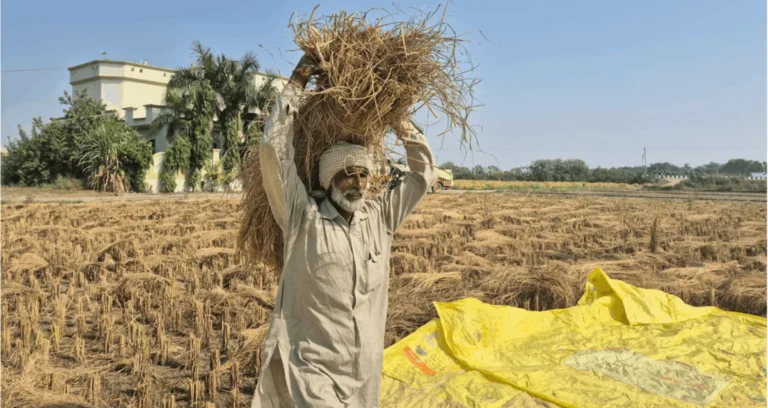
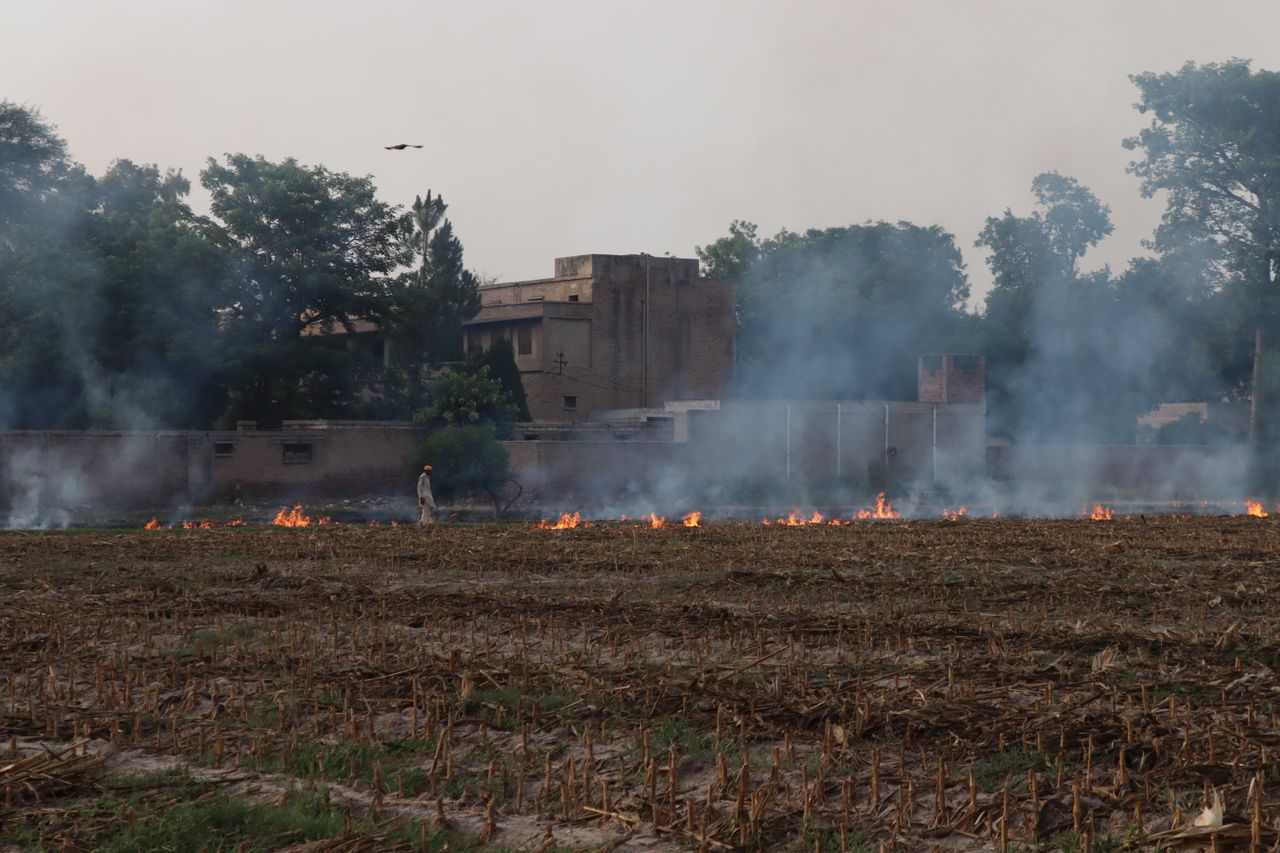
Every autumn, as the agrarian heartland of Punjab completes its arduous rice paddy harvest, a familiar and hazardous ritual unfolds beneath the northern Indian sky. Across the vast, flat plains that serve as the nation’s primary food bowl, millions of farmers face a relentless logistical countdown. With a mere 25-day window to clear their fields of leftover crop residue and prepare the soil for the impending wheat sowing season, an overwhelming number of agriculturalists confront a grim economic reality. For many small-scale farmers, the choice is not between environmental stewardship and willful negligence, but rather between economic survival and financial ruin. The ignition of a simple matchstick to burn away stubble remains the cheapest, fastest, and most accessible method to clear fields, despite triggering a toxic wave of air pollution that chokes northern India and threatens millions of lives.
The crisis of agricultural residue burning is deeply embedded in the historical architecture of India’s Green Revolution. Initiated in the mid-20th century to pull the nation out of chronic food shortages, the intensive rice-wheat cropping system transformed Punjab into an agricultural powerhouse. Today, the state plays a foundational role in national food security, contributing approximately 46.24% of India’s wheat supply and 31.22% of its rice. However, this intensive double-cropping cycle has created an ecological bottleneck. Nearly one million farmers in the state are locked into this high-stakes calendar. The physiological maturity of late-harvested paddy varieties leaves a desperately narrow timeframe for land preparation. Because the biological decomposition of rice straw takes months—and untreated residue interferes with the germination of subsequent wheat seeds—farmers must find immediate ways to clear the dense mat of leftover stalks and roots.

The consequences of this seasonal land-clearing method extend far beyond the agrarian borders of Punjab, manifesting as a monumental public health catastrophe across northern India. From October through November, smoke billowing from thousands of farm fires combines with a toxic cocktail of vehicular emissions, industrial pollutants, road dust, and festive fireworks during Diwali to transform the national capital region of New Delhi into a literal gas chamber. The severity of this phenomenon reached alarming heights recently when Punjab recorded 1,152 farm fires in a single day on Diwali, driving Delhi’s air quality index (AQI) to some of its worst levels in five years. Medical experts have repeatedly sounded the alarm over the sheer toxicity of the air. During recent peak pollution episodes, pulmonary specialists at the All India Institute of Medical Sciences (AIIMS) in New Delhi openly characterized the survival of the populace under such heavy particulate loads as miraculous, emphasizing that prolonged exposure to such dense smog causes irreversible damage to respiratory and cardiovascular systems.
Epidemiological and environmental research underscores the devastating long-term health toll of this seasonal practice. A landmark 2002 study assessing the health impacts of agricultural residue burning in India estimated that chronic and acute exposure to fine particulate matter ($PM_2.5$) generated by farm fires was directly associated with between 44,000 and 98,000 premature deaths annually across the country between 2003 and 2019. States within the Indo-Gangetic plain—specifically Punjab, Haryana, and Uttar Pradesh—accounted for an overwhelming 67 to 90 percent of these mortality figures. These statistics highlight that stubble burning is not merely an aesthetic or localized nuisance, but a lethal public health burden that disproportionately affects vulnerable demographics, including children, the elderly, and those with pre-existing pulmonary conditions.
In response to mounting domestic and international pressure, both central and state governments have introduced various regulatory frameworks, penal measures, and technological interventions. Official government data present a dramatic narrative of progress, asserting that the number of recorded farm fires in Punjab plummeted from an astronomical 83,002 incidents in 2020 down to 5,835 incidents. However, these optimistic figures have been a subject of intense scientific scrutiny and fierce debate. Independent atmospheric scientists utilizing advanced satellite-based remote sensing technologies have repeatedly challenged the official tallies. Last year, prominent aerosol scientists from Morgan State University and NASA’s Goddard Space Flight Center revealed that actual stubble-burning incidents were routinely underreported by a factor of 10 to 11. Subsequent satellite analyses identified approximately 34,000 farm fires across Punjab and Haryana during the peak autumn window, exposing a glaring discrepancy between ground-level bureaucratic reporting and satellite observations.
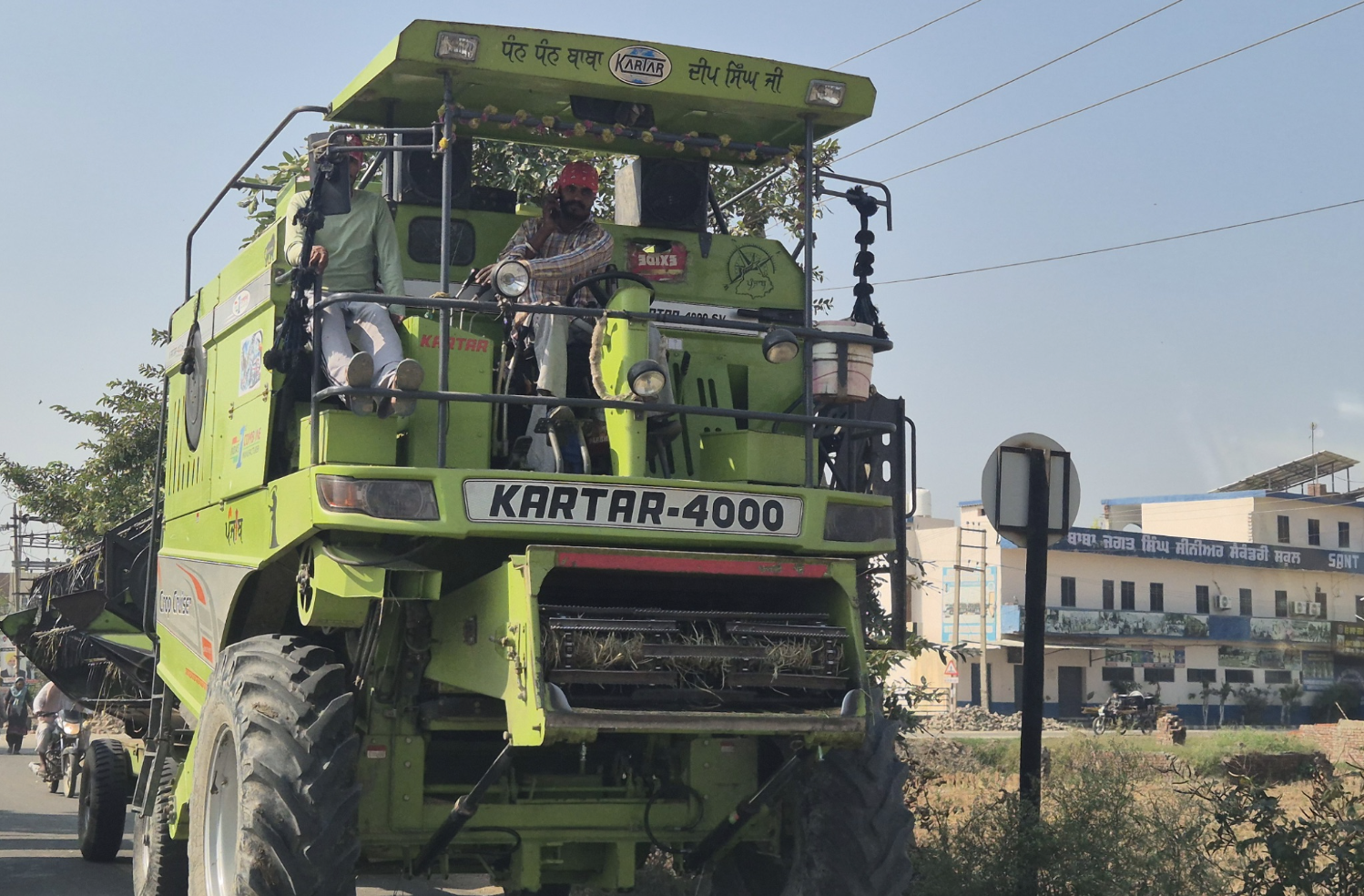
The persistent chasm between official statistics and reality points to systemic failures in how agricultural policies address the root causes of stubble burning. Government initiatives have heavily relied on subsidizing specialized agricultural machinery designed for in-situ crop residue management. Machines such as the Happy Seeder, straw choppers, stubble shavers, and Straw Management Systems (SMS) allow farmers to either mulch the residue directly into the soil or plant wheat seeds straight through the stubble layer. While the Punjab government offers subsidies of up to 50% for acquiring this equipment, grassroots realities render these programs largely ineffective for the vast majority of smallholder farmers.
The economic profile of Punjab’s agricultural sector reveals why machinery subsidies fall short. The vast majority of farmers operate small landholdings ranging strictly between one and nine acres. These small-scale operators simply cannot afford to purchase high-powered tractors capable of hauling heavy residue-management machinery. Consequently, they are forced to rely on renting equipment. Yet, the rental market is plagued by severe supply-demand imbalances. Villages often share only a handful of specialized machines, which large-scale landowners monopolize for their own fields first. By the time these machines become available to smaller farmers, the narrow sowing window has already slammed shut. Furthermore, rental rates spike dramatically during peak seasons, pushing already indebted farmers further into financial precarity. For families whose younger generations are increasingly migrating abroad due to agrarian distress and local unemployment, accumulating additional debt for machinery rentals is an unviable proposition.
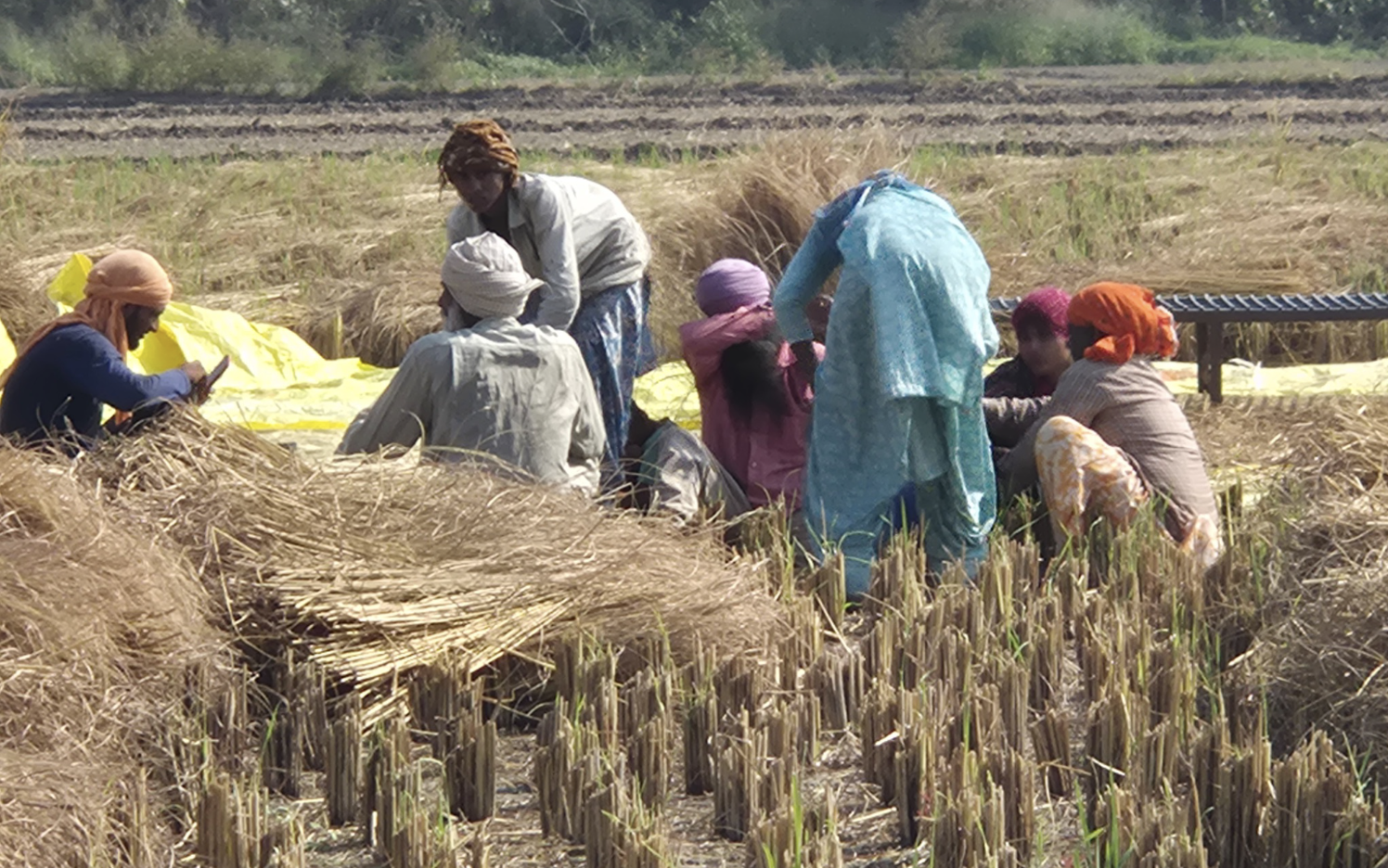
Manual clearing of fields via hired agricultural laborers presents another theoretical alternative, but one that is economically out of reach. Hiring laborers to manually uproot and clear crop residue costs approximately 7,000 rupees (around $70) per acre—an exorbitant expense for smallholders operating on thin profit margins. While this traditional method provides valuable winter fodder for livestock, the prohibitive labor costs leave impoverished farmers with few rational economic choices.
Amid these systemic hurdles, alternative models of ex-situ crop residue management have emerged with varying degrees of success. Some industrial initiatives involve private companies collecting stubble directly from farms to convert it into biofuel, compressed biogas (CBG), or raw material for power-generation plants. For instance, large-scale biomass processing facilities, such as Sukhbir Agro Energy Limited in Punjab, consume hundreds of tonnes of stubble daily, offering a seamless solution for farmers whose lands fall within their operational radius. Under this arrangement, industrial operators handle all logistics and labor. However, the geographic distribution of biomass plants remains deeply uneven. Farmers whose properties are located far from these industrial hubs derive no benefit from the system, leaving them entirely isolated and reliant on self-management strategies.
The policy response from authorities has largely oscillated between punitive measures and crop-diversification campaigns. Government enforcement bodies have aggressively pursued punitive actions, registering thousands of First Information Reports (FIRs) and imposing heavy financial penalties on farmers caught burning stubble. This year alone, Punjab authorities registered formal cases in connection with thousands of farm-fire incidents, levying millions of rupees in fines. Concurrently, policymakers have advocated for a structural shift away from the water-intensive rice-wheat cycle toward alternative crops like maize.
However, agricultural leaders and policy experts argue that punitive enforcement and unbacked crop diversification strategies fail to address the core economic vulnerabilities of the farming community. Independent policy analysts note that urging farmers to abandon wheat and rice in favor of maize is economically untenable without a guaranteed Minimum Support Price (MSP) and assured procurement channels. Without a reliable safety net, asking smallholders to take on the financial risk of transitioning to new crops exacerbates agrarian insecurity.
Critics contend that the government’s current strategy remains fundamentally reactive—focusing on satellite monitoring, police enforcement, and superficial penalties rather than addressing the structural economics of farming. Agricultural unions continue to demand direct financial assistance to help smallholders hire manual labor, alongside community-centric machinery distribution models where equipment is allocated directly to village panchayats based on land and population metrics, rather than funneled primarily to wealthy landowners.
Ultimately, the annual shroud of toxic smog over northern India cannot be lifted through fines and political rhetoric alone. As long as the structural pressures of a compressed cropping calendar collide with prohibitive machinery costs, inadequate industrial infrastructure, and a lack of guaranteed income for alternative crops, farmers will continue to view the matchstick as their only viable economic tool. Resolving the crisis requires a comprehensive paradigm shift—one that treats farmers not as lawbreakers to be penalized, but as essential partners in an ecological transition that must be economically underwritten by the state.