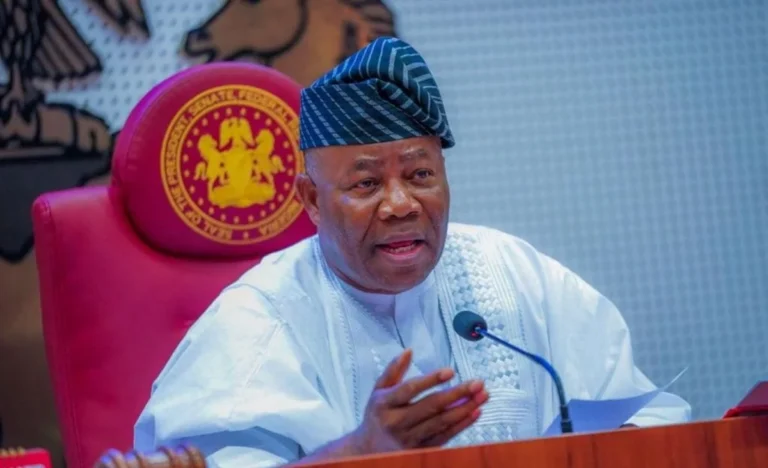
Abuja, Nigeria – Senate President Godswill Akpabio has posited a direct correlation between the escalating insecurity across Nigeria and the approaching electoral cycle, asserting that the current surge in unrest is a politically motivated phenomenon destined to dissipate once the next general elections are concluded. Akpabio made these significant remarks on Tuesday during the official commissioning of the Nigerian Revenue Service (NRS) Corporate Headquarters in Abuja, an event that also served as a platform for him to laud President Bola Tinubu’s performance since assuming office. His statements have ignited a fresh round of debate regarding the underlying causes of Nigeria’s complex security challenges and the nature of its political discourse.
Akpabio’s Assertions: Insecurity as a Political Tool
Senator Akpabio’s core argument rests on the premise that opposition figures, finding themselves unable to effectively counter the perceived progress and achievements of the current administration, are resorting to sponsoring insecurity as a destabilizing tactic. "Insecurity is increasing because election is coming, because people don’t know what to do again," Akpabio declared, emphasizing his belief that the situation is transient and politically engineered. He further elaborated, "Immediately after election, two weeks after election, the insecurity will stop. The insecurity is being sponsored by people." This assertion directly attributes the nation’s multifaceted security woes—ranging from banditry and kidnapping to communal clashes and residual insurgency—not to systemic failures or socio-economic grievances, but to deliberate political machinations aimed at undermining the incumbent government.
The Senate President’s perspective suggests a deeply entrenched political rivalry, where the security landscape becomes a battleground for electoral advantage. His comments imply a cynical manipulation of public safety for partisan gains, painting a picture of a desperate opposition willing to sow chaos to disrupt governance and influence future polls. This interpretation, while provocative, is not entirely new in Nigeria’s political history, where allegations of political thuggery and state-sponsored violence have often surfaced during election periods. However, attributing the widespread and persistent nature of current insecurity to such a singular, politically-driven cause offers a specific, and some might argue, simplistic narrative for a problem with diverse and deep-seated roots.
The Commissioning of the Nigerian Revenue Service Headquarters: A Strategic Milestone
Akpabio’s remarks were delivered against the backdrop of a significant national event: the inauguration of the Nigerian Revenue Service (NRS) Corporate Headquarters. This 16-storey edifice, comprising three towers designed to accommodate approximately 3,000 staff members, represents a monumental step in the federal government’s drive to enhance its revenue generation capabilities and streamline tax administration. The NRS, a pivotal institution in Nigeria’s economic framework, is tasked with assessing, collecting, and accounting for taxes and revenues accruing to the federal government. Its efficient operation is critical to funding national development projects, social welfare programs, and bolstering the national treasury, particularly in an era of fluctuating oil prices and a concerted effort to diversify the economy away from crude oil dependency.
The new headquarters symbolizes the Tinubu administration’s commitment to fiscal reforms and strengthening non-oil revenue streams. President Bola Tinubu, whose presence underscored the strategic importance of the event, has consistently articulated a vision for a robust economy underpinned by efficient tax collection and prudent fiscal management. The modern facility is expected to provide a conducive environment for the NRS workforce, foster greater inter-departmental collaboration, and leverage technology to optimize tax compliance and enforcement. It stands as a physical manifestation of the government’s resolve to improve institutional capacity and deliver on its economic agenda.
Praise for Leadership and Critique of Opposition
Beyond his comments on insecurity, Senator Akpabio used the platform to extend glowing commendations to President Tinubu and Dr. Zacch Adedeji, the head of the Nigerian Revenue Service. He urged Nigerians to remain patient with the current administration, affirming that "Let Nigerians be patient with you, you are doing the right thing." This statement reinforces the ruling party’s narrative of a government diligently working towards national progress despite existing challenges. Akpabio’s endorsement of Tinubu suggests a united front within the All Progressives Congress (APC) leadership, projecting confidence in the administration’s policies and direction.
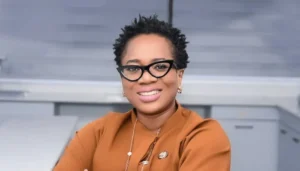
Dr. Zacch Adedeji, described by Akpabio as a "rare and effective tax administrator," also received significant praise. "Even in the Bible, people don’t like tax collectors. Zacch has done very well, and Nigerians are happy with him," Akpabio remarked, highlighting the often-unpopular nature of tax collection but commending Adedeji’s perceived effectiveness in his role. This recognition underscores the government’s appreciation for the NRS’s efforts in navigating the complex terrain of tax reforms and revenue enhancement, crucial for the nation’s financial health.
However, Akpabio’s address was not solely focused on commendation. He also took a pointed swipe at the opposition, specifically targeting Peter Obi, the Labour Party’s 2023 presidential candidate, whom he accused of political inconsistency. "Opposition is in disarray, someone got six million votes and abandoned the party, abandoned the six million votes and went shopping for another platform, and they are blaming the ruling party," Akpabio stated. This critique likely refers to the internal dynamics and challenges within the Labour Party and the broader opposition landscape following the contentious 2023 general elections. The 2023 elections saw Peter Obi, a former governor of Anambra State, emerge as a significant third force, garnering considerable youth support and securing over six million votes. His subsequent legal challenges to the election results and the ongoing post-election political realignments have been a subject of intense public discussion. Akpabio’s comments can be interpreted as an attempt to highlight perceived weaknesses and divisions within the opposition, thereby reinforcing the narrative of the ruling party’s stability and unified purpose.
Chronology of Insecurity and Political Discourse

Nigeria has contended with various forms of insecurity for over a decade, with distinct phases and geographical concentrations. The Boko Haram insurgency in the North-East dominated headlines for years, gradually morphing into a complex struggle against ISWAP. Concurrently, the North-West and parts of the North-Central regions witnessed a dramatic rise in banditry, mass kidnappings for ransom, and communal violence, particularly from around 2018 onwards. These phenomena escalated significantly in the lead-up to the 2023 general elections, with concerns raised about their potential impact on voter turnout and the overall integrity of the electoral process.
Post-2023 elections, despite initial hopes for a reduction in violence, various forms of insecurity have persisted and, in some areas, intensified. The current administration inherited a complex security landscape, and its efforts to tackle these challenges have included significant military operations, intelligence gathering, and regional collaborations. Akpabio’s statement, coming at a time when discussions about the next general elections (slated for 2027) are implicitly beginning to shape political strategies, places the ongoing security crisis squarely within a pre-electoral context. This framing aligns with a historical pattern where political rhetoric often intensifies as elections draw nearer, with accusations and counter-accusations becoming more pronounced.
Supporting Data and Broader Context of Insecurity
While Akpabio’s claims emphasize political sponsorship, security analysts and numerous reports often point to a more complex interplay of factors fueling Nigeria’s insecurity. Socio-economic deprivation, high unemployment rates (particularly among youth), pervasive poverty, weak governance, porous borders, proliferation of small arms and light weapons, ethnic and religious grievances, and climate change-induced resource scarcity are frequently cited as root causes. For instance, data from the National Bureau of Statistics consistently highlights high poverty and unemployment rates, which many experts argue create a fertile ground for recruitment into criminal gangs and extremist groups. Reports from organizations like the Council on Foreign Relations’ Nigeria Security Tracker and various international NGOs frequently document thousands of deaths and kidnappings annually, painting a grim picture that transcends simple political motivations.
The economic implications of insecurity are also profound, deterring foreign investment, disrupting agricultural production, displacing communities, and contributing to inflationary pressures. President Tinubu’s administration has prioritized economic revitalization, revenue generation, and job creation, understanding that these are crucial components of a holistic security strategy. The efforts to reform the tax system, as exemplified by the new NRS headquarters, are thus implicitly linked to the broader goal of building a resilient economy that can better address the root causes of insecurity.
Inferred Reactions and Alternative Perspectives
Akpabio’s strong assertions are likely to elicit varied reactions from across the political spectrum and civil society.
- Opposition Parties: Opposition figures are almost certain to vehemently deny Akpabio’s allegations of sponsoring insecurity. They are likely to counter-accuse the ruling party of failing to address the fundamental issues driving insecurity, such as economic hardship, poor governance, and a lack of accountability. They might argue that such statements are an attempt to deflect blame from the government’s inability to protect its citizens and to stifle legitimate criticism. The Labour Party, in particular, may view Akpabio’s critique of Peter Obi as a deliberate strategy to delegitimize their electoral performance and political relevance.
- Security Analysts and Experts: Many security analysts and academics might offer a more nuanced perspective, cautioning against oversimplifying complex security challenges. While acknowledging that political opportunism can exacerbate insecurity, they would likely emphasize the deep-seated socio-economic, structural, and historical factors that make Nigeria vulnerable to various forms of violence. They might argue that attributing insecurity solely to political sponsorship risks distracting from the need for comprehensive security sector reforms, improved intelligence gathering, community engagement, and addressing grievances.
- Civil Society Organizations (CSOs): CSOs focused on governance, human rights, and peacebuilding may express concern over the politicization of insecurity. They might argue that such rhetoric undermines national unity, erodes public trust in political institutions, and impedes the collaborative efforts needed to find sustainable solutions to violence. They would likely call for evidence-based discussions on security rather than partisan finger-pointing.
- The General Public: Public reaction would likely be divided, with supporters of the ruling party potentially echoing Akpabio’s sentiments, while others, frustrated by the ongoing insecurity, might view the comments as an attempt to rationalize government failures or distract from the real suffering caused by violence.
Broader Impact and Implications
Senator Akpabio’s statements carry significant implications for Nigeria’s political landscape and security discourse. Firstly, they highlight the intense political maneuvering already underway as the nation looks towards the next electoral cycle. By framing insecurity as a politically manufactured problem, the ruling party attempts to control the narrative and position itself as a victim of desperate opposition tactics, rather than being solely responsible for addressing the security crisis.
Secondly, such pronouncements can potentially impact security policy. If the government’s top echelon primarily views insecurity through a political lens, it might influence resource allocation, operational strategies, and the overall approach to tackling various threats. A narrow focus on political motives could potentially overshadow the need to address the structural and socio-economic drivers of conflict, leading to incomplete or ineffective solutions.
Thirdly, the accusations against the opposition, particularly against a prominent figure like Peter Obi, further polarize the political environment. This could exacerbate inter-party tensions, making it harder to forge national consensus on critical issues like security and economic reform. A climate of mutual suspicion and blame could undermine efforts at national cohesion and collaborative governance.
Finally, Akpabio’s statements challenge public trust. When complex national challenges are reduced to partisan accusations, it can erode public confidence in political leaders and institutions to genuinely address their suffering. For citizens living under the constant threat of violence, simplistic explanations may ring hollow if tangible improvements in security are not realized. The onus remains on the government to demonstrate effective strategies that transcend political rhetoric and deliver palpable safety and stability to all Nigerians.
In conclusion, the Senate President’s remarks at the commissioning of the Nigerian Revenue Service Corporate Headquarters have thrown a spotlight on the intricate relationship between politics, elections, and insecurity in Nigeria. While the new NRS facility signifies a forward step in fiscal management, Akpabio’s controversial assertions underscore the deep divisions and intense political jockeying that continue to define the nation’s socio-political fabric as it navigates its complex path toward stability and prosperity. The coming months will likely see continued debate and scrutiny over the causes and solutions to Nigeria’s enduring security challenges, with political narratives playing a significant role in shaping public perception and policy direction.