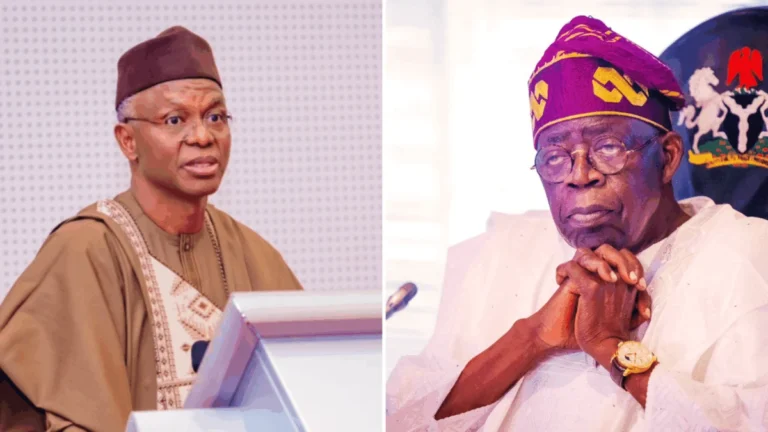
Speculation regarding the 2027 presidential election has intensified following a declaration by Hayatudeen Lawal Makarfi, a prominent chieftain of the African Democratic Congress (ADC) and a close political associate of former Kaduna State Governor, Mallam Nasir El-Rufai, indicating that El-Rufai is actively preparing to contest the nation’s highest office. This pronouncement, made on Tuesday, March 12, 2024, came shortly after a Federal High Court in Kaduna granted the former governor bail in a corruption case brought against him by the Independent Corrupt Practices and Other Related Offences Commission (ICPC). The twin developments – a bold political forecast and a significant legal hurdle – have thrust El-Rufai back into the national spotlight, igniting a fresh wave of discourse on Nigeria’s political future and the integrity of its public office holders.
Makarfi’s assertion was unequivocal, delivered to journalists outside the courtroom following the legal proceedings. He expressed profound confidence that El-Rufai is not only eyeing the presidency but is also destined to succeed the incumbent, President Bola Ahmed Tinubu. "His Excellency President Bola Ahmed Tinubu will hand over to His Excellency Mallam Nasir El-Rufai in May 2027, and the journey has started," Makarfi stated, leaving little room for ambiguity about the perceived trajectory of El-Rufai’s political ambitions. The statement, coming from an ally outside El-Rufai’s current political party, the All Progressives Congress (APC), adds an intriguing layer to the unfolding political narrative, suggesting a potentially broader, cross-party alignment or a strategic testing of the waters for future political realignments. The timing of such a declaration, coinciding with El-Rufai’s ongoing legal challenges, underscores the complex interplay of legal battles and political maneuvering in Nigeria’s high-stakes political arena.
The Intricacies of the ICPC Corruption Case and Bail Conditions
The legal proceedings that day saw the Federal High Court in Kaduna admit El-Rufai to bail, albeit under conditions described by Justice Rilwanu Aikawa as "strict and extensive." The court mandated a bail bond of N200 million with two sureties in like sum. These sureties are required to meet specific, rigorous criteria: one must be a civil servant not below Grade Level 15, and the other must be a recognized traditional ruler. Furthermore, both sureties are compelled to deposit their international passports with the court, a measure designed to prevent flight risks. Critically, the court ordered that El-Rufai is to remain in the custody of the anti-graft agency until all these stringent bail conditions are fully met. This condition highlights the seriousness with which the court views the allegations and ensures compliance before temporary freedom is granted.
The charges against El-Rufai by the ICPC, though not fully detailed in the immediate public reports, generally pertain to corruption-related offenses committed during his tenure as governor of Kaduna State from 2015 to 2023. The ICPC, established in 2000, is one of Nigeria’s primary anti-corruption agencies, tasked with combating corruption and other related offenses in the public sector. Its mandate includes investigating and prosecuting offenses such as gratification, fraudulent acquisition of property, abuse of office, and illicit enrichment. The case against El-Rufai is part of a broader trend of anti-corruption agencies pursuing high-profile individuals, including former governors, underscoring a continuous, albeit sometimes politically charged, effort to curb systemic corruption within the Nigerian governance framework. The specific nature of the allegations will undoubtedly play a significant role in public perception and the eventual legal outcome.
A Chronology of El-Rufai’s Political Ascent and Recent Challenges
To fully appreciate the weight of Makarfi’s statement and the implications of the ICPC case, it is essential to trace Nasir El-Rufai’s extensive and often controversial political journey. Born in 1960, El-Rufai first gained national prominence during the administration of President Olusegun Obasanjo.
-
1999-2003: Bureau of Public Enterprises (BPE) and Privatization Efforts: El-Rufai served as the Director-General of the Bureau of Public Enterprises (BPE) and the Secretary of the National Council of Privatisation. In this role, he oversaw the ambitious privatization of numerous state-owned enterprises, a process lauded by some for its economic reforms but criticized by others for its perceived lack of transparency and equity. His tenure here established his reputation as a no-nonsense reformer.
-
2003-2007: Minister of the Federal Capital Territory (FCT): Appointed FCT Minister by President Obasanjo, El-Rufai embarked on a highly visible and often contentious urban renewal program in Abuja. This involved the demolition of thousands of illegal structures and settlements, including those belonging to high-ranking officials, in an effort to restore the city’s original master plan. While praised for bringing order and enforcing regulations, his actions also drew significant backlash for their perceived harshness and impact on ordinary citizens. This period cemented his image as a decisive, albeit uncompromising, leader.
-
Post-Obasanjo Era and Opposition Politics: After the Obasanjo administration, El-Rufai became a vocal critic of subsequent governments, particularly the Goodluck Jonathan administration. He was instrumental in the formation of the All Progressives Congress (APC) in 2013, a coalition of opposition parties aimed at unseating the then-ruling Peoples Democratic Party (PDP). His strategic insights and sharp criticisms played a key role in galvanizing support for the nascent party.
-
2015-2023: Governor of Kaduna State: El-Rufai was elected Governor of Kaduna State in 2015 and re-elected in 2019. His two terms were marked by an aggressive reform agenda focusing on education, healthcare, infrastructure development, and public service reform. Notable policies included mass teacher competency tests leading to disengagement of unqualified teachers, urban renewal projects across the state, and efforts to address the pervasive insecurity, particularly banditry and communal clashes, though these efforts met with mixed results and significant challenges. His administration also faced criticism for its handling of industrial actions and its controversial religious preaching bill.
-
Post-Governorship and Ministerial Nomination: Following the expiration of his second term in May 2023, El-Rufai was widely expected to play a significant role in President Bola Tinubu’s administration. He was nominated as a ministerial candidate, but his confirmation was withheld by the Senate, citing security clearance issues. This unexpected turn of events led to his withdrawal from consideration, sparking various interpretations about his relationship with the new administration and his future political trajectory. It is against this backdrop of a distinguished yet often turbulent political career, and a recent setback, that the current declaration of presidential ambition and the ongoing ICPC case must be understood.
Supporting Data and Context: The Nigerian Political Landscape
Nigeria’s political landscape is perpetually dynamic, characterized by intense competition, regional considerations, and the intricate dance of alliances and rivalries. The 2027 presidential election, though three years away, is already a subject of much speculation. Incumbent President Bola Tinubu, having just completed his first year in office, is constitutionally eligible for a second term. However, the declaration by Makarfi, suggesting a handover to El-Rufai, introduces a potential challenge to the traditional expectation of an incumbent seeking re-election. This could signify internal jostling within the APC or a strategic move to position El-Rufai regardless of Tinubu’s future intentions.
Historically, presidential elections in Nigeria are often influenced by:
- Regional Balancing: The unwritten convention of power rotation between the North and South. El-Rufai, being from the North-West, would be a strong contender if the presidency is perceived to return to the North after Tinubu’s potential second Southern term, or even if there’s a push for it earlier.
- Party Primaries: The internal selection process of major parties like the APC and PDP is often fiercely contested and can be a make-or-break stage for aspirants. El-Rufai’s strong base in the North and his reformist credentials could make him a formidable candidate in a primary.
- Anti-Corruption Sentiments: While corruption cases often dog Nigerian politicians, how the public perceives these cases can vary. Some see them as politically motivated witch-hunts, while others view them as genuine attempts at accountability. The outcome of the ICPC case will undoubtedly influence public opinion regarding El-Rufai’s suitability for the highest office.
The N200 million bail sum, while substantial, is not unprecedented for high-profile cases involving former governors in Nigeria. It reflects the judiciary’s attempt to balance the presumption of innocence with the need to ensure the accused’s appearance in court. The requirement of a Grade Level 15 civil servant and a traditional ruler as sureties also underscores the court’s desire for individuals with significant standing and influence to guarantee the accused’s compliance, reflecting the societal structure where such figures hold considerable sway.
Official Responses and Inferred Reactions
As of now, there has been no official statement from Mallam Nasir El-Rufai himself directly confirming or refuting Makarfi’s declaration of his 2027 presidential ambition. This silence, in itself, is subject to interpretation; it could be a strategic posture, allowing the speculation to build, or an indication that he is prioritizing his legal battles.
- All Progressives Congress (APC): Within the ruling APC, Makarfi’s statement is likely to elicit a range of reactions. Officially, the party is expected to maintain its focus on supporting President Tinubu’s current administration and its agenda. Any premature discussion of 2027 succession could be seen as divisive or disloyal. However, behind the scenes, political observers suggest that the statement could trigger quiet strategizing among various factions within the party, particularly those with presidential aspirations or those seeking to align themselves with potential future power brokers. Some party stalwarts might call for unity and caution against early politicking, while others might view it as an opportune moment to test the waters for internal party dynamics.
- Presidency/President Tinubu’s Camp: From the perspective of the Presidency, an early declaration of ambition by a prominent figure like El-Rufai could be seen as an attempt to undermine the current administration or preemptively challenge President Tinubu’s potential second term. While no official reaction has been released, it is plausible that the President’s inner circle would monitor such developments closely, understanding the implications for party cohesion and political stability.
- Opposition Parties (PDP, Labour Party, etc.): Opposition parties are likely to seize upon Makarfi’s statement and the ongoing ICPC case as evidence of internal divisions within the APC and a perceived lack of sincerity in the ruling party’s anti-corruption drive. They might highlight the contradiction of a presidential aspirant facing corruption charges, using it to question the credibility of both the individual and the governing party. Such developments provide fertile ground for opposition narratives leading up to the next election cycle.
- Legal Experts and Civil Society Organizations: Legal experts might weigh in on the implications of the "strict and extensive" bail conditions, discussing their legality and fairness within the context of Nigerian jurisprudence. Civil society organizations, particularly those focused on good governance and anti-corruption, will likely monitor the ICPC case closely, advocating for transparency, due process, and accountability, irrespective of the political standing of the accused. The intersection of a high-profile corruption case with presidential ambition will undoubtedly fuel public discourse on ethical leadership and the fight against graft.
Broader Impact and Implications for Nigerian Politics
The dual narrative surrounding Nasir El-Rufai – a bold declaration of presidential ambition coupled with a serious corruption charge and stringent bail conditions – carries significant implications for Nigeria’s political landscape and governance ethos.
- 2027 Electoral Dynamics: An early declaration by a figure as prominent as El-Rufai effectively kick-starts the 2027 presidential race, even if informally. It signals that aspirants are already positioning themselves, potentially creating tension within the ruling party and forcing other potential candidates to reassess their timelines. This early maneuvering could lead to a more fragmented political environment as various camps begin to emerge and coalesce.
- The Anti-Corruption Fight: The ICPC case against El-Rufai highlights the ongoing challenges and complexities of Nigeria’s anti-corruption efforts. The perception of whether such cases are genuinely driven by the rule of law or are politically motivated can significantly impact public trust in institutions. If El-Rufai, a former governor and a highly visible political figure, is successfully prosecuted, it could send a strong message about accountability. Conversely, if the case is perceived to falter or be influenced by political considerations, it could further erode public confidence in the fight against corruption. The strict bail conditions also underscore the seriousness of the allegations and the judiciary’s role in ensuring due process in high-profile cases.
- Political Stability and Governance: The confluence of an early presidential ambition and a corruption trial for a key political player can introduce an element of uncertainty into the political system. While democratic competition is healthy, prolonged internal party strife or a perception of political instability could detract from governance, as focus shifts from policy implementation to political maneuvering. The ability of the APC to manage these internal dynamics will be crucial for maintaining cohesion and stability.
- Public Trust and Perception: The Nigerian public will be watching these developments closely. The outcome of the ICPC case and the trajectory of El-Rufai’s political aspirations will inevitably shape public perceptions of political integrity, the rule of law, and the fairness of the electoral process. For a populace often cynical about political promises and legal outcomes, transparency and adherence to due process will be paramount.
In conclusion, the assertion by Hayatudeen Lawal Makarfi regarding Mallam Nasir El-Rufai’s purported 2027 presidential ambition, juxtaposed with the former governor’s ongoing legal battle with the ICPC and the court’s imposition of stringent bail conditions, has created a potent mix of political intrigue and legal scrutiny. This development not only places El-Rufai squarely at the center of future political discourse but also reignites critical conversations about leadership, accountability, and the future direction of Nigeria. As the legal proceedings unfold and the political landscape continues to evolve, these events will undoubtedly serve as a significant barometer for the nation’s commitment to democratic principles and the rule of law.