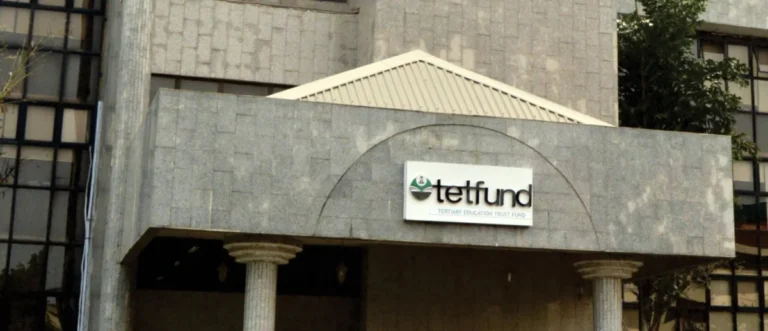
The Tertiary Education Trust Fund (TETFund) has announced a strategic investment exceeding N30 billion aimed at fortifying security across Nigeria’s tertiary institutions from January 2024 to the present date. This disclosure was made by the Chairperson of the TETFund Board of Trustees (BoT), Aminu Bello Masari, during an official statement released in Katsina. The move marks a significant shift in the agency’s intervention strategy, elevating security to a core budgetary priority alongside traditional infrastructure such as lecture halls and laboratories.
Mr. Masari, who previously served as the Executive Governor of Katsina State, emphasized that this substantial financial commitment was necessitated by the evolving security landscape in the country. He noted that the investment has already yielded measurable improvements in the safety of students, academic staff, and administrative personnel within campus environments. According to the BoT Chairman, the initiative is a direct response to the directives of President Bola Ahmed Tinubu, whose administration has prioritized the creation of a secure and conducive atmosphere for higher education as a pillar of national development.
A Strategic Shift in Funding Priorities
For decades, TETFund’s primary focus remained on the construction of physical infrastructure, the provision of library facilities, and the sponsorship of academic research and staff training. However, the escalating wave of insecurity, characterized by banditry, kidnapping, and insurgent activities near educational hubs, has forced a reevaluation of what constitutes "essential infrastructure."
Mr. Masari explained that the Board of Trustees made a deliberate policy decision to institutionalize security funding. "Just as we created a budget line for electricity to address the energy crisis in our institutions, we also deemed it fit to establish a dedicated line for security," he stated. This institutionalization ensures that security is no longer treated as an emergency contingency but as a permanent component of the Fund’s annual intervention cycle. The rationale is clear: without a guarantee of safety, the billions of Naira invested in research and classroom blocks risk being undermined by the exodus of talent and the closure of institutions due to fear.
Breakdown of Physical and Technological Interventions
The N30 billion allocated so far has been channeled into various physical and technological safeguards based on the specific needs of applying institutions. A significant portion of these funds has been directed toward the installation of solar-powered streetlights. In many Nigerian universities, polytechnics, and colleges of education, vast and poorly lit campuses have historically provided cover for criminal elements. By prioritizing solar lighting, TETFund is addressing both security and energy sustainability, ensuring that campus pathways and residential areas remain illuminated even during national grid failures.

Furthermore, the intervention covers the construction of robust perimeter fencing. Many older Nigerian institutions lack defined boundaries, making them porous and difficult to monitor. The new funding allows for the erection of high-security walls and the establishment of modern gatehouses and observation towers. In addition to physical barriers, there has been an increased focus on "safety-enhancing projects," which stakeholders suggest include electronic surveillance systems, communication hardware for campus security units, and the fortification of staff quarters.
The Context of National Insecurity and the Safe Schools Initiative
The urgency of TETFund’s intervention cannot be overstated when viewed against the backdrop of Nigeria’s security challenges. Over the past decade, educational institutions have increasingly become "soft targets" for non-state armed groups. While much of the international attention has focused on the abduction of secondary school students—most notably the Chibok, Dapchi, and Kankara incidents—tertiary institutions have not been immune.
In recent years, universities in the North-west and North-central geopolitical zones have faced targeted attacks. Lecturers have been abducted from their homes, and students have been seized from off-campus hostels. These incidents have not only traumatized the academic community but have also contributed to the "brain drain" phenomenon, as seasoned academics seek safer opportunities abroad. TETFund’s N30 billion injection serves as a localized reinforcement of the federal government’s broader "Safe Schools Initiative," providing the specific financial muscle needed to protect higher education hubs that are often larger and more complex to secure than primary or secondary schools.
Financial Sustainability and the 2024 Nigerian Tax Bill
The ability of TETFund to sustain such massive investments is tied to its revenue streams, which are currently undergoing significant reform. Mr. Masari commended President Tinubu for his support of the Fund, particularly regarding the 2024 Nigerian Tax Bill. A key feature of this legislation is the approval of a 50 percent Development Levy, which is scheduled to take effect in January 2025.
"The development levy is set to further boost the Fund’s capacity to deliver interventions," Masari noted. This legislative support is crucial, as TETFund’s revenue is primarily derived from the Education Tax paid by registrable companies in Nigeria. Recent data from the Nigeria Extractive Industries Transparency Initiative (NEITI) revealed that TETFund received approximately N1.024 trillion from the extractive sector alone between 2019 and 2023. As the government seeks to widen the tax base and increase the efficiency of collection through the new tax bill, the Fund’s ability to tackle multi-dimensional challenges—including security and the "Japa" (emigration) syndrome—is expected to grow.
Stakeholder Engagement and the Town Hall Framework
To ensure that the N30 billion is utilized effectively and transparently, TETFund has adopted a model of continuous stakeholder engagement. Mr. Masari highlighted a recent town hall meeting in Katsina as a blueprint for this approach. These forums bring together a diverse array of actors, including members of the National Assembly, the Academic Staff Union of Universities (ASUU), Vice-Chancellors, Rectors, Provosts, and student leadership bodies such as the National Association of Nigerian Students (NANS).

The primary goal of these meetings is to receive direct feedback on the impact of ongoing interventions and to identify emerging needs. "We share ideas, receive suggestions, and work toward a more inclusive TETFund," Masari explained. By involving ASUU and student unions, the Fund ensures that security measures are not just top-down impositions but are tailored to the lived realities of those on the ground. For instance, student feedback often highlights specific "black spots" on campus that require more lighting or patrol presence, which then informs the Fund’s allocation decisions.
Analysis of Implications for Research and Global Competitiveness
The N30 billion security investment has implications that extend far beyond mere physical safety. In the global academic landscape, an institution’s reputation is inextricably linked to its stability. Frequent security breaches lead to academic calendar disruptions, the withdrawal of international research grants, and a decline in foreign student enrollment.
By stabilizing the security situation, TETFund is indirectly protecting Nigeria’s research output. Safety is a prerequisite for the 24-hour laboratory operations and field research necessary for breakthroughs in science and technology. Furthermore, a secure campus is essential for attracting and retaining high-caliber faculty. When lecturers feel safe in their quarters and classrooms, they are more likely to remain in the domestic system rather than seeking opportunities in safer jurisdictions. This intervention, therefore, acts as a critical buffer against the erosion of Nigeria’s intellectual capital.
Challenges and Future Outlook
While the N30 billion investment is a landmark achievement, experts note that physical infrastructure is only one side of the security coin. The sustainability of these projects will depend on maintenance cultures within the beneficiary institutions. Solar streetlights require battery replacements, and perimeter fences require regular patrols and repairs.
Moreover, there is a growing call for TETFund to also support "soft security" measures, such as the training of campus security personnel in intelligence gathering and the integration of digital identity management systems for students and staff. As the 50 percent Development Levy kicks in next year, stakeholders expect TETFund to expand its scope even further, potentially moving into the realm of cyber-security to protect the digital infrastructure of Nigerian universities from increasing global threats.
Aminu Masari’s disclosure underscores a pivotal moment in the history of Nigerian education funding. It acknowledges that in the modern era, a "center of excellence" cannot exist in a vacuum of insecurity. As the Fund moves toward the 2025 fiscal year with enhanced revenue prospects, the focus remains on transforming Nigerian tertiary institutions into safe havens where research, manpower development, and infrastructure can flourish without the looming shadow of violence. The success of this N30 billion initiative will likely be measured not just by the kilometers of fencing built, but by the restoration of peace and confidence within the nation’s ivory towers.