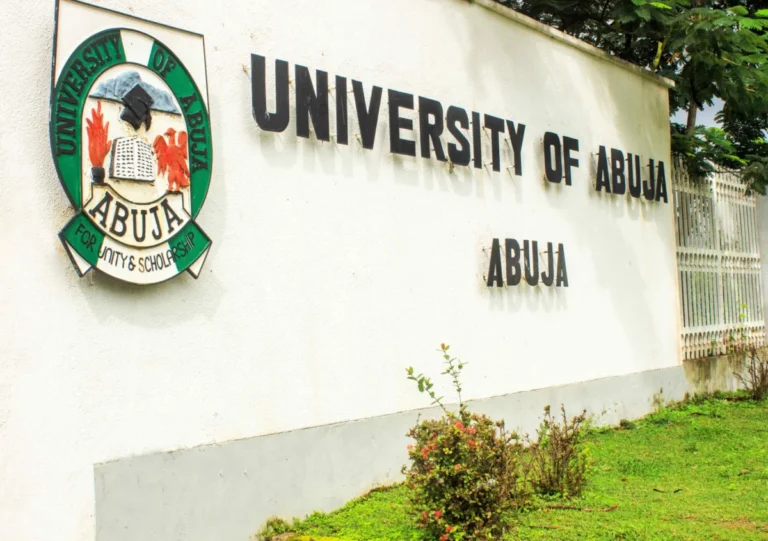
The House of Representatives Committee on University Education has issued a stern directive to the newly appointed Vice Chancellor of the University of Abuja, Professor Hakeem Fawehinmi, to initiate a comprehensive investigation into allegations of a sophisticated accommodation racketeering syndicate operating within the institution. This mandate was delivered by the Chairperson of the Committee, Honorable Abubakar Fulata, during an extensive oversight visit to the university’s campus in the Federal Capital Territory. The committee revealed that it had been inundated with numerous petitions from aggrieved students, parents, and stakeholders, detailing a system where university-allocated housing is allegedly hijacked by middlemen and resold to students at predatory rates, sometimes reaching a staggering 500 percent markup over the official university price.
The legislative intervention comes at a critical juncture for the University of Abuja, an institution that has recently transitioned through a period of significant leadership instability. Honorable Fulata, representing the Birniwa/Guri/Kiri-Kasamma Federal Constituency of Jigawa State, emphasized that the integrity of the university’s management is under scrutiny. He noted that the practice of accommodation racketeering not only undermines the affordability of higher education but also creates a tiered system of access that favors the wealthy while disenfranchising the poor. According to the committee, these middlemen secure bed spaces through illicit channels and then exploit the high demand for on-campus housing to extort vulnerable students who are desperate for a secure living environment.
The Crisis of Student Housing and the Mechanics of Racketeering
The allegations of accommodation racketeering at the University of Abuja reflect a broader, systemic crisis within the Nigerian tertiary education sector. Historically, most federal universities in Nigeria are only able to provide official on-campus housing for approximately 15 to 30 percent of their total student population. This acute supply-demand imbalance has created a fertile ground for "bed-space trading."
In the specific case of UniAbuja, the committee’s findings suggest that a network of "room brokers"—often a mix of unscrupulous staff members and external agents—manipulates the portal or allocation process. These individuals acquire the rights to multiple rooms under various names and then "sublet" them. For instance, a bed space officially valued at 25,000 Naira could be sold on the black market for upwards of 125,000 to 150,000 Naira.
Honorable Fulata expressed particular concern regarding the impact of this racketeering on female students. He argued that when students are priced out of safe, regulated on-campus hostels, they are forced to seek accommodation in neighboring communities that may lack adequate security. This exposure significantly increases the risk of gender-based violence, harassment, and recruitment into criminal activities. The lawmaker stressed that the university management has a moral and administrative obligation to protect its students from such predatory practices, noting that a failure to do so constitutes a dereliction of duty.
Leadership Instability and the Call for Administrative Harmony
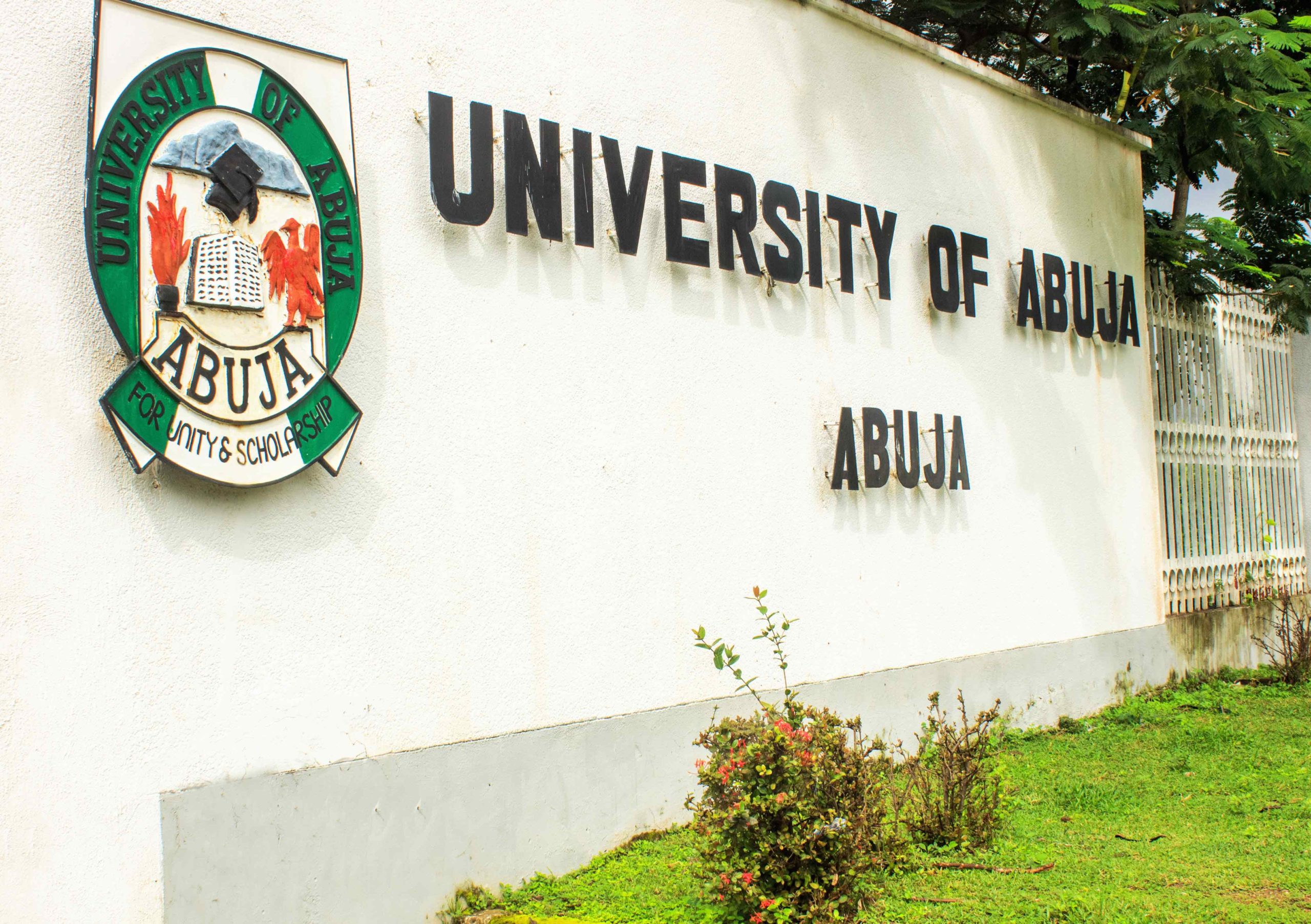
A significant portion of the committee’s oversight discourse focused on the historical volatility of the University of Abuja’s leadership. Honorable Fulata issued a cautionary note to Professor Fawehinmi, referencing a turbulent period in the university’s recent past where the institution saw the appointment of four different vice chancellors in quick succession within a three-year window. This revolving door of leadership, the committee argued, has historically hampered the institution’s ability to implement long-term reforms or maintain consistent academic standards.
The committee urged the new Vice Chancellor to prioritize institutional harmony by fostering a collaborative relationship with the various staff unions, including the Academic Staff Union of Universities (ASUU), the Senior Staff Association of Nigerian Universities (SSANU), and the Non-Academic Staff Union of Allied and Education Institutions (NASU). The lawmakers observed that internal friction between management and unions often leads to administrative paralysis, which in turn allows illicit activities like accommodation racketeering to flourish unchecked. Professor Fawehinmi was advised to adopt a transparent governance model that prioritizes the welfare of both staff and students to prevent the recurrence of the industrial actions and leadership crises that have plagued the university in previous cycles.
Ensuring Compliance with the Federal Character Principle
In addition to the specific issues at the University of Abuja, the House Committee extended its oversight to other newly established and existing federal institutions within the region. A primary area of concern was the adherence to the Federal Character Principle, as enshrined in Section 14(3) of the 1999 Constitution of the Federal Republic of Nigeria. This principle mandates that the composition of the government and its agencies must reflect the linguistic, ethnic, religious, and geographic diversity of the country to prevent the dominance of any particular group.
During a session with the management team of the newly established Federal University of Technology (FUT), Abuja, the committee warned against nepotism in recruitment and admissions. Honorable Fulata emphasized that as a federal institution located in the nation’s capital, FUT Abuja must serve as a model of national integration. The committee demanded a detailed breakdown of the institution’s current staff profile and admission list to ensure that no single region or state is overrepresented at the expense of others.
The committee also engaged with the leadership of the Federal University of Technology, Minna, and the Federal University of Education, Kontagora, in Niger State. These interactions focused on the fiscal management of the institutions and the quality of infrastructure. The lawmakers noted that while the federal government continues to invest in these schools, the management teams must demonstrate "value for money" and ensure that budgetary allocations are utilized for the direct benefit of the academic environment rather than being diverted into administrative overheads or questionable procurement processes.
Accountability and the Case of Usman Danfodio University
The oversight activities took a notable turn during an encounter with Professor Bashir Garba, the Vice Chancellor of Usman Danfodio University, Sokoto (UDUS). Professor Garba appeared before the committee to address his absence during previous oversight visits over the past three years. In a formal apology, the Vice Chancellor attributed his prior absences to unavoidable administrative exigencies and reaffirmed his commitment to legislative transparency.

Professor Garba asserted that his administration runs an "open-door policy" and maintains a transparent financial system. He welcomed the committee’s scrutiny, stating that he had nothing to hide and that legislative oversight is a necessary component of democratic accountability in the education sector. He pledged to work closely with the committee to address the challenges facing UDUS, particularly in the areas of research funding and campus security, which remain pressing concerns for institutions in the northwestern region of Nigeria.
Analysis of Implications for the Nigerian University System
The House Committee’s findings and directives signal a shift toward more aggressive legislative oversight of the university system. For decades, Nigerian universities have operated with a degree of autonomy that, while necessary for academic freedom, has sometimes shielded administrative inefficiencies and corruption from public view. The specific focus on accommodation racketeering highlights a growing recognition that the "student experience" is as much a part of educational quality as the curriculum itself.
The implications of these directives are manifold:
- Digitalization of Housing Services: To eliminate middlemen, the University of Abuja will likely need to overhaul its digital allocation system. This could involve the integration of biometric verification or National Identification Number (NIN) linking to ensure that the student who pays for the room is the one residing in it.
- Standardization of Recruitment: The emphasis on Federal Character will likely lead to more rigorous auditing by the Federal Character Commission (FCC), forcing universities to be more transparent in their hiring processes.
- Fiscal Responsibility: The committee’s interest in the management of "newly established" universities suggests that the era of "blank check" funding is ending. Institutions will be expected to provide clear metrics for how they are fulfilling their mandates.
- Safety and Gender Equity: By linking accommodation racketeering to the safety of female students, the committee has framed housing as a human rights and security issue, rather than just an administrative one. This could lead to new policies regarding student protection and the regulation of off-campus housing "university-approved" schemes.
Chronology of Recent Events in UniAbuja Leadership
To understand the committee’s concern over leadership stability, one must look at the timeline of the University of Abuja’s recent administrative transitions. The institution has frequently dealt with "Acting" capacities for its top roles, which often leads to a lack of decisive policy implementation.
- Mid-2023: The end of the tenure of the previous substantive Vice Chancellor led to internal debates regarding the succession plan, involving the Governing Council and the Ministry of Education.
- Early 2024: Amidst administrative friction, several interim appointments were made to ensure the daily functioning of the university, though these were met with protests from various staff factions citing procedural irregularities.
- November 2024: Professor Hakeem Fawehinmi officially assumed office, bringing expectations of a more stable era. His background in university administration is seen by many as an asset, but as the House Committee noted, his success will depend on his ability to dismantle the "shadow economies" (like the housing racketeers) that have embedded themselves in the university’s structure.
Conclusion and Future Outlook
The directive to Professor Fawehinmi represents a "litmus test" for his new administration. If he successfully probes and dismantles the accommodation racketeering syndicate, it will signal a new era of transparency and student-centric governance at the University of Abuja. Conversely, failure to address these systemic issues could lead to further legislative sanctions or a loss of public confidence in the institution.
As the House Committee on University Education continues its oversight tour across the country, the message to university administrators is clear: the era of unchecked administrative autonomy is being replaced by a demand for total accountability. The committee has indicated that it will return for a follow-up visit to UniAbuja in the coming months to assess the progress of the investigation and the implementation of the Federal Character principles across the board. For the students of the University of Abuja, the hope is that these legislative interventions will finally lead to an affordable, safe, and transparent campus environment.