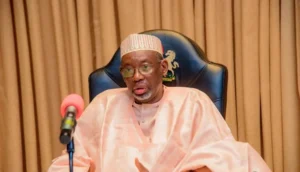
The Ogun State Government has officially prohibited all public and private primary and secondary schools across the state from organizing graduation ceremonies and end-of-session parties, citing the increasingly prohibitive financial burden these events place on parents and guardians. This sweeping directive, issued through the state’s Ministry of Education, Science and Technology, marks a significant shift in the state’s educational policy, moving from partial restrictions to a total ban across all grade levels. The government’s decision comes in response to numerous reports of school administrators allegedly extorting families by demanding various fees and levies under the guise of celebratory events, a practice the state authorities have described as both exploitative and insensitive to the current economic climate.
The directive was formalized in a circular dated June 17, 2026, and signed by the Director of Education (Private Schools), A.A. Bisiriyu. Addressed to "All Administrators of both Public and Non-State (Private) Schools," the document makes it clear that the state government will no longer tolerate the organization of these gatherings. The circular emphasizes that the ban is effective immediately and applies to all classes, from the earliest stages of basic education through the completion of secondary school. Furthermore, the ministry warned that any school found in violation of this order would face stringent sanctions, which could include fines, suspension of operating licenses for private institutions, or disciplinary action against the heads of public schools.
The Rationale Behind the Decision: Combating Financial Extortion
According to the Ministry of Education, Science and Technology, the decision to implement a total ban was necessitated by a growing trend of "extortion" within the school system. Officials noted that many school administrators had begun to view the end of the academic session not just as a time for pedagogical assessment, but as an opportunity for revenue generation. Parents across the state had filed complaints regarding compulsory "graduation packages" that often included high-priced academic gowns, professional photography fees, mandatory yearbooks, expensive venue rentals, and catering levies for lavish parties.
"It has been brought to the notice of the Ministry that some administrators of both public and non-state (private) schools have started extorting parents and guardians under the disguise of organizing graduation and end-of-session parties for learners," the circular stated. The government expressed concern that these financial demands were being made at a time when many families are struggling with the rising cost of living, inflation, and other socio-economic pressures. By removing the requirement—or even the option—for schools to host these events, the government aims to ensure that no child is marginalized due to their family’s inability to pay for non-essential social activities.
A Timeline of Regulatory Interventions
The latest directive is not an isolated event but rather the culmination of a series of regulatory steps taken by the Ogun State Government to manage the cost of education. The path to this total ban can be traced through several key milestones over the past academic year:

- September 2025 Stakeholders’ Meeting: During a pre-resumption meeting held at the Lisabi Grammar School Hall in Abeokuta, the state capital, stakeholders including government officials, school owners, and parent-teacher associations discussed the rising costs of schooling. Resolutions were reached regarding the need to curb excessive spending on social events, though some schools allegedly ignored these agreements.
- Late 2025 Partial Ban: Following the stakeholders’ meeting, the state government initially introduced a ban on graduation ceremonies for pupils in pre-basic and kindergarten levels. At that time, celebrations were restricted only to "terminal classes"—specifically Primary Six, Junior Secondary School Three (JSS3), and Senior Secondary School Three (SS3).
- June 2026 Total Prohibition: Observing that many schools were circumventing the partial ban or using "end-of-session parties" as a loophole to continue charging parents for social events in non-terminal classes, the Ministry of Education moved to implement a total ban across all levels.
This chronological progression highlights the government’s frustration with school administrators who continued to prioritize social festivities over the financial well-being of their students’ families.
The Economic Context: Education Amidst Inflation
The Ogun State Government’s intervention occurs against a backdrop of significant economic challenges in Nigeria. With headline inflation remaining a persistent concern and the cost of basic commodities rising, the additional requirement to pay for school parties has become a breaking point for many households. In private schools, graduation fees can range from 20,000 to over 100,000 Naira per student, depending on the prestige of the institution. When multiplied by several children in a single family, these costs often rival or exceed the actual tuition fees.
By banning these ceremonies, the government is effectively regulating the "hidden costs" of education. Public sentiment in Abeokuta, Ijebu-Ode, and Ota suggests that while some parents appreciate the milestone of a graduation ceremony, the majority view the government’s move as a necessary relief. Educational advocates have argued that the focus of the end-of-year period should remain on academic achievement and the transition to the next grade, rather than the theatricality of a party.
Comparative Trends Across Other Nigerian States
Ogun State is not the only sub-national entity in Nigeria to take such a stance. A growing number of states have recognized that the commercialization of school graduations has become a social problem. States such as Ekiti, Edo, Imo, Ebonyi, and Benue have previously introduced similar measures.
In Ekiti State, the government moved to ban "extravagant" graduation parties in public schools several years ago to ensure that the free education policy was not undermined by miscellaneous levies. In Edo State, the focus has been on curbing the "pressure of competition" between private schools, where proprietors often feel compelled to host ever-more-expensive events to attract prospective parents, ultimately passing those costs down to the current clientele. Ogun’s recent directive is considered one of the most comprehensive, as it explicitly includes both public and private institutions and covers every single class level.
Implications for School Administrators and Stakeholders
The total ban is expected to have a ripple effect across various sectors. For school proprietors, particularly those in the private sector, the ban removes a significant source of seasonal revenue. Many schools utilize the margins from graduation fees to fund facility repairs during the long vacation. With this revenue stream cut off, schools may need to re-evaluate their financial models or focus more strictly on tuition-based income.

For the event planning and catering industry in Ogun State, the ban represents a loss of seasonal business. Graduation season typically sees a surge in demand for marquee rentals, gown tailoring, and event photography. However, the state government has maintained that the economic protection of the general citizenry outweighs the interests of the event industry in this specific context.
The Ministry of Education has instructed school administrators to "publicize the directive widely among parents, teachers, and other stakeholders." This ensures that parents are aware of their rights and are empowered to refuse any requests for graduation-related payments. The government’s stance is that the educational responsibilities of a school should be fulfilled within the classroom, and the successful completion of a session is best marked by the issuance of report cards and academic promotion rather than a party.
Monitoring and Enforcement
To ensure full compliance, the Ogun State Ministry of Education, Science and Technology has signaled that its monitoring teams will be active as the 2025/2026 academic session concludes in mid-July. Inspectors will be tasked with visiting school premises to ensure that no unauthorized gatherings are taking place.
The warning of sanctions is being taken seriously by the educational community. In the past, the Ogun State Government has demonstrated a willingness to shut down schools that operate outside of state guidelines or fail to adhere to safety and financial regulations. The Ministry’s stance is clear: the era of compulsory, high-cost school celebrations is over in Ogun State.
As schools prepare to wrap up the current session, the focus has now shifted to administrative close-outs and preparing students for the next academic year. While the absence of music and festivities may make the end of this term quieter than usual, the state government believes the financial peace of mind provided to parents is a far more valuable outcome. This policy serves as a reminder of the government’s role in mediating the relationship between private service providers and the public to ensure that essential services like education remain accessible and are not encumbered by unnecessary social costs.