For many Nigerian families, the cost of private education has long ceased to be defined solely by the figure written beside "school fees" on a termly bill. Across the country—from the bustling commercial hub of Lagos to the Federal Capital Territory (FCT), Kaduna, Katsina, and Benue states—parents are increasingly grappling with a labyrinth of secondary expenses. Graduation ceremonies, mandatory textbook purchases directly from school inventories, specialized uniforms, photography packages, feeding levies, and extracurricular event fees have transformed basic education into a financial tightrope walk.
This growing friction between cash-strapped households and cash-strapped school operators highlights a complex socio-economic dilemma. While private school proprietors argue that skyrocketing overhead costs, inflation, and heavy tax burdens make extra charges essential for survival, parents contend that these fragmented levies are compounding already stretched household budgets. Amid a broader macroeconomic downturn characterized by high inflation and a rising cost of living, the accumulation of hidden school bills is pushing many families to the brink.
The Anatomy of Hidden School Costs
The financial strain typically begins at the end of academic sessions or during transitional milestones. For Mrs. Kuburat, a parent in Abuja, the end-of-session celebration at Megaliy International School came with an additional bill of nearly N100,000. With three children graduating at different levels—nursery, junior secondary, and senior secondary—she was billed N20,000, N25,000, and N50,000 respectively, alongside a standard N10,000 per child fee demanded in non-graduation years.
Similar narratives echo across state lines. In Lagos, Damilola Ojuolape, a mother residing in Ojo, discovered that her nine-year-old daughter’s primary school graduation involved far more than a simple certificate presentation. The school charged N45,000 for the ceremony, but ancillary costs—including a specific green dress, matching accessories, jewellery, a purse, and class portraits—pushed her total expenditure past N154,000.

In northern states like Katsina and Kaduna, while nominal figures are lower, the impact relative to baseline earnings is equally severe. Parents interviewed reported paying between N3,000 and N8,000 for speech and prize-giving days, graduation gowns, and group photographs. In many instances, these fees are ostensibly categorized as "optional," yet practical realities remove the element of choice. Children whose parents opt out frequently face social exclusion, being barred from participating in ceremonies, denied refreshment packages, or emotionally ostracized while their peers celebrate.
The Textbook Monopoly and Compulsory Materials
Beyond celebratory milestones, learning materials represent another significant battleground. Numerous private schools mandate that parents purchase textbooks, workbooks, and stationery exclusively from school-managed bookstores at fixed prices, often cutting out independent vendors.

School administrators frequently defend this practice by citing the need to maintain curriculum uniformity, avoid pirated copies circulating in open markets, and ensure students possess the correct, updated editions. However, parents often question both the pricing and the necessity of such centralization. In Abuja, parents at select private institutions reported being barred from purchasing standard notebooks elsewhere. Similar restrictions apply at institutions like Fluorescent Private School in Lagos and Mariamoh Ajiri Memorial International School in Katsina, where early-childhood learning packs are strictly school-supplied.
While some proprietors, such as Abubakar Yunus Abubakar of Ayak Academy in Katsina, permit independent book sourcing as long as correct editions are secured, the prevailing trend across many private institutions leans toward exclusive internal procurement. This dynamic strips parents of the ability to shop for competitive prices or pass textbooks down to younger siblings—a traditional coping mechanism for large families.
Government Interventions and Regulatory Pushback

Recognizing the mounting financial pressure on families, federal and state authorities have increasingly stepped in to regulate non-essential school spending through a series of policy directives and legislative actions.
The chronology of regulatory pushback spans several key interventions:
- January: The Federal Ministry of Education announced a national restriction limiting formal graduation ceremonies exclusively to students completing terminal classes: Primary Six, Junior Secondary School Three (JSS3), and Senior Secondary School Three (SSS3). Simultaneously, the government introduced a reusable textbook policy to encourage multi-session utility and sibling hand-me-downs.
- June: The Ogun State government enacted a comprehensive ban on graduation and end-of-session parties for nursery, kindergarten, and other non-terminal classes across all public and private schools, mandating that terminal ceremonies remain modest and free of financial burdens for parents.
- July: The Anambra State government reinforced this stance, exempting only SSS3 students from restrictions while explicitly banning financial levies for basic and primary graduations under threat of school closure.
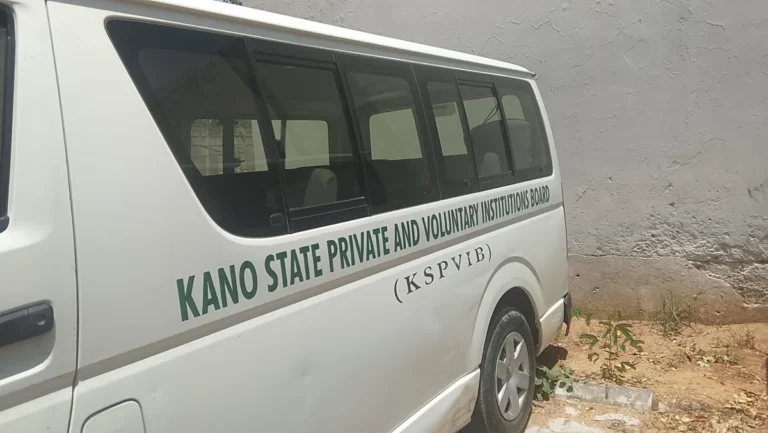
- August: Benue State introduced similar prohibitions against nursery graduations and mandatory purchases of non-transferable customised textbooks. Concurrently, the Kano State House of Assembly passed the Kano State Private and Voluntary Institutions Board (Amendment) Bill, introducing stricter oversight on private school fee hikes and mandating prior consultation with Parent-Teacher Associations (PTAs).
Despite these sweeping regulatory frameworks, enforcement remains uneven. State education ministries often face a reporting bottleneck; while parents readily voice grievances in private, many are reluctant to submit formal written complaints out of fear that school authorities might victimize or expel their children.

The Perspective of Private School Proprietors
Defending their financial models, private school operators emphasize that they function entirely without government subsidies. Facing soaring inflation, exorbitant commercial rents, heavy taxation, and rising operational and maintenance costs, many proprietors argue that tuition alone no longer covers basic institutional overhead.
"The running cost of a private school in Nigeria is very high," noted an anonymous Kaduna-based school proprietor. "These schools receive no government funding; they fund themselves."

Administrators also point out that funds collected for graduation ceremonies and co-curricular events directly offset logistical expenses—such as venue rentals, canopies, chairs, catering, and prizes for academic excellence. Furthermore, many school heads maintain that payment deadlines are flexible, with management frequently permitting students to participate in events if parents formally request extensions or sign repayment undertakings.
Mansir Sani, the Katsina State chairperson of the National Association of Proprietors of Private Schools (NAPPS), noted that excessive and compulsory graduation fees are not standard policy for the majority of mainstream member schools, asserting that most institutions rely on standard examination fees rather than separate charges.
Implications for the Future of Private Education

The friction between private school operators and parents sheds light on a deeper structural challenge within Nigeria’s educational ecosystem. With public school infrastructure overburdened and underfunded, a vast segment of the population relies on low- and medium-fee private institutions to secure foundational learning for their children.
However, as operational costs mount for school owners and household disposable incomes shrink under macroeconomic pressures, the current model of private schooling is approaching an inflection point. Without targeted government support—such as tax relief, simplified regulatory compliance, or subsidized educational materials—schools will likely continue passing financial deficits down to parents through creative levies.
Ultimately, as families navigate these hidden costs, the true price of private education in Nigeria has become a heavy burden. For parents balancing multiple children, the accumulation of graduation bills, textbook monopolies, and supplementary fees ensures that keeping a child in school requires far more than paying the termly tuition.