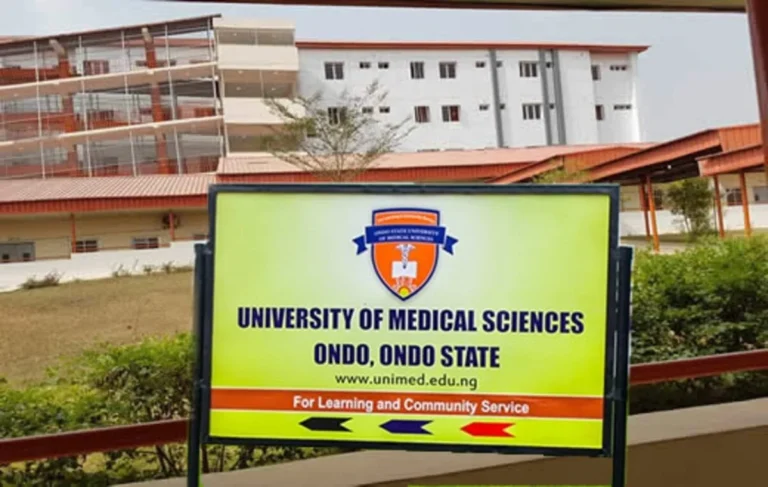
The Vice-Chancellor of the University of Medical Sciences (UNIMED), Ondo State, Professor Ebunoluwa Adejuyigbe, has issued a compelling call to the nation’s brightest students to look beyond the confines of academic transcripts and embrace a life defined by integrity, discipline, and selfless service. Speaking as the keynote orator at the Fourth Edition of the Obafemi Awolowo University (OAU) Academic and Research Excellence Awards, held at the historic Oduduwa Hall in Ile-Ife, Professor Adejuyigbe asserted that the trajectory of Nigeria’s national development is inextricably linked to the ethical caliber of its emerging professionals. The event, which celebrated the highest-achieving students and researchers at the institution colloquially known as "Great Ife," served as a platform for the Vice-Chancellor to challenge the prevailing notion that intellectual capacity alone is sufficient for leadership.
Addressing an audience of university administrators, faculty members, and the distinguished student awardees known as the "OAU STARS," Adejuyigbe emphasized that while Nigeria requires brilliant minds to navigate the complexities of the 21st century, it more urgently requires men and women whose competence is anchored in a firm moral compass. Her address, titled "Excellence is a Journey: Building Character, Inspiring Lives, and Leaving a Legacy," reframed the concept of excellence not as a destination reached upon graduation, but as a continuous, grueling process of self-refinement and societal contribution.
The Philosophical Foundation of Excellence and Character
Professor Adejuyigbe’s discourse was rooted in the philosophy that academic distinctions are merely tools, the value of which is determined by the character of the individual wielding them. She argued that the pursuit of excellence is a marathon of resilience rather than a sprint for accolades. According to the Vice-Chancellor, excellence is not a static achievement but a "disciplined habit" formed through the accumulation of deliberate, often difficult, choices.
"Excellence is built one deliberate decision at a time, one disciplined habit at a time, one difficult challenge at a time, and one act of perseverance after another," she stated. This perspective challenges the modern culture of "instant success," reminding the OAU STARS that their current recognition is merely the baseline for future responsibilities. She maintained that while talent and high Grade Point Averages (GPAs) can open doors to prestigious opportunities, it is the qualities of integrity and discipline that ensure those doors remain open and lead to a lasting legacy.
The Vice-Chancellor further urged Nigerian higher education institutions to move toward a more holistic model of evaluation. She suggested that universities must go beyond rewarding cognitive brilliance and actively cultivate values that inspire public trust. In a climate where institutional integrity is often scrutinized, she insisted that producing graduates who prioritize the public good over personal gain is a fundamental duty of the Nigerian university system.
A Chronology of Perseverance: From Akoko to the Vice-Chancellery
To ground her theoretical assertions in reality, Professor Adejuyigbe shared a rare and intimate look into her own academic and professional journey. Born and raised in the Akoko region of Ondo State, her path to becoming a Professor of Paediatrics and the Vice-Chancellor of Africa’s first specialized medical university was not without significant hurdles.
She recounted an early academic setback that occurred during her formative years, an event that she admitted nearly derailed her long-term ambitions. However, rather than allowing failure to become a permanent label, she used the experience as a catalyst for growth. "Failure is an event, not an identity," she told the hushed audience of students, many of whom face intense pressure to maintain perfect academic records. This narrative served as a powerful reminder that the road to the top is rarely linear and that the ability to recover from setbacks is a more accurate predictor of success than an unbroken string of victories.
Her transition from a student facing challenges to a globally recognized researcher in neonatal health was highlighted as a testament to the power of staying the course. Her story provided a bridge between the aspirations of the students in Oduduwa Hall and the realities of high-level professional service in Nigeria’s healthcare and educational sectors.
Research Integrity and the Global Validation of Truth
A significant portion of the keynote address was dedicated to the ethics of scientific inquiry and research. Professor Adejuyigbe underscored the importance of unwavering integrity in the laboratory and the field, drawing on her own pioneering research into antibiotic resistance in newborn infections.
She recalled a period in her career when her findings, which challenged existing protocols and revealed uncomfortable truths about infection management in Nigerian hospitals, were met with significant skepticism from peers and established authorities. Despite the pressure to align her data with more "acceptable" or traditional viewpoints, she remained committed to the empirical evidence she had gathered. Years later, her work gained international validation and has since contributed to saving the lives of countless neonates.
This anecdote was used to urge young researchers and the OAU STARS to prioritize truth over convenience. In an era of "publish or perish" and the increasing temptation to manipulate data for academic advancement, Adejuyigbe’s message was clear: the credibility of the scientific community depends on the courage of researchers to stand by their findings, even when those findings are unpopular. She encouraged the students to view criticism not as a deterrent, but as an opportunity to refine their methodologies and strengthen their resolve.
Defining the STAR: A Framework for Leadership
The Vice-Chancellor utilized the acronym "STAR"—the title given to the OAU award recipients—to provide a practical framework for the students to follow as they transition from the university to the global stage. She deconstructed the acronym into four core principles:
- S – Service before Self: The idea that true leadership is rooted in the desire to contribute to the welfare of others and the development of the nation.
- T – Thinking beyond Limitations: A call to innovation and the rejection of the "status quo" mentality that hinders progress in developing economies.
- A – Aspiring with Integrity: The pursuit of high goals through honest means, ensuring that the path to success does not leave a trail of ethical compromises.
- R – Remaining Humble: The recognition that excellence is a gift to be used for the benefit of humanity, requiring a spirit of humility to remain teachable and connected to the community.
She described these principles as the "essential ingredients" for sustainable national development, arguing that if the current generation of students adopts this "STAR" philosophy, the systemic issues of corruption and administrative inefficiency currently plaguing the nation could be significantly mitigated.
Reactions and Institutional Context
The Fourth Edition of the OAU Academic and Research Excellence Awards served as a significant milestone for the university. Obafemi Awolowo University has long been regarded as a citadel of learning and culture in Nigeria, and the 2026 edition of these awards sought to reinforce that reputation.
Professor Oladapo Afolabi, a former Head of the Civil Service of the Federation and a distinguished academic, was among the high-profile recipients recognized during the ceremony. His presence, alongside that of Professor Adejuyigbe, provided the students with contemporary examples of individuals who have successfully navigated the intersection of academic excellence and public service.
While official statements from the OAU management emphasized the university’s pride in its "STARS," the underlying sentiment of the day was one of cautious optimism. Faculty members noted that the Vice-Chancellor’s speech was timely, given the increasing "brain drain" (popularly known as the ‘Japa’ syndrome) where many of Nigeria’s best minds seek opportunities abroad. Adejuyigbe’s call for "selfless service" was seen by many as a plea for the youth to remain committed to the development of their home country.
Analytical Implications for the Nigerian Education Sector
The themes raised by Professor Adejuyigbe carry significant implications for the future of Nigerian higher education. Her emphasis on "character" aligns with a growing global movement that prioritizes "soft skills" and emotional intelligence alongside technical proficiency.
- Shift in Pedagogy: There is a growing consensus that Nigerian universities must integrate ethics and leadership training more deeply into their core curricula. The UNIMED VC’s address suggests that the traditional focus on rote learning and exam performance is no longer sufficient to produce graduates who can lead in a complex, globalized world.
- Research Funding and Credibility: By highlighting her journey with antibiotic resistance research, Adejuyigbe pointed to the need for more robust support for local research that addresses specific Nigerian problems. However, she also highlighted that for this research to be taken seriously on the world stage, it must be conducted with the highest levels of transparency.
- National Identity and Youth Engagement: The speech serves as a corrective to the disillusionment often felt by Nigerian youth. By framing success as a "journey" and failure as a "temporary event," Adejuyigbe offered a psychological roadmap for students navigating the economic and social challenges of the country.
Conclusion: A Vision for the Future
In her closing remarks, Professor Adejuyigbe congratulated the university community and the awardees, expressing her firm belief that the "OAU STARS" would go on to distinguish themselves as innovators and ethical leaders. She reiterated that the world does not merely need more "successful" people in the traditional sense; it needs individuals whose success creates a "multiplier effect" of hope and opportunity for others.
"The world does not need more successful individuals alone," she concluded. "It needs men and women whose success creates opportunities for others, whose excellence inspires hope, and whose integrity restores faith in our institutions."
As the ceremony at Oduduwa Hall concluded, the message left behind was one of profound responsibility. The Fourth Edition of the OAU Academic and Research Excellence Awards was not just a celebration of high grades, but a commissioning of a new generation of leaders tasked with the burden and the honor of building a more ethical and prosperous Nigeria. The challenge now lies with the students to translate the "STAR" acronym into a lived reality as they move beyond the gates of Ile-Ife.