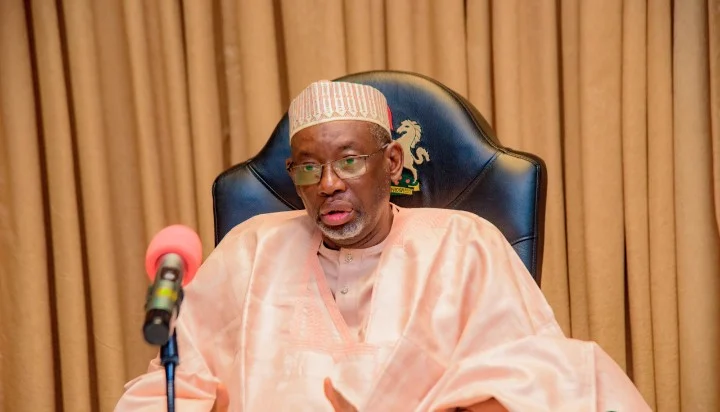
In a strategic move designed to consolidate the administrative machinery of Jigawa State, Governor Umar Namadi has officially approved the reinstatement of 28 former political aides alongside the appointment of eight new officials. This decision, aimed at revitalizing the state’s governance framework and ensuring the seamless delivery of democratic dividends, reflects the administration’s commitment to continuity and meritocracy. The announcement was formalized through a statement signed by the Secretary to the Jigawa State Government (SSG), Malam Bala Ibrahim, and disseminated to the public via the Public Relations Officer in the Office of the SSG, Ismaila Dutse, on Tuesday in Dutse, the state capital.
The governor’s directive encompasses a broad spectrum of portfolios, reinstating 14 Special Advisers, six Senior Special Assistants, and eight Special Assistants who had previously served the administration in various capacities. According to the SSG, these individuals were brought back into the fold to enhance the efficiency of the executive arm and to provide the necessary support for the implementation of the state’s development agenda. The reinstatement of these seasoned officials is seen as a move to maintain institutional memory while the new appointments are intended to inject fresh perspectives and technical expertise into the government.
Comprehensive List of Reinstated Special Advisers
The list of reinstated Special Advisers highlights the governor’s focus on critical sectors such as public health, youth engagement, and local government administration. Among the high-profile returns is Dr. Atiku Hafiz, who resumes his role as Special Adviser on Public Health. His reinstatement comes at a time when Jigawa State is intensifying efforts to improve primary healthcare services and reduce maternal and infant mortality rates. Similarly, Saleh Ahmed Birniwa has been returned to his post as Special Adviser on Youth Mobilization, a role crucial for bridging the gap between the government and the state’s large youth population.
Other notable reinstatements in the Special Adviser category include Abdurrahman Alkassim, who oversees Local Government Affairs I, and Haladu Usman—widely known by the moniker “Killer”—who returns to the Project Monitoring portfolio. The role of project monitoring is particularly significant under Governor Namadi’s administration, as the state seeks to ensure that all ongoing infrastructural projects are completed within stipulated timelines and meet quality standards.
The technology and innovation sector will continue to be guided by Dr. Habib Aminu Kani, while Khalid S. Ibrahim returns to manage Support Groups. The administration’s focus on social welfare and commerce is further reinforced by the reinstatement of Hudu Babangida (Senior Citizens), Safiyanu Abba Sankara (Health Matters), Haruna Mairiga (Social Security), and Ibrahim Hussaini Kadeta (Trade and Commerce).
Furthermore, the governor has brought back Ismaila Abdul’aziz to oversee Microfinance Banks, Adamu Idris Andaza for Social Protection, and Abdulwahab T. Sulaiman to support the State Emergency Management Agency (SEMA). Hassan Alhaji Musa, popularly referred to as “Shakara,” has been reinstated to manage Human Resources, a pivotal role in optimizing the state’s civil service and political workforce.
Senior Special Assistants and Grassroots Representation
To ensure that government policies resonate at the grassroots and within specialized sectors, Governor Namadi reinstated six Senior Special Assistants (SSAs). These roles are designed to facilitate communication between the executive and various interest groups. Hamza Gada Bala returns as SSA on Assembly Matters, acting as a vital link between the executive and the Jigawa State House of Assembly to ensure legislative harmony.
The industrial and labor relations sector will be handled by Husseini Umar BK, while Shu’aibu Inuwa Basirka resumes his duties as SSA on Nutrition. Nutrition has become a focal point of development in Northern Nigeria, and Basirka’s role is expected to align with national and international efforts to combat stunting and malnutrition among children in the state. Mansur Shehu has been returned to handle MSMEs and Financial Inclusion, a portfolio essential for the state’s economic diversification plans.
In terms of regional representation and specialized agencies, Abdurrashid Illah Ringim returns to the Jigawa Agricultural Supply Company (JASCO), and Aliyu Abubakar Aliyu has been reinstated as SSA on Youth Mobilization specifically for the Ringim Emirate. These appointments reflect a localized approach to governance, ensuring that the unique needs of different emirates are addressed.
Strengthening Monitoring and Community Engagement
The reinstatement of eight Special Assistants (SAs) underscores the governor’s emphasis on accountability and field-level monitoring. Siraj Muhammad will continue his work in Project Monitoring, while the health sector receives a boost with the return of Muhammad Fatihu Adamu, Aliyu Umar Abubakar, and Yusha’u Abdu as SAs on Health Monitoring. These officials are tasked with the oversight of hospitals and clinics across the state’s 27 local government areas.
Education and social order also feature prominently in the list. Salisu Yau returns as SA on Higher Education, while Haruna Mustapha Jahun resumes his role in the Due Process office to ensure transparency in government procurement. Tijjani Sayyadi has been reinstated to tackle the sensitive issues of Drug Abuse and Rape, and Garba A. Abdullahi returns as SA on Community Mobilization, tasked with fostering social cohesion and civic participation.
New Appointments and Technical Expertise
In addition to the reinstatements, Governor Namadi has appointed eight new aides, selecting individuals based on what the SSG described as "merit, competence, and personal integrity." These new appointments are strategically placed in roles that require high-level technical advice and diplomatic coordination.
Leading the new cohort is Prof. Muftahu Sa’adu Majia, who has been appointed as the Technical Adviser on Higher Education. Prof. Majia’s academic background is expected to provide the intellectual framework needed to reform the state’s tertiary institutions. Hajiya Salma Wakili joins the administration as Special Adviser on Entrepreneurship, reflecting the governor’s intent to empower women and small business owners.
Recognizing the importance of religious and intergovernmental coordination, Adamu Yusuf Garkuwa has been appointed as Special Adviser on Hajj Affairs, while Mubarak Aliyu takes on the role of Special Adviser on Intergovernmental Affairs. To drive economic growth, Musbahu Rabi’u Kaugama has been named Special Adviser on Investment Promotion, a role that will be central to attracting foreign and domestic capital to Jigawa’s agricultural and solid minerals sectors.
The list of new appointees is rounded out by Bala Sule Kila (Special Adviser on NGOs), Umar Sa’idu Janbola (Senior Special Assistant on Hajj Affairs), and Bayero Maifulani (Senior Special Assistant on Youth Mobilization).
Administrative Rationale and Expected Impact
The Secretary to the State Government, Malam Bala Ibrahim, emphasized that these appointments are not merely political rewards but are calculated steps toward a more robust administration. "The governor has approved these reinstatements and appointments to enhance governance in the state," Ibrahim stated. "We are confident that their wealth of knowledge and experience will significantly contribute to the enhancement of governance in Jigawa State."
The timing of these appointments is significant. Since assuming office, Governor Umar Namadi—often referred to as "Dan Modi"—has been working to implement his "12-Point Agenda," which prioritizes agriculture, health, education, and social security. By bringing back experienced hands and introducing new experts, the governor is effectively building a "hybrid team" of loyalists and technocrats.
Political analysts in the region suggest that this move serves two purposes. First, it ensures political stability by maintaining the support of key grassroots mobilizers and community leaders (as seen in the reinstatement of figures like "Killer" and "Shakara"). Second, it addresses the technical gaps in the administration by bringing in academics like Prof. Majia and investment experts like Kaugama.
Broader Implications for Jigawa State
Jigawa State, primarily an agrarian economy, faces several challenges, including high poverty rates and the recurring threat of seasonal flooding. The reinstatement of aides in sectors like SEMA (Social Emergency Management) and Social Protection indicates that the Namadi administration is preparing for a more proactive stance on disaster management and poverty alleviation.
Furthermore, the focus on "Health Monitoring" and "Nutrition" reflects a shift toward quality control in public service delivery. Rather than just building facilities, the administration appears focused on ensuring that these facilities function effectively for the average citizen.
The immediate effect of these appointments, as stated by the SSG, means that the new and returning aides are expected to hit the ground running. As the administration enters its next phase of project execution, the performance of these 36 individuals will likely be a benchmark for the overall success of the Namadi government.
In conclusion, the reinstatement and new appointments represent a strategic recalibration of the Jigawa State executive. By balancing political continuity with fresh expertise, Governor Umar Namadi is positioning his administration to tackle the state’s developmental hurdles with renewed vigor. The citizens of Jigawa will now be looking toward these officials to translate their "merit and competence" into tangible improvements in the quality of life across the state’s diverse communities.