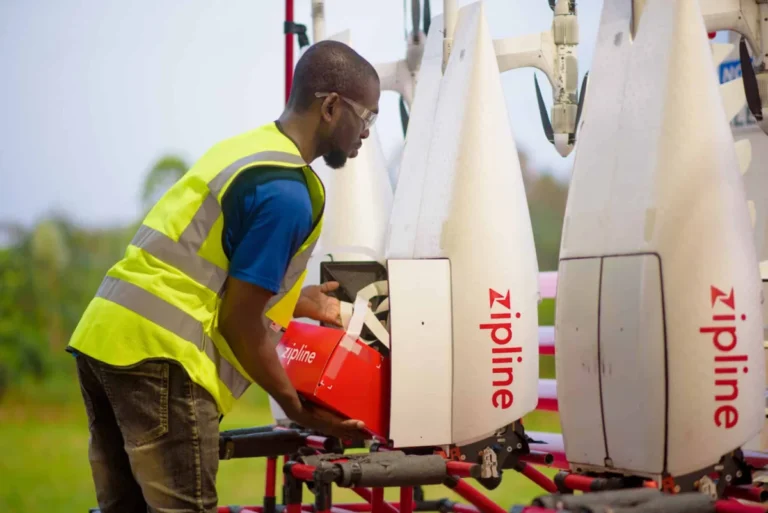
The autonomous logistics leader Zipline is embarking on a transformative expansion of its operations within Nigeria, transitioning from localized state-level partnerships to a comprehensive national delivery network. Headquartered in South San Francisco, California, the company has spent the last four years quietly integrating into the Nigerian healthcare fabric, delivering critical medical supplies across Kaduna, Cross River, and Bayelsa states. With the backing of a strategic grant from the United States government, Zipline is now poised to scale its infrastructure significantly, aiming to increase its reach from the current six million people to an estimated one hundred million Nigerians over the next two years.
This ambitious roadmap involves the construction of 12 additional distribution centers, which the company refers to as "nests." This expansion represents a shift in strategy, moving beyond the fragmented state-by-state engagement model toward a holistic integration with local, state, and federal healthcare stakeholders. By aligning with national initiatives such as the National Primary Health Care Development Agency (NPHCDA) and the Presidential Vaccine Value Chain initiative, Zipline intends to create a seamless, tech-driven logistics backbone for the most populous nation in Africa.
The Evolution of Zipline in Africa: From Rwanda to Nigeria
To understand the magnitude of the Nigerian expansion, one must look at Zipline’s foundational success in Rwanda. In 2016, the company launched the world’s first national drone delivery service in the East African nation, focusing initially on the delivery of blood products to remote clinics. Before Zipline, the "last-mile" delivery of blood in Rwanda could take several hours due to mountainous terrain and poor road infrastructure; with drones, that time was slashed to under 30 minutes.
Building on this success, Zipline entered the Nigerian market in 2022. While many observers associate the company primarily with its Rwandan origins, the Nigerian operation has quietly become one of the most sophisticated examples of drone logistics globally. Since its inception in Nigeria, Zipline has facilitated approximately 180,000 deliveries, transporting over one million medical product units and 6.1 million vaccine doses. These figures underscore the company’s role not just as a technology provider, but as a vital component of the public health infrastructure.
The impact of these operations is measurable. In the regions where Zipline operates, there has been a documented 30% increase in the treatment of malnourished children and a 42% reduction in "zero-dose" prevalence—a term used by health organizations to describe children who have not received any basic vaccinations. Nigeria currently faces a significant public health challenge, holding the highest number of zero-dose children globally, with over two million infants missing out on life-saving immunizations. The expansion of drone logistics is viewed by many experts as a critical tool in reversing these statistics.
Strategic Shift: Building a National Network
Anthonio Pinheiro, Zipline’s Country Director for Nigeria, emphasizes that the company’s new phase is defined by "national footprint" rather than isolated successes. The previous model relied heavily on individual agreements with state governments. While effective, this approach often faced limitations when navigating federal health mandates or inter-state logistics.
The new strategy seeks to bridge these gaps. By engaging with the federal government, Zipline aims to integrate its "nests" into the broader national healthcare strategy. The planned 12 new distribution centers will be strategically placed to ensure that no community is too remote for rapid medical intervention. The expansion is funded in part by a grant Zipline received from the U.S. Trade and Development Agency (USTDA) in 2023, specifically aimed at expanding its logistics services across the continent.
Under this funding model, the grant covers the capital-intensive aspects of the expansion, including engineering, construction, and the specialized equipment required for flight operations. In turn, the Nigerian government—at various levels—is expected to commit to the ongoing operating costs. This public-private partnership (PPP) model ensures that the infrastructure is built using international investment while remaining sustainable through local government commitment.
The Anatomy of a Zipline Nest: More Than Just Drones
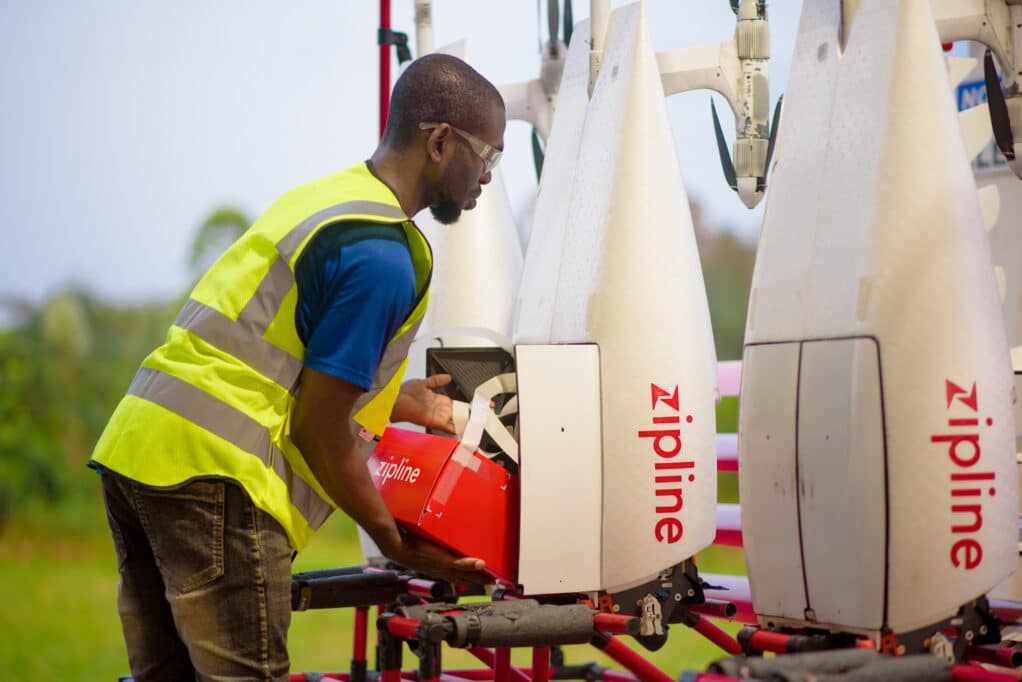
While the drones—often called "Zips"—are the most visible part of the operation, Pinheiro describes Zipline as an "AI robotic infrastructure company." The drone flight itself represents only about 20% of the company’s internal operations. The remaining 80% involves complex logistics, pharmaceutical management, and data science.
Each Zipline "nest" functions as a high-tech warehouse and a mini-airport. These facilities are equipped with:
- Cold Chain Storage: Essential for maintaining the efficacy of vaccines and blood products, which must be kept at precise temperatures.
- On-site Pharmacy: Every nest employs licensed pharmacists who verify orders, check dosages, and ensure the integrity of the medical supplies before they are dispatched.
- Flight Operations Center: A team of flight operators manages the autonomous fleet, performing pre-flight safety checks and monitoring the "SkyNet" tracking system.
The operational workflow is triggered when a healthcare worker at a remote clinic places an order via phone, email, or a dedicated WhatsApp channel. Once the order is verified by the on-site pharmacist, it is packaged in a specialized Zipline box equipped with a parachute. The drone is then launched via an electric catapult, reaching speeds of up to 100 kilometers per hour.
These drones have a round-trip range of approximately 125 kilometers and can carry a payload of up to three kilograms. Upon reaching the destination, the drone does not land. Instead, it descends to a low altitude and releases the package, which drifts safely to a designated drop zone via parachute. The drone then automatically returns to the nest, where it is recovered using a wire-capture system, fitted with a fresh battery, and prepared for its next mission.
Socio-Economic Impact and Future Applications
The expansion of Zipline’s operations is expected to have a ripple effect on the Nigerian economy and labor market. Currently, the Nigerian "nests" employ nearly 80 specialized staff members, including engineers, pharmacists, and logistics experts. As the network grows to include 12 additional centers, the company will need to recruit and train hundreds of local talents, contributing to the country’s burgeoning tech ecosystem.
Beyond the immediate healthcare benefits, Zipline is exploring the diversification of its delivery services. Pinheiro has indicated that while healthcare remains the primary focus, the infrastructure is capable of supporting other sectors. Potential future applications include:
- Animal Health: Delivering vaccines and medicines for livestock to support rural farmers.
- Agriculture: Transporting high-value seeds or soil testing kits to improve crop yields.
- Commercial Logistics: Facilitating the rapid delivery of e-commerce goods or critical industrial parts.
However, the transition to these commercial sectors will depend on market demand and regulatory approvals from the Nigerian Civil Aviation Authority (NCAA). The company remains focused on ensuring that its expansion does not disrupt its core mission of saving lives through healthcare logistics.
Challenges and the Path Forward
Despite the optimistic outlook, Zipline’s national expansion is not without its hurdles. Nigeria’s regulatory environment for Unmanned Aerial Vehicles (UAVs) is still evolving. Operating a national fleet of autonomous drones requires constant coordination with aviation authorities to ensure airspace safety, particularly in areas with heavy commercial air traffic.
Furthermore, the success of the national network depends on the "dormant" agencies Pinheiro mentioned—local health departments and primary healthcare centers that may lack the digital infrastructure to easily integrate with Zipline’s system. The company’s ability to "carry along" these stakeholders will be the true test of its expansion plan.
In 2025, Zipline plans to begin its rollout into five additional states as a precursor to the full national network. This phased approach allows the company to refine its logistics model in diverse geographical terrains, from the thick forests of the south to the arid regions of the north.
The significance of Zipline’s work in Nigeria extends beyond technology; it is a case study in how leapfrogging traditional infrastructure—such as roads that are often impassable during the rainy season or in conflict-affected zones—can lead to immediate improvements in human development indices. As Nigeria moves toward its goal of universal health coverage, the sight of a Zipline drone in the sky may soon become a common symbol of a modernized, resilient healthcare system reaching every corner of the federation.