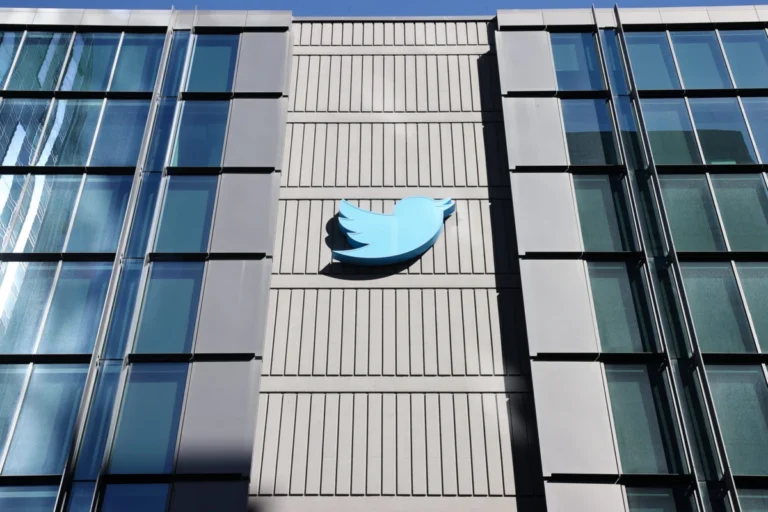
The landscape of global technology shifted fundamentally on April 12, 2021, when Jack Dorsey, co-founder and then-CEO of Twitter, announced that the social media giant was officially establishing its first African headquarters in Accra, Ghana. Hailed as a watershed moment for the continent’s burgeoning tech ecosystem, the move promised to bridge the gap between Silicon Valley and Africa’s rich, dynamic digital communities. However, barely a year and a half later, the dream of a localized African digital frontier was abruptly dismantled amidst the chaos of Elon Musk’s $44 billion acquisition of the platform. The rapid dissolution of Twitter’s Ghana office has since ignited a fierce debate over corporate accountability, international labor standards, and whether Big Tech’s engagement with the Global South amounts to genuine inclusion or little more than a fleeting public relations maneuver.
A Milestone for African Tech: The Promise of Twitter Ghana
When Twitter selected Ghana as its continental base in 2021, the decision was met with widespread celebration across West Africa and beyond. The choice of Accra was not arbitrary; Twitter’s leadership explicitly cited Ghana’s democratic credentials, its staunch defense of free speech, and its support for an open internet as foundational reasons for the move. Ghanaian President Nana Akufo-Addo immediately championed the partnership, calling it a vital catalyst for the nation’s rapidly developing technology sector.
For years, multinational technology corporations had viewed the African continent primarily as an emerging consumer market rather than a hub for core engineering, product development, and policy governance. Twitter’s initiative sought to change this paradigm. By hiring local talent to work remotely before transitioning to a physical workspace, the company aimed to integrate African perspectives directly into its global product safety, public policy, and partnership teams. Users across the continent celebrated the prospect of having content moderators and community managers who intimately understood the unique socio-political dynamics of African digital spaces. The initiative fostered a powerful sense of belonging and signaled to the broader tech industry that African talent was ready to compete and lead on the global stage.
The Leadership Transition: From Dorsey to Agrawal
The momentum established under Dorsey faced its first major administrative hurdle later that year. On November 29, 2021, just seven months after championing the expansion into Africa, Dorsey announced his resignation as CEO, leaving the company in the hands of Parag Agrawal, Twitter’s former Chief Technology Officer. Agrawal inherited a company striving to meet aggressive growth and revenue targets, a mission that required navigating complex internal pressures and an increasingly volatile macroeconomic climate.
Despite early optimism regarding Agrawal’s calm, people-oriented leadership style—highlighted by engagements with regional tech advocates like Microsoft project manager Ivy Barley—the new CEO was soon forced to make difficult operational decisions. In May 2022, Agrawal dismissed two high-ranking executives, General Manager of Revenue Bruce Falck and Consumer Product Leader Kayvon Beykpour, while simultaneously implementing a company-wide hiring freeze. Yet, these internal restructuring efforts were soon overshadowed by an external force that would fundamentally alter the trajectory of the entire organization.
The $44 Billion Saga: Musk’s Hostile Takeover
The most profound disruption to Twitter’s corporate strategy began to unfold in early 2022. On April 14, 2022, regulatory filings revealed that billionaire Tesla CEO Elon Musk had accumulated a significant stake in Twitter and made an unsolicited $44 billion offer to take the company private. What followed was a tumultuous months-long corporate drama characterized by public spats, allegations regarding automated bot accounts, and intense behind-the-scenes friction between Musk and Agrawal.
Court proceedings later revealed the depth of the hostility between the incoming owner and the sitting CEO. In private text messages, Agrawal cautioned Musk that his public criticisms of the platform were severely damaging internal employee morale and disrupting daily operations. Musk, dismissive of these concerns, questioned Agrawal’s productivity and ultimately backed out of the acquisition agreement in July 2022, citing a lack of transparency regarding fake accounts.
In response, Twitter filed a lawsuit in Delaware to compel Musk to complete the transaction at the agreed-upon price of $54.20 per share. Facing an impending trial, Musk abruptly reversed course in October 2022, finalizing the $44 billion acquisition and immediately assuming control of the platform as its self-described "Chief Twit."
The November Layoffs: Decimation of the Global Workforce
Musk’s ascension to leadership ushered in an era of unprecedented internal turmoil. Promising a drastic restructuring to curb operating losses that he claimed exceeded $4 million a day, Musk initiated a sweeping reduction in force that eliminated roughly 50% of Twitter’s 7,500-strong global workforce.
On November 4, 2022, employees across all time zones woke up to locked corporate email accounts and Slack channels. The notification of termination arrived via email with the subject line "Your Role at Twitter," delivered with a cold efficiency that left little room for dialogue. While Musk publicly defended the layoffs by stating that all departing employees were offered three months of severance pay—surpassing legal requirements—the reality on the ground for international workers proved to be starkly different.
The Collapse of Twitter Africa: A PR Gimmick or Structural Failure?
Nowhere was the disconnect between Silicon Valley’s executive decisions and international labor realities more apparent than at Twitter’s newly minted African headquarters in Accra. Just days before the mass layoffs, Senior Partner Manager Bernard Kafui Sokpe had taken to LinkedIn to celebrate a major milestone: after operating remotely for a year, the local team had finally convened in their newly opened physical office space in Ghana.
The celebration was heartbreakingly short-lived. Within seventy-two hours of the office opening, every single employee on the Africa team received termination notices. Unlike their American counterparts, reports from international journalists, including CNN’s Larry Madowo, indicated that the African staff did not receive the promised three months of severance, nor were they provided with clear, individualized off-boarding protocols. Instead, employees were reportedly notified via automated emails sent from the company’s Dublin office after their corporate credentials had already been revoked.
The manner in which the Ghana office was dismantled drew sharp rebukes from former high-ranking Twitter executives. Alphonzo Terrell, former Global Head of Social & Editorial, publicly challenged Jack Dorsey on social media, writing: "No severance for Ghanaian Tweeps? If this is true, this is TRASH. @jack you were a champion for @TwitterGhana and still have a significant interest in the company, MAKE THIS RIGHT." Former Global VP of Partners & Marketing Lara Cohen similarly questioned Dorsey’s commitment to the continent, highlighting a glaring disparity in how local labor was treated compared to domestic workers in the United States.
Broader Implications for Global Tech Expansion
The closure of Twitter’s Africa headquarters and the chaotic manner of its execution carry profound implications for the technology sector at large. For years, multinational corporations have sought to project an image of global inclusivity by establishing operational outposts in emerging markets across Africa, Latin America, and Southeast Asia. However, the sudden and unceremonious abandonment of the Accra office suggests that regional operations in the Global South remain vulnerable to the whims of corporate restructuring and cost-cutting measures dictated from Western headquarters.
Beyond labor rights, the dismantling of the Africa team raises critical questions regarding platform safety, content moderation, and algorithmic equity. With the removal of localized teams who possessed deep contextual insights into regional political landscapes, users in Africa and other developing regions are once again left without adequate representation or dedicated channels to address platform-specific challenges, such as misinformation, hate speech, and state-sponsored digital manipulation.
Conclusion: A Cautionary Tale for the Digital Age
The story of Twitter Ghana stands as a cautionary tale of corporate ambition colliding with economic volatility and ideological shifts at the top. What began as a celebrated bridge-building exercise between Silicon Valley and the African tech ecosystem ultimately devolved into a casualty of rapid, top-down corporate restructuring under new leadership. As multinational tech firms continue to navigate an uncertain economic climate, the legacy of Twitter’s brief venture into Africa will serve as a stark reminder that true global inclusion requires more than symbolic announcements and public relations milestones—it demands enduring institutional commitment, equitable labor practices, and genuine respect for the markets they pledge to serve.