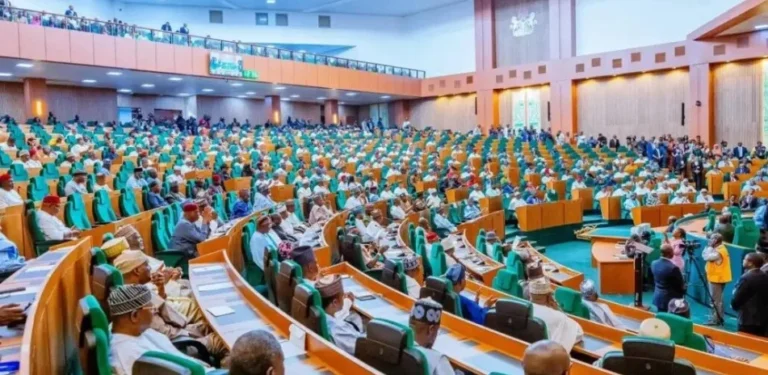
The drive to establish state police forces across Nigeria has significantly advanced this week, marked by the House of Representatives receiving a crucial report from its Special Ad Hoc Committee on Constitution Review. This report, presented by Deputy Speaker Benjamin Kalu, who also chairs the Constitution Review Committee, formally lays the groundwork for a comprehensive debate and clause-by-clause scrutiny of a proposed constitutional amendment aimed at decentralizing policing powers. The move comes as Nigeria grapples with persistent and evolving security challenges, highlighting the urgent need for a more responsive and localized approach to law enforcement.
The presentation of the report followed an intensive executive session on Monday, where members of the Constitution Review Committee worked to harmonize the House’s legislative stance with that of the Senate. This collaborative effort is a critical step in the ongoing, complex process of amending the 1999 Constitution of the Federal Republic of Nigeria (as amended). The proposed amendment specifically seeks to introduce a new legal framework to govern the establishment, regulation, and operational modalities of state-level police services, alongside addressing other pertinent matters related to this significant shift in Nigeria’s security architecture.
Deepening the Debate: The Case for State Police
The proposed constitutional amendment to allow for state police is arguably one of the most keenly anticipated and debated legislative proposals currently before the National Assembly. Its resurgence in prominence is directly linked to a chorus of persistent calls from various quarters, including state governors, seasoned security experts, and influential civil society organizations. These stakeholders have consistently advocated for the decentralization of policing, arguing that the current centralized federal model is increasingly insufficient to effectively combat the escalating and multifaceted security threats plaguing the nation.
Proponents of state police posit that such a system would revolutionize intelligence gathering, enabling a more granular and community-centric approach to security. They argue that local law enforcement agencies, being closer to the populace, would be better positioned to gather actionable intelligence on emerging threats and to foster stronger community relationships, crucial for crime prevention and resolution. Furthermore, the ability to deploy state-level forces could lead to swifter and more targeted responses to localized security challenges, ranging from farmer-herder conflicts and armed banditry to communal unrest and petty crime. This localized approach, they contend, would alleviate the burden on the overstretched federal police and enhance overall public safety.
However, the proposal is not without its detractors, who have voiced significant concerns. A primary worry revolves around the potential for abuse of power by state governors, who would assume significant control over their respective state police forces. Critics fear that these forces could be weaponized for political purposes, used to suppress dissent, or to gain an unfair advantage during elections. The question of financial sustainability for state police forces also looms large, with many questioning the capacity of less financially buoyant states to adequately fund and equip their own police services. Consequently, advocates for caution emphasize the absolute necessity of embedding robust constitutional safeguards and stringent oversight mechanisms within any legislation enabling state police to mitigate these risks and ensure accountability. The historical context of regional security forces in Nigeria, prior to the current federal structure, also informs these debates, with lessons learned from past challenges and successes being crucial considerations.
A Timeline of Consideration
The journey towards potentially establishing state police has been a long and winding one, punctuated by various legislative attempts and extensive public discourse.
- Early Advocacy: Decades ago, calls for regional or state policing began to emerge as a response to perceived inadequдетs of the federal police in addressing diverse local security needs across Nigeria’s vast and varied landscape.
- Constitutional Conferences: Various constitutional reform conferences, including those in the lead-up to and following the return to civilian rule in 1999, saw proposals for state police debated, though none were ultimately adopted into the amended constitution.
- Legislative Initiatives: Several National Assembly sessions have witnessed attempts to introduce bills or constitutional amendment proposals for state police. These efforts often face significant hurdles, including the requirement for a two-thirds majority vote in both legislative chambers and ratification by a majority of state Houses of Assembly.
- Recent Momentum: The current legislative push, culminating in the House’s receipt of the Special Ad Hoc Committee’s report, represents a significant step forward. The committee’s work in harmonizing positions with the Senate indicates a concerted effort to overcome previous stalemates.
- Next Steps: Following the formal laying of the report, the House is expected to schedule a date for a full debate and clause-by-clause consideration. This will be followed by a process that, if successful, will require concurrence from the Senate and subsequent ratification by at least 24 state Houses of Assembly.
Nigeria Police Trust Fund: Budgetary Approvals for Enhanced Capacity
In a parallel development that underscores the legislative focus on bolstering national security infrastructure, the House of Representatives also adopted the report of its Committee on Police Affairs, approving the budget estimates for the Nigeria Police Trust Fund for the fiscal years 2025 and 2026. This decision signals a commitment to providing sustained financial support for the modernization and operational enhancement of the Nigeria Police Force.
The report, presented by Abubakar Yelleman, Chairman of the House Committee on Police Affairs, was considered and adopted during a Committee of Supply session presided over by Deputy Speaker Benjamin Kalu.
2025 Budgetary Allocations:
For the 2025 fiscal year, the House has sanctioned a substantial budget of N170.11 billion for the Nigeria Police Trust Fund. A detailed breakdown reveals the strategic allocation of these funds:
- Capital Expenditure (NPTF Headquarters): N27.29 billion has been earmarked for capital projects at the headquarters of the Nigeria Police Trust Fund itself, likely focusing on administrative infrastructure and capacity building within the Fund’s operational framework.
- Capital Projects (Nigeria Police Force): A significant portion, N132.45 billion, is allocated for capital projects directly benefiting the Nigeria Police Force. This is expected to cover crucial areas such as the acquisition of modern policing equipment, vehicles, forensic tools, and upgrades to police stations and operational bases nationwide.
- Personnel Costs: N1.82 billion is designated for personnel-related expenses within the Trust Fund’s operations.
- Overhead Expenditure: N8.54 billion is allocated to cover the operational overheads of the Trust Fund, including administrative costs, logistics, and other essential running expenses.
2026 Budgetary Allocations:
Looking ahead to the 2026 fiscal year, lawmakers have approved an even larger allocation of N233.96 billion for the Nigeria Police Trust Fund. This increased funding reflects an anticipated expansion of needs and strategic investments in the police force’s capabilities. The proposed estimates for 2026 include:
- Capital Expenditure (NPTF Headquarters): N43.78 billion is allocated for capital projects at the Nigeria Police Trust Fund headquarters.
- Capital Projects (Nigeria Police Force): The lion’s share, N179.11 billion, is designated for capital projects for the Nigeria Police Force, indicating a continued emphasis on equipping and modernizing the force to meet contemporary security challenges.
- Personnel Costs: N1.86 billion is allocated for personnel-related expenses within the Trust Fund.
- Overhead Expenditure: N9.21 billion is set aside for the operational overheads of the Trust Fund.
These proposed budgets are slated to proceed to a third reading on Wednesday, a procedural step before their final passage by the House, after which they will be transmitted to the Senate for concurrence.
The Role and Funding of the Nigeria Police Trust Fund
Established under the Nigeria Police Trust Fund Act, the Fund plays a pivotal role in supplementing the annual budgetary allocations to the Nigeria Police Force. Its mandate is to provide additional, crucial financing for the training, equipping, logistics, and welfare of police officers. This supplementary funding is vital for addressing gaps that may not be fully covered by the regular national budget, thereby enhancing the overall operational effectiveness and morale of the police.
The Fund derives its financial resources from various statutory sources, including contributions from the Federation Account, grants from both domestic and international partners, and other approved donations. The increase in allocations for 2025 and 2026 signals a renewed strategic commitment by the Federal Government to bolstering internal security, modernizing policing infrastructure, and significantly improving the operational capacity of the Nigeria Police Force in an era of heightened security concerns.
Broader Implications and Future Outlook
The concurrent legislative actions on state police and the Nigeria Police Trust Fund highlight a dual approach to national security: decentralization and reinforcement. The debate around state police is intrinsically linked to the efficacy of the current policing model and the pressing need for more localized and responsive security mechanisms. The success of this constitutional amendment will depend on achieving broad consensus, addressing legitimate concerns about potential abuses, and establishing robust accountability frameworks.
Simultaneously, the substantial budgetary approvals for the Police Trust Fund demonstrate a commitment to strengthening the existing federal police force. This investment is critical for ensuring that the Nigeria Police Force remains capable of tackling complex security threats, even as the conversation around decentralization progresses. The interplay between these two legislative tracks will be closely watched as Nigeria navigates the intricate path towards a more secure and stable future, balancing the need for centralized national security with the demands for localized community policing and effective resource allocation. The coming weeks and months will be critical in shaping the future of policing in Nigeria, with the outcomes of these legislative processes holding profound implications for governance, security, and the rule of law across the federation.