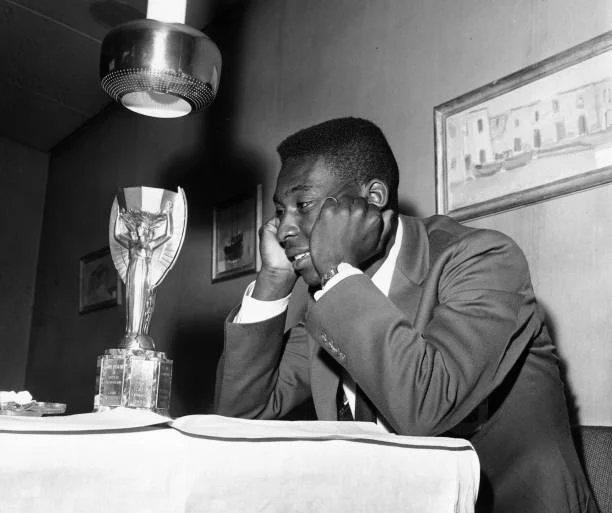
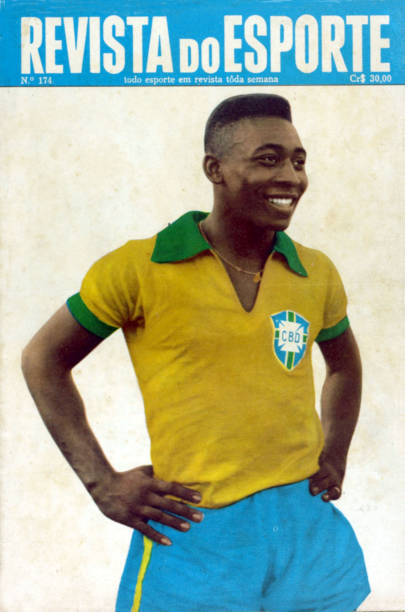
In a landmark event that resonated deeply within the annals of football history, the iconic number 10 jersey worn by Brazilian legend Pelé during the unforgettable 1958 FIFA World Cup final has commanded an extraordinary price of $4.9 million at a Sotheby’s auction in New York. The sale, which concluded in mid-July, occurred mere days before the anticipation surrounding the 2026 World Cup final between Argentina and Spain, lending a profound sense of temporal significance to the transaction. This remarkable sum elevates Pelé’s jersey to the second most expensive football shirt ever sold, a testament to the enduring global reverence for the player often hailed as the greatest footballer of all time.
The shirt itself carries the weight of an unparalleled moment in sporting history. In 1958, a precociously talented 17-year-old Pelé donned this very jersey as Brazil decisively defeated Sweden 5-2 in the final. His performance was nothing short of spectacular; he netted two goals, etching his name in the record books as the youngest player ever to score in a World Cup final. This extraordinary feat remains unbroken, a standing record that has endured for an astonishing 68 years. The sheer magnitude of this achievement, coupled with Pelé’s subsequent legendary career, has cemented the shirt’s status as a priceless artifact of sporting achievement.
The auction process itself underscored the immense demand for such a historically significant piece. The bidding saw robust competition, with the shirt attracting 10 bids from a pool of more than five distinct international buyers. This intense interest culminated in the final sale price, which far surpassed expectations and solidified the jersey’s place in auction history.
A Legacy Etched in Silk: The Journey of Pelé’s 1958 Jersey
The narrative of how this hallowed jersey has survived through the decades is as compelling as its on-field exploits. Following the triumphant 1958 final, Pelé, in a gesture of profound camaraderie and gratitude, presented the shirt to his roommate and teammate, Dida. This act of generosity ensured the jersey’s survival, passing from Pelé’s possession into the care of Dida’s family. For many years, the shirt was cherished by the family, eventually finding its way into a Brazilian museum, where it was preserved as a national treasure.
The shirt’s public auction journey began in 2004, when it was sold for approximately $105,000. The dramatic escalation in value from that sale to the recent $4.9 million underscores the increasing commercialization of sports memorabilia and the ever-growing appreciation for items directly associated with sporting icons. The nearly 47-fold increase in value over two decades highlights the unique allure and historical significance attached to artifacts that represent peak moments in human athletic endeavor.
Record-Breaking Sales: Pelé’s Jersey Joins Elite Company
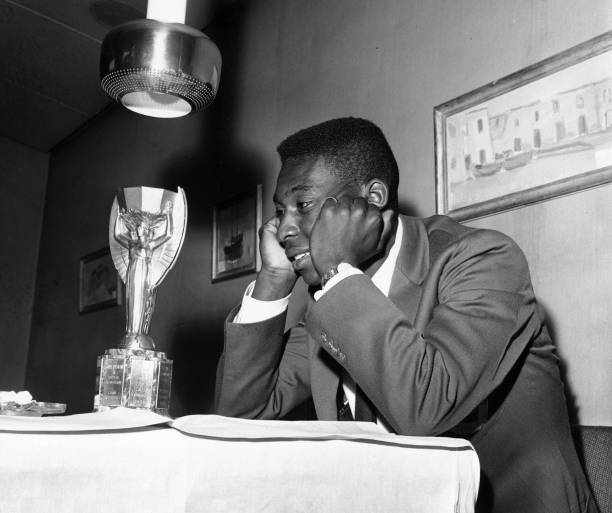
The $4.9 million price tag places Pelé’s 1958 World Cup final jersey second only to one other footballing garment: Diego Maradona’s infamous "Hand of God" jersey from the 1986 World Cup. That iconic shirt, synonymous with controversy and brilliance, fetched an astronomical $9.3 million in 2022, setting a benchmark for football memorabilia. The presence of both Pelé’s and Maradona’s jerseys at the top of this exclusive list speaks volumes about their respective legacies and the profound impact they had on the global football landscape.
The 1958 final was a pivotal moment not only for Pelé but for Brazilian football as a whole. It marked the nation’s first World Cup triumph, ushering in an era of unparalleled success and establishing Brazil as a dominant force in international football. Pelé, as the prodigious young star of that team, became the embodiment of Brazilian flair and skill, a symbol of national pride and global sporting excellence. His two goals in the final were not merely goals; they were the first brushstrokes on a canvas that would soon be filled with a career of unprecedented achievements.
Pelé’s Unrivaled World Cup Pedigree
Pelé’s impact on the World Cup stage extended far beyond the 1958 tournament. He went on to win the coveted trophy two more times, in 1962 and 1970. This remarkable feat makes him the only player in the history of the sport to have won the World Cup on three separate occasions, a distinction that solidifies his unique place in footballing history. His World Cup record alone is a testament to his longevity, his consistent brilliance, and his ability to perform on the grandest stage imaginable.
Throughout his illustrious career, Pelé scored an astonishing 757 official goals, a tally that places him among the most prolific scorers in football history. His skill, vision, and goal-scoring prowess captivated audiences worldwide, earning him widespread acclaim and the moniker "O Rei" (The King). His passing in December 2022 marked the end of an era, leaving behind a legacy that continues to inspire generations of footballers and fans alike.
The 2026 World Cup: A New Chapter in the Making
The timing of the auction, occurring just days before the 2026 World Cup final, served as a poignant reminder of the cyclical nature of sporting history and the pursuit of legendary status. As Lionel Messi, another player widely considered among the greatest of all time, leads Argentina against Spain at MetLife Stadium in the upcoming final, the specter of Pelé’s enduring legacy looms large. Messi, who has achieved unparalleled success at the club level and has finally claimed a World Cup title, continues to write his own chapter in football history, a chapter that may one day see his own iconic jerseys command similar attention and value.
The 2026 World Cup final promises to be a spectacle in itself, drawing global attention to the continued evolution of the sport and the emergence of new heroes. However, the sale of Pelé’s 1958 jersey serves as a powerful anchor to the past, a tangible link to a golden era of football and the unparalleled genius of its most celebrated figure. It is a reminder that while new legends may rise, the impact and legacy of true pioneers like Pelé remain indelible, etched not only in record books but also in the very fabric of sporting memorabilia that commands the highest reverence.
The Economics of Football Memorabilia: A Growing Market
The astronomical sums paid for football memorabilia are indicative of a burgeoning market that has witnessed significant growth in recent years. This trend is driven by several factors:
- Increasing Globalization of Sports: Football’s global reach means that its icons are recognized and admired across continents, creating a worldwide collector base.
- Nostalgia and Emotional Connection: For many fans, these items represent cherished memories of iconic moments and legendary players, offering a deep emotional connection to the sport’s history.
- Investment Potential: As demonstrated by the surge in value of Pelé’s and Maradona’s jerseys, rare sports memorabilia is increasingly viewed as a viable investment asset, attracting both passionate collectors and astute investors.
- The Rise of Online Marketplaces and Auctions: Platforms like Sotheby’s, Christie’s, and specialized sports memorabilia auction houses have made it easier for rare items to reach a global audience, driving up prices through competitive bidding.
- The "Icon Effect": The enduring fame and influence of players like Pelé and Maradona are directly correlated with the value of their associated artifacts. Their status as global superstars transcends the sport itself, elevating their personal belongings to the realm of cultural treasures.
The auction of Pelé’s 1958 World Cup final jersey is more than just a financial transaction; it is a cultural event that underscores the profound and lasting impact of sporting legends. It highlights the intersection of athletic achievement, historical significance, and the tangible artifacts that preserve these moments for posterity. As the world continues to celebrate the enduring magic of football, the story of this remarkable jersey serves as a powerful testament to the immortal legacy of Pelé and his indelible mark on the beautiful game. The $4.9 million price tag is not merely a number; it is a reflection of the immeasurable value placed on a symbol of sporting greatness that continues to inspire awe and admiration decades after its wearer graced the world’s biggest stage.