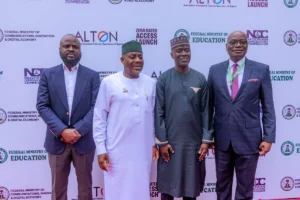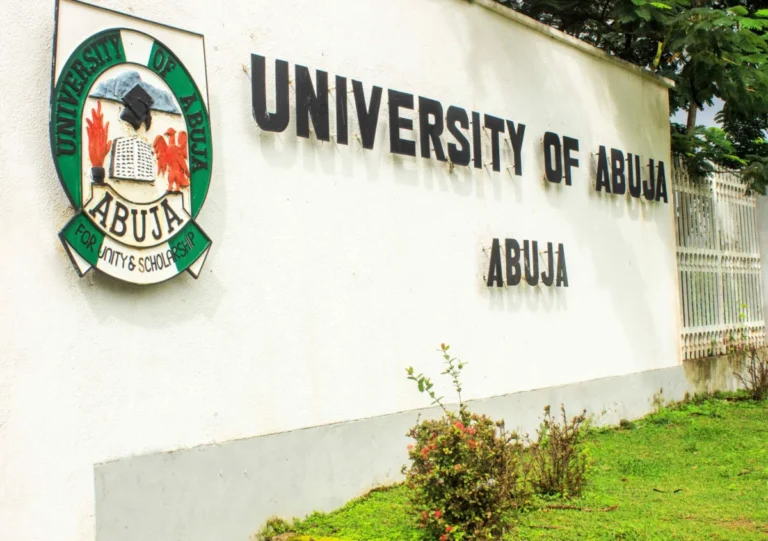
The House of Representatives Committee on University Education has formally directed the newly appointed Vice Chancellor of the University of Abuja, Professor Hakeem Fawehinmi, to launch a comprehensive investigation into allegations of a sophisticated accommodation racketeering syndicate operating within the institution. This directive was issued by the Chairperson of the Committee, Honourable Abubakar Fulata, during a high-profile oversight visit to the university’s campus in the Federal Capital Territory. The committee revealed that it had been inundated with petitions from students, parents, and concerned stakeholders regarding the exploitative practices of middlemen who allegedly hijack school-managed housing units to sub-let them at exorbitant rates, often reaching a 500 percent markup over the official university price.
The legislative intervention comes at a critical juncture for the University of Abuja, which has recently undergone significant leadership transitions. Honourable Fulata, representing the Birniwa/Guri/Kirikasamma Federal Constituency of Jigawa State, emphasized that the integrity of the university’s residential system is paramount to student welfare and academic performance. According to the committee, the practice of accommodation racketeering does not merely represent a financial burden but also constitutes a significant security risk. By pricing legitimate students out of on-campus housing, these middlemen force many, particularly female students, to seek alternative residency in unregulated and often dangerous off-campus environments, where they are more susceptible to crime and exploitation.
The Mechanics of Accommodation Racketeering and Its Socio-Economic Impact
Accommodation racketeering in Nigerian universities is a systemic issue driven by a massive disparity between student enrollment numbers and available bed spaces. At the University of Abuja, like many other federal institutions, the official cost of a bed space in a government-subsidized hostel is kept intentionally low to ensure affordability for students from diverse economic backgrounds. However, the committee’s findings suggest that a shadow market has emerged. Middlemen—who may include unscrupulous staff members, former students, or external speculators—acquire these rooms through influence or fraudulent applications and then "sell" the space to desperate students at rates far exceeding the university’s approved fees.
For instance, if a university-allocated bed space is officially priced at N20,000 per session, the racketeers have been reported to charge upwards of N120,000 or more. This 500 percent increase effectively excludes children of the poor from accessing on-campus benefits, defeating the purpose of federal subsidies. The House Committee noted that this practice fosters an environment of inequality and corruption that undermines the moral fabric of the academic community. Professor Fawehinmi, who recently assumed office, has been tasked with identifying the internal collaborators within the university’s student affairs and bursary departments who facilitate these illegal transfers.
Addressing Leadership Instability and Labor Relations
Beyond the immediate crisis of housing, the House Committee raised concerns regarding the historical leadership instability at the University of Abuja. Honourable Fulata issued a stern warning to the new Vice Chancellor, referencing a turbulent period in the institution’s recent history where four different vice chancellors were appointed in quick succession within a three-year span. This administrative volatility was cited as a primary cause for the breakdown in institutional discipline and the stalling of long-term development projects.
The committee urged Professor Fawehinmi to prioritize industrial harmony by fostering a collaborative relationship with the various staff unions, including the Academic Staff Union of Universities (ASUU), the Senior Staff Association of Nigerian Universities (SSANU), and the Non-Academic Staff Union of Allied and Education Institutions (NASU). Historically, the University of Abuja has been a flashpoint for industrial action, often stemming from disputes over internal promotions, earned allowances, and administrative transparency. The lawmakers emphasized that a stable academic calendar is essential for the university to regain its status as a premier institution in the nation’s capital.
Enforcing Federal Character in New Institutions
The oversight visit extended its scope to include the newly established Federal University of Technology, Abuja (FUTA). During an interface with the management of this nascent institution, the House Committee underscored the legal necessity of adhering to the Federal Character Principle as enshrined in the 1999 Constitution of the Federal Republic of Nigeria. This principle mandates that the composition of the workforce and the distribution of admissions in federal agencies and institutions must reflect the linguistic, ethnic, and geographic diversity of the country to prevent the dominance of any single group.
Honourable Fulata warned that the committee would not tolerate "localized" employment patterns, where the majority of staff members are recruited from the immediate catchment area at the expense of qualified candidates from other regions. As a federal institution located in the heart of the country, the committee expects the Federal University of Technology, Abuja, to serve as a model of national integration in its recruitment and student intake processes.
Accountability and Oversight in the North-Central Region
The legislative delegation also reviewed the administrative and financial health of other key institutions in the North-Central geopolitical zone, specifically the Federal University of Technology (FUT), Minna, and the Federal University of Education, Kontagora, both located in Niger State. These reviews are part of a broader effort by the 10th National Assembly to ensure that budgetary allocations to the education sector are utilized efficiently and that the institutions are meeting their mandates of research, teaching, and community service.

While the specifics of the discussions with FUT Minna and the Kontagora institution were kept in executive session, the committee hinted at a rigorous audit of capital projects. Many federal universities have struggled with abandoned projects funded by the Tertiary Education Trust Fund (TETFund) and the regular capital budget. The House Committee is seeking to bridge the gap between appropriation and execution, ensuring that taxpayers’ money translates into modern lecture theaters, laboratories, and, crucially, more student hostels to mitigate the very racketeering they are currently investigating.
A Formal Apology from Usman Danfodio University
In a significant moment of institutional accountability, the Vice Chancellor of Usman Danfodio University, Sokoto (UDUS), Professor Bashir Garba, appeared before the committee to offer a formal apology. The apology addressed his absence during the committee’s oversight visits over the previous three years. In the Nigerian legislative framework, the failure of a head of a government agency to appear before a committee is often viewed as an act of contempt and a lack of transparency.
Professor Garba, however, assured the lawmakers that his absence was not an attempt to evade scrutiny. He maintained that UDUS operates a transparent administrative system and that the institution has "nothing to hide" from the public or the legislature. He pledged a renewed commitment to working closely with the committee and other relevant stakeholders to elevate the institution’s academic standing. The committee accepted the apology but reiterated that physical presence during oversight functions is a constitutional requirement for all accounting officers of federal agencies.
Analysis of the Broader Implications for Nigerian Education
The House Committee’s actions signal a shift toward more aggressive legislative oversight in the tertiary education sector. For decades, Nigerian universities have operated with a degree of autonomy that, while necessary for academic freedom, has sometimes shielded administrative lapses and corrupt practices from public view. By focusing on issues like accommodation racketeering and federal character, the legislature is addressing the "ground-level" problems that directly affect the student experience.
The accommodation crisis, in particular, is a microcosm of the larger funding and infrastructure deficit in Nigeria. With a population of over 200 million and a median age of 18, the demand for higher education is skyrocketing. However, the expansion of student populations has not been matched by a corresponding investment in physical infrastructure. This gap creates a fertile ground for "campus sharks" and middlemen to exploit the system.

Furthermore, the committee’s emphasis on the Federal Character Principle highlights a growing concern over the "politicization" of university appointments. In many instances, local communities view federal universities as "their" property, leading to pressure on Vice Chancellors to hire locally regardless of merit. The House of Representatives’ stance serves as a reminder that these are national institutions funded by the federation, and their operations must reflect a national outlook.
Chronology of Recent Oversight Activities
- Late 2023 – Early 2024: The House Committee on University Education receives a surge in petitions regarding exorbitant "off-record" fees for hostels at the University of Abuja.
- July 2024: Professor Hakeem Fawehinmi is appointed as the new Vice Chancellor of the University of Abuja, following a period of administrative transition.
- October 2024: The House Committee commences its nationwide oversight tour, starting with institutions in the North-Central and North-West zones.
- November 2024: The committee visits the University of Abuja and the newly established Federal University of Technology, Abuja, issuing the directives for probes and adherence to federal character.
- Concurrent Session: Professor Bashir Garba of UDUS appears before the committee to reconcile past absences and commit to future transparency.
As the House Committee concludes this phase of its oversight, the focus now shifts to the management of these universities. The success of the probe into the University of Abuja’s housing crisis will depend on the willingness of the new administration to confront internal vested interests. For the Nigerian public, these legislative actions represent a glimmer of hope that the path toward a more transparent, equitable, and stable university system is being paved, one oversight visit at a time. The committee has indicated that it will return for a follow-up assessment in the coming quarter to monitor compliance with its directives.