Sweden has embarked on a bold strategic initiative, announcing plans Thursday to significantly bolster its domestic mining sector, particularly focusing on the extraction of rare earth elements. This move is a direct response to Europe’s profound dependence on China for these crucial minerals, which are indispensable for modern industries ranging from renewable energy and defense to electric vehicle manufacturing and advanced computing. The government in Stockholm views this as a matter of national security and economic resilience, aiming to position Sweden as a leading nation in the global supply chain for critical raw materials.
The impetus for this strategic pivot is clear: China currently dominates the global rare earth market, accounting for approximately 70% of mining and an even higher share of refining capacity. This near-monopoly presents a systemic risk to European industries, especially as the continent strives to achieve ambitious climate targets and enhance its strategic autonomy. Rare earth elements, a group of 17 chemically similar metallic elements, are vital components in a vast array of high-tech applications, including magnets in wind turbines and electric car motors, lasers, missile guidance systems, and advanced electronics. Securing a reliable and diversified supply chain for these materials has become a top priority for the European Union.
A New Era for Swedish Mining: Declaring National Security Interest
The Swedish government’s announcement signals a paradigm shift in its approach to mineral extraction. Energy Minister and Deputy Prime Minister Ebba Busch declared the mining of critical metals and rare earth minerals to be an explicit national security interest. This designation is designed to streamline and accelerate the often-lengthy permit processes for new extraction projects, thereby attracting much-needed investment into the sector. "Sweden must become a leading mining nation," Busch stated during her press conference, emphasizing the government’s intention to "streamline authorization procedures so decisions can be taken more quickly." She also highlighted the broader geopolitical implications, asserting that this initiative would "contribute significantly to both Sweden’s, the EU’s, and NATO’s defense capabilities," while labeling European industry’s reliance on China as a "systemic risk."
To further support this ambitious goal, the government is exploring the establishment of a state-owned investment company dedicated to the mining sector. Busch conceded that, "Today, to put it plainly, the government lacks concrete tools to wisely contribute to accelerating and attracting investments in crucial strategic projects." Such a company could provide capital, reduce risk for private investors, and strategically direct resources towards projects deemed vital for national and European interests. This proactive approach underscores the urgency felt by Stockholm to translate its vast mineral wealth into tangible industrial and strategic advantages.
Sweden’s Deep Roots in Mining and Modern Discoveries
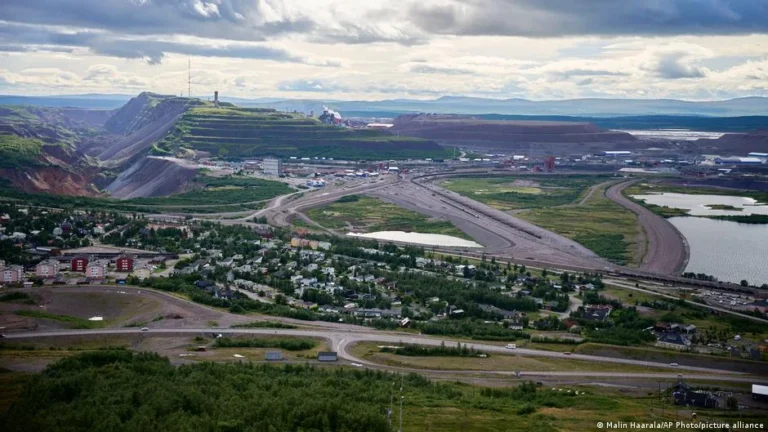
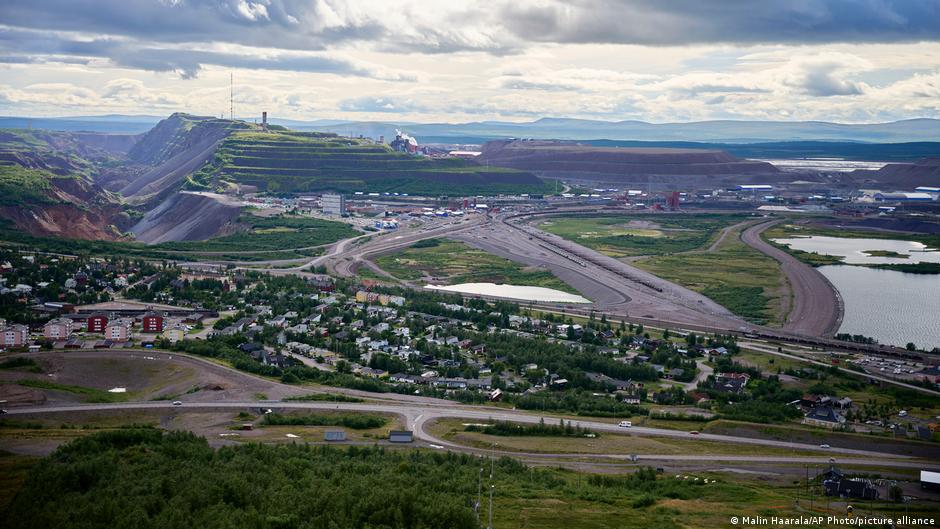
Sweden’s mining heritage stretches back over a millennium, making it a historical powerhouse in European mineral production. The legendary Falun copper mine, operational since the 10th century, once produced as much as two-thirds of Europe’s copper, leaving an indelible mark on the country’s culture, including the distinctive "Falun Red" paint. Today, the modern-day equivalent of Falun’s dominance is found in the Arctic Circle, specifically at the vast LKAB iron ore mine in Kiruna.
Sweden is estimated to hold approximately 60% of Europe’s known iron ore deposits. As of 2021, the country was responsible for about 90% of the continent’s iron ore extraction, with the Kiruna mine alone contributing roughly one-third of that output. The sheer scale of the Kiruna operation has become globally renowned, particularly for the extraordinary undertaking of relocating entire sections of the city, including its historic church, due to ground subsidence caused by the extensive underground mining. This monumental engineering feat, which saw Kiruna’s church moved on a specially designed trolley with 224 wheels, garnered international attention and underscored the profound impact of mining on the region.
More recently, Kiruna has gained even greater strategic importance with the discovery of significant rare earth deposits. In January 2023, LKAB announced the identification of considerable rare earth deposits at the Per Geijer site, adjacent to the existing iron ore mine. This discovery, estimated to contain around 1.2 billion tons of mineral resources, including an impressive 2.2 million tons of rare earth oxides, represents Europe’s largest known deposit of these critical minerals. The Per Geijer find has quickly become a flagship EU project, central to the bloc’s aspirations for reducing mineral reliance on China. However, the path from discovery to extraction is long and complex, with LKAB estimating that obtaining the necessary permits to excavate on Sami land could take up to a decade.
The Broader European Context: A Quest for Strategic Autonomy
Sweden’s intensified focus on rare earths aligns perfectly with the European Union’s broader strategy to secure its supply of critical raw materials. The EU’s Critical Raw Materials Act, proposed in March 2023, aims to ensure a secure and sustainable supply of raw materials essential for the bloc’s green and digital transitions. The Act sets ambitious targets: by 2030, the EU should be able to extract at least 10% of its annual consumption of strategic raw materials, process at least 40%, and recycle at least 15%. Currently, the EU imports the vast majority of its critical raw materials, with China being the dominant supplier for many, including rare earths.

The geopolitical landscape further underscores the urgency of these efforts. Recent events, such as China’s past restrictions on rare earth exports, have highlighted the vulnerability of global supply chains. For Europe, developing domestic sourcing capabilities is not just an economic imperative but also a strategic one, enhancing its independence and resilience in an increasingly volatile world. Four of the EU’s 47 strategic projects aimed at reducing mineral dependence on China are located in Sweden, signaling the country’s pivotal role in the continent’s long-term resource security.
Navigating Indigenous Rights and Environmental Stewardship
While the economic and strategic benefits of boosting mining are substantial, the expansion of extraction projects in Sweden presents significant challenges, particularly concerning indigenous rights and environmental protection. The majority of Sweden’s mines, over 90%, operate in the sparsely populated and resource-rich Norrland region, which is part of Sapmi, the traditional territory of the Sami people. The Sami, Europe’s only indigenous people, have historically relied on reindeer herding for their traditional way of life. They express deep concerns that the expansion of mining operations could irreversibly damage their grazing lands and cultural heritage, potentially spelling the end for their ancient traditions.
Energy Minister Ebba Busch acknowledged this sensitive issue, stating that the government’s new strategy would make it easier for the state to assign land for mining projects. This statement, while intended to facilitate development, immediately raises red flags for Sami representatives and environmental groups. Balancing the national strategic interest in critical raw materials with the rights and livelihoods of indigenous communities, and ensuring environmentally responsible mining practices, will be a delicate and often contentious process. The permit process for projects like Per Geijer will undoubtedly face intense scrutiny from these stakeholders, necessitating robust consultation and impact assessments. Sustainable mining practices, including responsible waste management, water usage, and biodiversity protection, will be paramount to gaining social license for these projects.
Economic, Geopolitical, and Environmental Implications
The implications of Sweden’s new mining strategy are far-reaching. Economically, a thriving critical minerals sector could attract significant investment, create jobs, and stimulate regional development, particularly in northern Sweden. It could also bolster Sweden’s position as a key industrial player within the EU and globally. For the EU, a successful Swedish initiative would be a crucial step towards diversifying its supply chains, reducing geopolitical risks, and supporting its green transition objectives.

Geopolitically, Sweden’s move sends a clear signal to Beijing regarding Europe’s determination to reduce its reliance on Chinese raw materials. This strategic decoupling, while gradual, could reshape global trade dynamics and resource politics. Furthermore, strengthening Europe’s domestic raw material supply enhances its defense capabilities, as many critical minerals are essential for advanced military technologies. The integration of this strategy with NATO’s collective defense objectives, as alluded to by Minister Busch, underscores the multi-faceted importance of secure resource access.
Environmentally, the expansion of mining, even for "green" technologies, carries inherent risks. Rare earth extraction can be energy-intensive and produce significant waste. Sweden’s reputation for high environmental standards will be tested as it balances extraction with protection. The challenge will be to develop and implement mining techniques that are as sustainable as possible, minimizing ecological footprints and ensuring long-term environmental stewardship. Innovation in areas like efficient processing, recycling, and responsible waste disposal will be critical.
Challenges and Outlook
Despite the ambitious vision, numerous challenges lie ahead. The technical complexities of rare earth extraction and processing are immense, requiring significant technological investment and expertise. Furthermore, securing the necessary capital and skilled workforce will be crucial. The prolonged permit processes, even with proposed accelerations, remain a significant hurdle, especially when navigating complex land use rights and environmental regulations.
The engagement and cooperation of the Sami people will be essential for the long-term viability and social acceptance of these projects. Constructive dialogue, equitable benefit-sharing, and robust mechanisms for protecting indigenous rights will be key to avoiding prolonged conflicts and legal battles that could delay or halt projects.
Ultimately, Sweden’s declaration marks a pivotal moment in its industrial policy and Europe’s broader quest for strategic autonomy. By leveraging its vast mineral resources and rich mining heritage, Sweden aims to transform from a significant iron ore producer into a diversified leader in critical raw materials. The success of this strategy will not only determine Sweden’s future economic trajectory but also play a vital role in shaping Europe’s resilience, security, and ability to lead the global green transition. The world will be watching as Sweden endeavors to forge a new path in the critical minerals landscape, balancing economic ambition with environmental responsibility and social equity.