South Africa has formally dismissed as "opportunistic" a petition lodged with the International Criminal Court (ICC) by two Ghanaian nationals, which sought an investigation into the persistent and often violent attacks targeting foreign migrants within the country’s borders. Pretoria maintains that its robust domestic legal system is fully capable of addressing such cases, thereby negating the need for international intervention. This assertion comes amid renewed international scrutiny and internal debates over the nation’s handling of recurring xenophobic violence.
The Heart of the Matter: South Africa’s Stance
The petition, submitted to the Hague-based court, argued that the systemic nature and severity of the violence against foreign nationals could amount to "crimes against humanity," a grave charge under international law. It further accused the South African government of a consistent failure to prevent these attacks and to adequately punish those responsible, implying a level of state inaction that warrants ICC attention.
However, the Department of International Relations and Cooperation (DIRCO) swiftly countered, describing the application as ill-conceived and "opportunistic." Chrispin Phiri, spokesperson for DIRCO, articulated the government’s official position: "South Africa notes this filing fails to satisfy the statutory legal triggers and jurisdictional requirements necessary for action by the court. South Africa maintains full confidence in its domestic legal framework." This statement underscores Pretoria’s adherence to the principle of complementarity, a cornerstone of the ICC’s founding Rome Statute, which dictates that the Court can only exercise jurisdiction when national judicial systems are genuinely unwilling or unable to investigate and prosecute international crimes.
Beyond the legalistic dismissal, South Africa has consistently rejected accusations of xenophobia as a national policy or widespread sentiment, instead framing the incidents as criminal acts perpetrated by individuals, often driven by broader socio-economic grievances rather than state-sponsored hatred. The government has reaffirmed its commitment to the rule of law and the protection of all residents, irrespective of nationality. In a move to address the broader regional implications, DIRCO has also reiterated South Africa’s dedication to "open, constructive, and action-oriented dialogue" with regional blocs such as the Economic Community of West African States (Ecowas), particularly on critical issues like regional stability and migration management. President Cyril Ramaphosa has repeatedly acknowledged public concerns about migration but has unequivocally condemned attacks against migrants, warning citizens against taking the law into their own hands.
A Deep-Rooted Problem: Context of Xenophobia in South Africa
The petition to the ICC is not an isolated event but rather a symptom of a deeply entrenched and frequently violent social phenomenon in post-apartheid South Africa. The nation, often seen as an economic beacon in Africa, has become a destination for migrants and asylum seekers from poorer neighbouring countries and beyond, including Zimbabwe, Mozambique, Lesotho, Malawi, Nigeria, and Ghana. This influx, coupled with South Africa’s high rates of unemployment, poverty, and profound socio-economic inequality, has regrettably fostered an environment where foreign nationals are often scapegoated for domestic challenges.
The history of xenophobic violence in South Africa is tragically long and complex. While sporadic incidents occurred throughout the early 2000s, the issue erupted onto the international stage in May 2008 when widespread, coordinated attacks swept through townships across the country. Over 60 people were killed, thousands displaced, and countless foreign-owned businesses looted or destroyed. The scale of this violence shocked the world and drew widespread condemnation from the African Union (AU), the United Nations, and various human rights organizations.
Despite government efforts and public awareness campaigns, the violence resurfaced in April 2015, primarily in KwaZulu-Natal and Gauteng provinces, leading to more deaths and displacement. Again, foreign-owned shops and informal traders bore the brunt of the attacks. A subsequent wave of violence in September 2019 saw similar patterns of destruction and fatalities, further straining South Africa’s diplomatic relations within the continent. These incidents often target individuals perceived as "outsiders," regardless of their legal status, leading to arbitrary attacks and widespread fear among migrant communities.
More recently, movements like "Operation Dudula" have gained traction, openly advocating for the removal of undocumented foreign nationals and often engaging in vigilantism. While claiming to act in the interest of South African citizens, these groups have been widely criticized for inciting xenophobia and contributing to the climate of fear that pervades migrant communities. The government has walked a tightrope, acknowledging citizens’ legitimate concerns about immigration management while simultaneously condemning the violence and illegal actions taken against foreign nationals.
The Petitioners’ Case: Seeking International Justice
The Ghanaian nationals who filed the petition argue that the South African government’s response to these recurrent attacks has been insufficient, creating an environment where perpetrators act with impunity. They contend that the sheer scale, systematic nature, and repeated targeting of specific groups of people (foreign nationals) elevate these domestic crimes to the level of "crimes against humanity," which are among the most serious offences under international law. Such crimes include murder, extermination, enslavement, deportation or forcible transfer of population, imprisonment, torture, rape, persecution, and other inhumane acts, when committed as part of a widespread or systematic attack directed against any civilian population, with knowledge of the attack.
For the ICC to take on such a case, petitioners typically need to demonstrate that national authorities are either unwilling or genuinely unable to carry out investigations or prosecutions. This "complementarity" principle is crucial. The Ghanaian petitioners are likely attempting to prove that despite arrests and condemnations, the root causes of the violence have not been addressed, and accountability for the most egregious acts remains elusive, thereby indicating a systemic failure of the domestic legal framework to adequately protect victims and deter future attacks.
International Reactions and Domestic Condemnation
The continued violence against foreign nationals has consistently drawn significant criticism from across Africa and beyond. Several African governments, including Nigeria, Zimbabwe, and Ghana, have publicly condemned the attacks and expressed deep concern over the safety of their citizens residing in South Africa. The Economic Community of West African States (Ecowas), a powerful regional bloc, has also been vocal in its condemnation, urging Pretoria to take decisive action to protect migrants and hold perpetrators accountable. These condemnations have at times led to diplomatic tensions and calls for boycotts of South African businesses in other African nations, highlighting the reputational and economic cost of the violence.
Within South Africa, President Cyril Ramaphosa has been unwavering in his condemnation of the attacks. He has consistently called for adherence to the rule of law, emphasizing that no individual or group has the right to take the law into their own hands. His administration has acknowledged the complex issue of migration and has called for broader African Union discussions on the root causes of migration across the continent, advocating for regional solutions to what is inherently a regional challenge. Human rights organizations, both local and international, have also played a crucial role, documenting abuses, advocating for victims, and pushing for greater accountability from the South African state. They have often called for independent investigations and comprehensive strategies to combat xenophobia, stressing that the government’s response has often been reactive rather than preventative.
The Exodus: Data on Repatriation
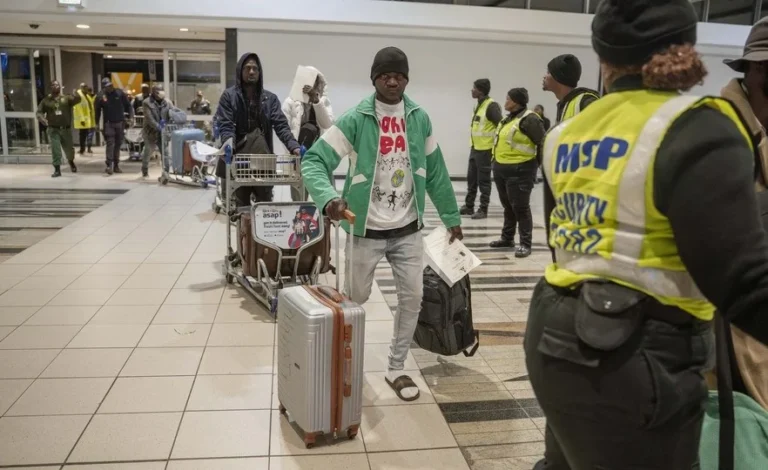
The ongoing instability and fear generated by these attacks have had tangible consequences, leading to a significant exodus of foreign nationals from South Africa. According to recent figures compiled from repatriating governments, an estimated more than 160,000 foreign nationals have left South Africa in the past two months alone. This mass departure underscores the severity of the crisis and the profound sense of insecurity felt by migrant communities.
Countries such as Zimbabwe, Malawi, Mozambique, Nigeria, and Ghana have been actively organizing return transportation for their citizens, a clear indication of the scale of the problem and the direct impact on their populations. This repatriation effort represents not only a humanitarian response but also a significant economic and social disruption for both South Africa and the sending countries. For South Africa, it means a loss of skills, labor, and entrepreneurial spirit that foreign nationals often contribute. For the returning migrants, it often means abandoning livelihoods, businesses, and homes, returning to countries that may not have the capacity to reabsorb them effectively.
The Legal Framework and ICC’s Jurisdiction
The International Criminal Court, established by the Rome Statute in 1998, has jurisdiction over the most serious crimes of concern to the international community as a whole: genocide, crimes against humanity, war crimes, and the crime of aggression. A critical aspect of its operation is the principle of complementarity, which dictates that the ICC will only intervene when national courts are unwilling or genuinely unable to prosecute these crimes.
South Africa’s argument that the petition "fails to satisfy the statutory legal triggers and jurisdictional requirements" directly invokes this principle. Pretoria is asserting that its judiciary is both willing and able to investigate and prosecute incidents of violence against foreign nationals. This involves demonstrating that the country has undertaken genuine investigations and prosecutions, that its legal system is functioning, and that there is no deliberate policy of inaction or cover-up.
For the ICC to proceed, the petitioners would need to convince the Court’s Prosecutor that the South African state’s response has been so deficient—either through systemic unwillingness (e.g., deliberate inaction, bias, or political interference) or inability (e.g., collapsed justice system, lack of resources, or technical capacity)—that it effectively amounts to a failure to meet its primary responsibility to prosecute. Given South Africa’s relatively well-developed legal system and its history of democratic governance, proving "unwillingness or inability" to the ICC’s satisfaction presents a significant legal hurdle for the petitioners. However, the recurring nature of the violence and the perceived lack of high-level accountability for its instigators could form the basis of such an argument.
Broader Implications: Diplomacy, Economy, and Human Rights
The dismissal of the ICC petition, while legally sound from South Africa’s perspective, carries significant broader implications. Diplomatically, the persistent issue of xenophobic violence continues to strain South Africa’s relations with fellow African nations. As a regional hegemon and a nation that champions human rights on the international stage, South Africa faces a credibility challenge when its own residents face such systematic threats. The perception of inadequate protection for foreign nationals can undermine its leadership role within the African Union and other continental bodies.
Economically, the violence and subsequent mass repatriations have tangible costs. Foreign direct investment could be deterred by perceptions of instability and insecurity. Trade relations within Africa could be impacted by calls for boycotts or a general cooling of diplomatic ties. Furthermore, the departure of thousands of migrants, many of whom are engaged in informal sector trade, skilled labor, or entrepreneurship, represents a loss of economic contribution to South Africa’s already struggling economy.
From a human rights perspective, the core issue remains the protection of all individuals within South Africa’s borders. Regardless of the ICC’s decision, the government is ethically and constitutionally bound to ensure the safety and dignity of all residents. The ongoing violence highlights a failure in social cohesion and a challenge to the foundational principles of equality and non-discrimination enshrined in the South African constitution.
Looking Ahead: Paths to Resolution
The path forward for South Africa involves a multi-faceted approach. Domestically, there is an urgent need to strengthen law enforcement efforts to prevent and prosecute xenophobic attacks, ensuring that perpetrators are brought to justice. This includes tackling incitement to violence and addressing the underlying socio-economic grievances that are often exploited to fuel anti-immigrant sentiment. Education and public awareness campaigns are also vital to combat xenophobia at a societal level.
Regionally, South Africa’s call for broader AU discussions on migration is crucial. Addressing the root causes of migration—such as poverty, conflict, and political instability in sending countries—requires collaborative efforts. A comprehensive regional migration policy, including mechanisms for legal migration, integration, and protection of migrant rights, is essential.
While the ICC petition may not proceed, it serves as a potent reminder of the international community’s concern and the ongoing human rights challenges within South Africa. The nation’s ability to demonstrate genuine commitment to protecting foreign nationals and fostering a truly inclusive society will ultimately define its standing both at home and abroad. The confidence expressed in its domestic legal framework must be consistently matched by visible and effective action on the ground.