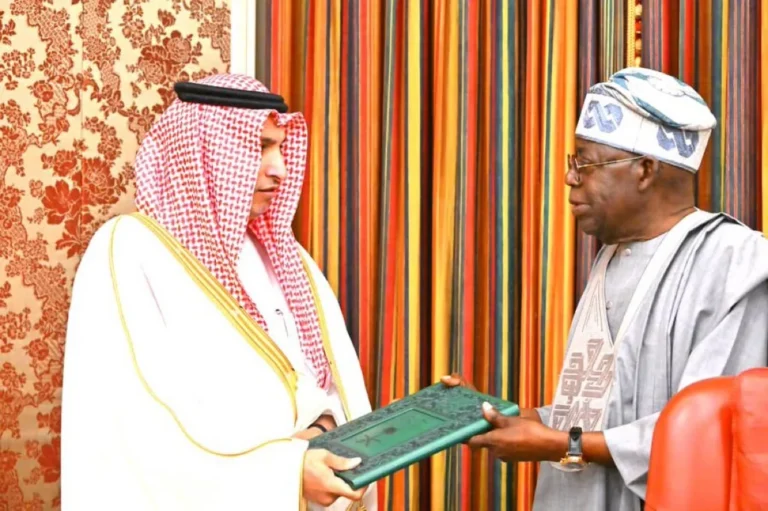
The invitation, a direct overture from the Saudi Crown Prince and Prime Minister, was formally delivered to President Tinubu on Friday by the Saudi Arabian Ambassador to Nigeria, Yousef Mohammed Albalawi, during an audience at the Presidential Villa in Abuja. This high-level invitation underscores the growing importance of Nigeria as a key player in the global investment landscape and Saudi Arabia’s strategic interest in fostering robust partnerships with leading African economies. The Future Investment Initiative, often dubbed the "Davos in the Desert," is Saudi Arabia’s flagship global investment conference, renowned for convening an elite gathering of world leaders, prominent investors, business executives, innovators, and policymakers to deliberate on critical global economic trends, technological advancements, sustainability initiatives, and burgeoning investment opportunities.
A Strategic Invitation and Presidential Acclaim
Ambassador Albalawi conveyed the esteemed invitation on behalf of the Saudi Crown Prince, formally inviting President Tinubu to participate in the landmark investment forum. This gesture reflects Saudi Arabia’s recognition of President Tinubu’s leadership and Nigeria’s significant economic potential under his administration. The meeting at the Presidential Villa served as a platform not only for the delivery of the invitation but also for reaffirming the strong and cordial bilateral relations that exist between the two nations.
President Tinubu, in his response, expressed profound appreciation to the Saudi leadership for the invitation. He lauded the enduring and robust relationship between Nigeria and the Kingdom of Saudi Arabia, noting that cooperation between the two nations continues to expand across a myriad of sectors. His remarks underscored a shared commitment to strengthening these ties, particularly in areas that promise mutual economic growth and development. The President reiterated his "sincere thanks and appreciation for the invitation" and specifically praised "the strong relations between the Kingdom of Saudi Arabia and the Federal Republic of Nigeria across various fields," signaling a readiness to engage at the highest levels of global economic discourse. This diplomatic exchange highlights a strategic alignment of interests, with both nations seeking to leverage international platforms for economic advancement and partnership building.
Understanding the Future Investment Initiative (FII)
The Future Investment Initiative is more than just a conference; it is a global economic powerhouse. Organized annually by the Future Investment Initiative Institute, a non-profit foundation headquartered in Riyadh, FII has evolved into a pivotal forum since its inception. It provides an unparalleled platform for dialogue and collaboration on the most pressing issues shaping the global economy, from the rapid pace of digital transformation and the imperative of energy transition to the complexities of climate resilience and the promise of healthcare innovation. The forum’s agenda consistently covers a broad spectrum of topics, including infrastructure development, advanced manufacturing, and strategies for mobilizing global capital to drive sustainable economic growth.
Launched in 2017, the FII was conceived as a cornerstone of Saudi Arabia’s ambitious Vision 2030 economic diversification program. Vision 2030 aims to transform the Saudi economy from its traditional reliance on oil to a diversified, knowledge-based economy driven by investment and innovation. The FII plays a crucial role in this transformation by showcasing Saudi Arabia’s investment potential, attracting foreign direct investment (FDI), and fostering international partnerships. Over the years, the forum has successfully attracted a distinguished array of attendees, including heads of state, leaders of sovereign wealth funds, CEOs of multinational corporations, pioneering entrepreneurs, and representatives from leading financial institutions worldwide. Its reputation as a nexus for global capital and cutting-edge ideas has solidified its status as a must-attend event for those at the forefront of global economic development.
The upcoming 10th edition in October 2026 marks a significant milestone, celebrating a decade since the initiative’s launch. This particular summit is expected to place a strong emphasis on contemporary global challenges and opportunities. Key thematic areas for discussion will include the transformative power of artificial intelligence, the acceleration of digital transformation across industries, the critical path towards energy transition, building resilience against climate change impacts, advancements in healthcare innovation, strategic infrastructure development, the future of advanced manufacturing, and comprehensive strategies for mobilizing global capital to achieve sustainable economic growth. These topics are not only central to Saudi Arabia’s future but also resonate deeply with Nigeria’s own developmental aspirations.
Saudi Arabia’s Vision 2030: A Blueprint for Diversification
To fully appreciate the significance of the FII, one must understand the context of Saudi Arabia’s Vision 2030. Unveiled in 2016 by Crown Prince Mohammed bin Salman, this comprehensive blueprint aims to reduce the Kingdom’s dependence on oil, diversify its economy, and develop public service sectors such as health, education, infrastructure, recreation, and tourism. The vision includes targets for increasing non-oil revenue, boosting the private sector’s contribution to GDP, and attracting significant foreign investment.
The Public Investment Fund (PIF), Saudi Arabia’s sovereign wealth fund, plays a central role in executing Vision 2030. With assets estimated to be over $900 billion, the PIF is one of the largest sovereign wealth funds in the world and is a major driver of investment, both domestically and internationally. The FII serves as a critical platform for the PIF to identify and forge partnerships with global investors, showcase its own investment projects (such as NEOM, a futuristic mega-city), and attract capital into the Kingdom’s nascent and diversifying sectors. By hosting FII, Saudi Arabia positions itself as a global investment hub, fostering an environment ripe for innovation and collaboration. The consistent engagement of global leaders and business magnates at FII underscores its role as a powerful engine for realizing Vision 2030’s ambitious goals.
Nigeria-Saudi Arabia Bilateral Relations: A Foundation for Growth
The invitation to President Tinubu is a testament to the robust and multifaceted relationship between Nigeria and Saudi Arabia. Historically, ties have been anchored by strong diplomatic relations, mutual respect, and shared cultural and religious values, particularly through the annual Hajj pilgrimage which sees hundreds of thousands of Nigerians travel to the Kingdom. Beyond these traditional links, recent years have witnessed a deliberate expansion of cooperation into vital economic and strategic sectors.

Both nations are significant oil producers within OPEC, sharing common interests in global energy markets and stability. However, the scope of their engagement has broadened considerably. There is increasing collaboration in areas such as trade, infrastructure development, agriculture, education, and security. Saudi investments, often channeled through the PIF, have been actively exploring opportunities in emerging markets, and Nigeria, with its large population, vast natural resources, and growing economy, presents a compelling prospect. President Tinubu’s administration has made attracting foreign investment a cornerstone of its economic policy, making platforms like FII particularly attractive. This invitation, therefore, is not merely a courtesy but a strategic move to foster deeper economic partnerships that could unlock substantial benefits for both countries.
Implications for Nigeria: Unlocking Investment and Global Standing
President Tinubu’s attendance at the 10th FII carries significant implications for Nigeria, aligning perfectly with his administration’s economic agenda focused on revitalizing the economy, attracting foreign direct investment, and creating jobs.
Firstly, the FII offers an unparalleled opportunity for Nigeria to showcase its vast economic potential and the ongoing reforms aimed at improving the ease of doing business. Nigeria, with its large domestic market, youthful population, and abundant natural resources beyond oil (including solid minerals, agricultural land, and a burgeoning digital economy), is ripe for investment. President Tinubu’s presence will allow him to directly engage with global investors, sovereign wealth funds, and multinational corporations, presenting Nigeria as an attractive investment destination. This direct engagement can help dispel misconceptions and highlight the government’s commitment to creating a stable and predictable investment climate.
Secondly, participating in FII provides a crucial platform for networking and forging strategic partnerships. Nigerian delegates, led by the President, will have the opportunity to interact with an exclusive cohort of global business leaders, technology innovators, and policymakers. These interactions can lead to concrete investment deals, technology transfer agreements, and knowledge-sharing initiatives that are vital for Nigeria’s industrialization and economic diversification efforts. For instance, discussions around energy transition can pave the way for investments in Nigeria’s renewable energy sector, while conversations on digital transformation can attract capital into its rapidly growing tech ecosystem.
Thirdly, the invitation and potential attendance elevate Nigeria’s international standing and diplomatic engagement. Being seen alongside other global economic powerhouses and engaging in discussions on future-oriented topics reinforces Nigeria’s position as a key player in Africa and on the world stage. It signals to the international community that Nigeria is open for business and is actively seeking to integrate further into the global economy, moving beyond traditional resource-based partnerships.
Fourthly, aligning with the FII’s thematic focus areas, such as artificial intelligence, digital transformation, and climate resilience, offers Nigeria a chance to attract investments into critical sectors. For example, Nigeria’s burgeoning tech startup scene could benefit immensely from Saudi venture capital, while its efforts to address climate change and transition to cleaner energy sources could attract green investments. The forum’s focus on infrastructure development also resonates deeply with Nigeria’s massive infrastructure deficit, potentially drawing in funding for critical projects in transport, power, and digital connectivity.
A Broader Global Economic Context
The 10th FII takes place against a backdrop of complex global economic dynamics. Geopolitical shifts, inflationary pressures, supply chain disruptions, and the accelerating pace of technological change are reshaping economies worldwide. In this environment, forums like FII become even more critical, serving as spaces for leaders to collectively strategize and identify pathways for sustained growth and stability. The emphasis on themes such as energy transition and climate resilience reflects a global consensus on the urgent need to address environmental challenges while ensuring economic viability. Similarly, the focus on AI and digital transformation highlights the imperative for nations to embrace technological advancements to remain competitive and foster innovation.
For Nigeria, engaging in these discussions is not just about attracting capital but also about learning from global best practices, adopting innovative solutions, and integrating into global value chains. It provides an opportunity to position itself strategically within a rapidly evolving global economic order, ensuring that its development trajectory is aligned with future trends and opportunities.
Chronology of the Future Investment Initiative
- 2016: Saudi Arabia unveils Vision 2030, a long-term economic diversification plan.
- 2017: The inaugural Future Investment Initiative (FII) is launched in Riyadh as a key pillar of Vision 2030, quickly earning the moniker "Davos in the Desert."
- Subsequent Years (2018-2025): FII hosts annual summits, steadily growing in influence and attracting an increasing number of heads of state, global CEOs, and financial leaders, discussing a range of topics from technology and energy to sustainability and geopolitics.
- Friday (Specific date of invitation delivery): The Saudi Arabian Ambassador to Nigeria, Yousef Mohammed Albalawi, formally delivers the invitation from Crown Prince Mohammed bin Salman to President Bola Tinubu at the Presidential Villa in Abuja.
- October 2026: The 10th edition of the Future Investment Initiative is scheduled to take place in Riyadh, marking a decade of the forum and focusing on themes like AI, digital transformation, energy transition, and climate resilience.
Conclusion: A Gateway to Future Partnerships
President Tinubu’s invitation to the 10th Future Investment Initiative is a clear indicator of Nigeria’s growing prominence on the global economic stage and the strengthening strategic partnership with Saudi Arabia. His potential attendance at this prestigious forum offers a significant opportunity for Nigeria to attract crucial foreign direct investment, foster strategic international collaborations, and showcase its commitment to economic reforms and sustainable development. As both nations navigate the complexities of a changing global economy, platforms like the FII become indispensable for forging the partnerships that will drive future prosperity. The engagement promises to deepen economic ties, open new avenues for investment, and ultimately contribute to Nigeria’s aspirations for robust and inclusive economic growth, firmly positioning it as a key player in the global dialogue on investment and innovation.