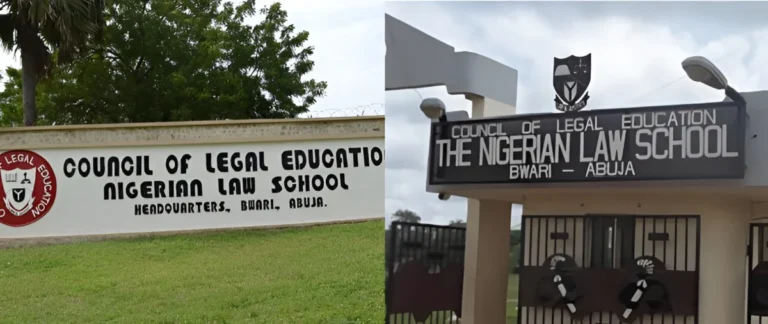
The Council of Legal Education (CLE), the statutory body responsible for regulating legal education in Nigeria, has officially released an updated and comprehensive list of 117 universities authorized to offer Bachelor of Laws (LL.B) programs across the federation. In a public notice issued through its administrative headquarters, the Council delivered a stern warning to prospective law students, parents, and guardians, emphasizing that any individual who graduates from a law program not recognized or accredited by the CLE will be strictly barred from admission into the Nigerian Law School. This directive underscores the Council’s commitment to maintaining the professional standards and academic integrity of the Nigerian legal profession, ensuring that only those trained in qualified environments are eligible to practice.
The public notice, signed by the Secretary to the Council and Director of Administration, Aderonke Osho, was disseminated via the Council’s official communication channels on Thursday. It serves as a critical guide for the 2024/2025 academic session and beyond, highlighting the legal and professional risks associated with enrolling in unapproved institutions. According to the Council, any university admitting students into law programs without explicit approval is in direct violation of the regulations governing legal education in Nigeria. Such institutions face severe sanctions, including potential blacklisting and legal action in accordance with extant policies and the Legal Education (Consolidation) Act.
The Regulatory Framework and the Mandate of the Council of Legal Education
The Council of Legal Education was established to oversee the standards of legal education in Nigeria. Its primary responsibilities include the accreditation of law faculties in Nigerian universities and the management of the Nigerian Law School, where law graduates must undergo a mandatory one-year practical training program. Upon successful completion of the Bar Part II examinations at the Nigerian Law School, graduates are called to the Nigerian Bar, a prerequisite for practicing as a barrister and solicitor of the Supreme Court of Nigeria.
The Council’s oversight is governed by the Legal Education (Consolidation) Act, which empowers the body to set standards for curriculum, faculty qualifications, library facilities, and physical infrastructure. The accreditation process is rigorous; it involves periodic visitations by teams of legal experts and academics who assess whether a university meets the "minimum benchmarks" required to produce competent legal practitioners. The release of the 117-university list is a proactive measure to prevent the "backdoor" entry of unqualified candidates into the profession and to protect unsuspecting members of the public from academic exploitation.
Critical Moratoriums and Restrictions on Specific Institutions
A notable feature of the newly released list is the inclusion of specific restrictions and moratoriums placed on certain high-profile institutions. These caveats are essential for prospective students to note, as they indicate that even accredited institutions can lose the right to admit new students if they fail to adhere to Council-imposed quotas or standards.
For instance, Baze University in Abuja is currently under a moratorium on admission for three academic sessions, spanning from 2023/2024 to 2025/2026. This decision, as previously reported by the Council, was necessitated by the institution’s violation of admission quotas, where it significantly over-admitted students beyond its approved capacity. Similarly, Lead City University in Ibadan has been placed under a five-year moratorium (2023/2024–2027/2028), and the Nigeria Police Academy in Wudil, Kano State, faces a two-year moratorium (2024/2025–2025/2026).
These sanctions serve as a deterrent to other universities. The CLE maintains that the "carrying capacity" of a law faculty is not a suggestion but a mandatory limit designed to ensure a manageable student-to-lecturer ratio and adequate access to learning resources. When universities exceed these limits, the quality of education is compromised, leading to a glut of graduates who may not be adequately prepared for the rigors of the Nigerian Law School or professional practice.
The Nigerian Law School: The Gateway to the Bar
The Nigerian Law School remains the only pathway for law graduates to qualify for the Bar. The Council’s warning is particularly significant because the Nigerian Law School does not accept "remedial" applications from graduates of unaccredited faculties. In recent years, there have been numerous legal battles where graduates of unapproved programs sought to compel the Council to admit them into the Law School. However, the courts have consistently upheld the Council’s statutory power to determine which institutions meet the requisite standards.
The recent appointment of the first female Director-General of the Nigerian Law School by President Bola Ahmed Tinubu further signals a period of institutional reform and strict adherence to regulatory standards. The leadership of the Law School and the Council are aligned in their mission to sanitize the legal education sector, ensuring that the influx of new lawyers into the Nigerian market is matched by a corresponding level of competence and ethical grounding.

Implications for Students, Parents, and the Legal Profession
The publication of this list has far-reaching implications. For students, it provides a "due diligence" checklist before committing financial resources to a five-year degree program. For the legal profession, it ensures that the "market" is not flooded with graduates from "degree mills" that lack the necessary academic rigor.
Legal analysts suggest that the Council’s decision to go public with the list is a response to the proliferation of private universities in Nigeria. While the expansion of higher education is generally welcomed, the Council of Legal Education insists that professional courses like Law cannot be treated as mere commercial ventures. The infrastructure required for a law faculty—including a well-stocked law library, a functional moot court, and a high percentage of PhD-holding lecturers—requires significant investment that some newer or smaller institutions may struggle to maintain.
Complete List of 117 Accredited Universities Approved for Law Programs
The following institutions are the only universities currently recognized by the Council of Legal Education to admit students for the LL.B program:
- Abia State University, Uturu, Abia State
- Achievers University, Owo, Ondo State
- Adamawa State University, Mubi, Adamawa State
- Adekunle Ajasin University, Akungba-Akoko, Ondo State
- Adeleke University, Ede, Osun State
- Admiralty University, Ibusa, Delta State
- Afe Babalola University, Ado-Ekiti, Ekiti State
- Ahmadu Bello University, Zaria, Kaduna State
- Ajayi Crowther University, Oyo, Oyo State
- Al-Ansar University, Maiduguri, Borno State
- Al-Hikmah University, Ilorin, Kwara State
- Aletheia University, Ago-Iwoye, Ogun State
- Alex Ekwueme Federal University, Ndufu-Alike, Ebonyi State
- American University of Nigeria, Yola, Adamawa State
- Ambrose Alli University, Ekpoma, Edo State
- Anchor University, Ayobo, Lagos State
- Arthur Jarvis University, Akpabuyo (Calabar), Cross River State
- Ave-Maria University, Piyanko, Nasarawa State
- Azman University, Kano, Kano State
- Babcock University, Ilishan-Remo, Ogun State
- Bauchi State University, Gadau, Bauchi State
- Bayero University, Kano, Kano State
- Baze University, Abuja (Under moratorium; no admissions 2023/2024–2025/2026)
- Benson Idahosa University, Benin City, Edo State
- Bingham University, Karu, Nasarawa State
- Bowen University, Iwo, Osun State
- Caleb University, Imota, Lagos State
- Chrisland University, Abeokuta, Ogun State
- Christopher University, Mowe, Ogun State
- Chukwuemeka Odumegwu Ojukwu University, Igbariam, Anambra State
- Confluence University of Science and Technology, Osara, Kogi State
- Crescent University, Abeokuta, Ogun State
- Delta State University, Abraka, Delta State
- Ebonyi State University, Abakaliki, Ebonyi State
- Edwin Clark University, Kiagbodo, Delta State
- Edo University, Iyamho (Uzairue), Edo State
- Ekiti State University, Ado-Ekiti, Ekiti State
- El-Amin University, Minna, Niger State
- Elizade University, Ilara-Mokin, Ondo State
- Enugu State University of Science and Technology, Agbani, Enugu State
- Federal University, Dutsin-Ma, Katsina State
- Federal University, Lokoja, Kogi State
- Federal University, Otuoke, Bayelsa State
- Federal University, Wukari, Taraba State
- Fountain University, Osogbo, Osun State
- Godfrey Okoye University, Enugu State
- Gombe State University, Gombe State
- Gregory University, Uturu, Abia State
- Hensard University, Toru-Orua, Bayelsa State
- Ibrahim Babangida University, Lapai, Niger State
- Igbinedion University, Okada, Edo State
- Imo State University, Owerri, Imo State
- Joseph Ayo Babalola University, Ikeji-Arakeji, Osun State
- Kingsley Ozumba Mbadiwe University, Ogboko, Imo State
- Koladaisi University, Ibadan, Oyo State
- Kwara State University, Malete, Kwara State
- Lagos State University, Ojo, Lagos State
- Lead City University, Ibadan, Oyo State (Under moratorium; no admissions 2023/2024–2027/2028)
- Lux Mundi University, Umuahia, Abia State
- Madonna University, Okija, Anambra State
- Maduka University, Ekwegbe-Nsukka, Enugu State
- Margaret Lawrence University, Abuja, FCT
- Maryam Abacha American University, Kano, Kano State
- McPherson University, Seriki-Sotayo, Ogun State
- Mewar International University, Masaka, Nasarawa State
- Modibbo Adama University, Yola, Adamawa State
- Nasarawa State University, Keffi, Nasarawa State
- Newgate University, Minna, Niger State
- Niger Delta University, Wilberforce Island, Bayelsa State
- Nigerian-British University, Asa, Abia State
- Nile University, Abuja
- Nnamdi Azikiwe University, Awka, Anambra State
- North-Eastern University, Gombe State
- Northwest University, Kano (Yusuf Maitama Sule University), Kano State
- Northwest University, Kalambaina, Wamakko, Sokoto State
- Novena University, Ogume, Delta State
- Obafemi Awolowo University, Ile-Ife, Osun State
- Olabisi Onabanjo University, Ago-Iwoye, Ogun State
- Osun State University, Osogbo, Osun State
- Peter University, Achina/Onneh, Anambra State
- Philomath University, Abuja, FCT
- Plateau State University, Bokkos, Plateau State
- Nigeria Police Academy, Wudil, Kano State (Under moratorium; no admissions 2024/2025–2025/2026)
- Prime University, Kuje, FCT Abuja
- Prince Abubakar Audu University, Anyigba, Kogi State
- Rayhaan University, Birnin-Kebbi, Kebbi State
- Redeemer’s University, Ede, Osun State
- Renaissance University, Ugbawka, Enugu State
- Reverend Father Moses Orshio Adasu University, Makurdi, Benue State
- Rivers State University, Port Harcourt, Rivers State
- Salem University, Lokoja, Kogi State
- Sam Maris University, Supare-Akoko, Ondo State
- Shanahan University, Onitsha, Anambra State
- Skyline University, Kano, Kano State
- Taraba State University, Jalingo, Taraba State
- Thomas Adewumi University, Oko-Irese, Kwara State
- Topfaith University, Mkpatak, Akwa Ibom State
- Umaru Musa Yar’Adua University, Katsina, Katsina State
- University of Abuja, Abuja, FCT
- University of Benin, Benin City, Edo State
- University of Calabar, Calabar, Cross River State
- University of Delta, Agbor, Delta State
- University of Ibadan, Ibadan, Oyo State
- University of Ilesa, Ilesa, Osun State
- University of Ilorin, Ilorin, Kwara State
- University of Jos, Jos, Plateau State
- University of Lagos, Akoka, Lagos State
- University of Maiduguri, Maiduguri, Borno State
- University of Nigeria, Nsukka, Enugu State
- University of Port Harcourt, Port Harcourt, Rivers State
- University of Uyo, Uyo, Akwa Ibom State
- University on the Niger, Umumya, Anambra State
- Usman Danfodio University, Sokoto, Sokoto State
- Veritas University, Bwari, Abuja
- Wesley University, Ondo, Ondo State
- Western Delta University, Oghara, Delta State
- Yobe State University, Damaturu, Yobe State
Future Outlook for Legal Education Standards
The Council of Legal Education has signaled that the list is subject to periodic updates based on ongoing accreditation visits. As more universities apply for approval and existing ones undergo re-evaluation, the Council remains the final arbiter of eligibility. The body has encouraged stakeholders to visit its official website or contact its secretariat for verification before proceeding with law school admissions.
In conclusion, this latest regulatory action serves as a vital safeguard for the Nigerian legal system. By clearly identifying approved institutions and highlighting those under disciplinary moratoriums, the CLE is taking a definitive stand against the dilution of professional standards. For the thousands of students aspiring to join the "learned profession," the message is clear: academic success begins with choosing a recognized and accredited institution. Failure to do so results in a terminal academic journey that ends short of the Bar, with no recourse for admission into the Nigerian Law School.