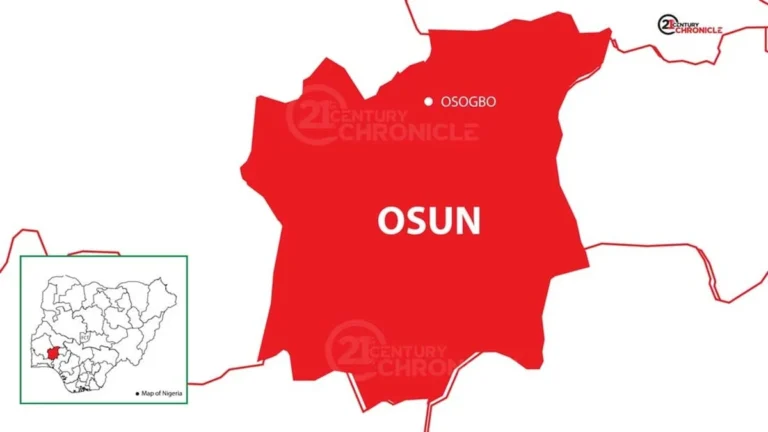
The Osun State Government has emphatically declared the purported appointment of Kazeem Oyewale, widely known as Asiri Eniba, as Chairman of the Osun State Council of the National Union of Road Transport Workers (NURTW), as "null and void and of no effect." This decisive pronouncement, delivered through an official statement, firmly re-establishes Comrade Nurudeen Alowonle and his executive committee as the sole recognized leadership of the influential transport union within the state. The government’s action comes amidst a period of heightened sensitivity surrounding motor park administration and the broader issue of public safety across Osun State.
The Heart of the Matter: A Contentious Appointment
The controversy stems from a recent move by a group identified as the APC Association of Local Governments of Nigeria (ALGON), which allegedly sought to suspend existing NURTW officers and inaugurate a caretaker committee, culminating in Oyewale’s purported emergence as chairman. This action, according to a statement issued on Friday in Osogbo by the Commissioner for Information and Public Enlightenment, Oluomo Kolapo Alimi, was deemed "illegal and unconstitutional" by the state government. The government underscored that such an intervention by a political association into the internal affairs and established leadership structure of a legally constituted union fundamentally undermines the principles of due process and union autonomy.
The National Union of Road Transport Workers holds significant sway in Nigeria’s socio-economic landscape, operating a vast network of commercial vehicles and controlling motor parks that serve as crucial hubs for inter- and intra-state transportation. Its leadership positions are often highly coveted, not just for the economic leverage they provide, but also due to their historical entanglement with political patronage and grassroots mobilization. Disputes over NURTW leadership are not uncommon across various Nigerian states, frequently leading to public unrest, violence, and disruption of public services.
Background to the Crisis: The Role of NURTW in Nigeria
The NURTW, established decades ago, is one of the most powerful and visible labour unions in Nigeria. Its members, primarily drivers and conductors of commercial buses, taxis, and motorcycles, play a vital role in connecting communities and facilitating commerce. This widespread presence, coupled with the daily financial transactions occurring in motor parks, grants the union immense economic power. Historically, the NURTW has also been a significant political actor, often mobilized by political parties during elections to secure votes or exert influence. This symbiotic, yet sometimes fraught, relationship between the union and political structures has frequently been a source of conflict, with successive state governments often seeking to assert control or mediate disputes within the union for reasons ranging from maintaining public order to securing political advantage.
The current situation in Osun State is a microcosm of these broader national dynamics. The Osun State Council of the NURTW, like its counterparts nationwide, oversees a complex network of motor parks, manages revenue collection, and represents the interests of its members. Any disruption to its leadership structure directly impacts thousands of daily commuters and the livelihoods of countless individuals involved in the transport sector. The mention of Kazeem Oyewale, also known as Asiri Eniba, as a "suspect in violent crimes" by the government adds another layer of gravity to the situation, highlighting concerns over public safety and the potential for increased criminality within the state’s transport sector if such an appointment were to stand.
Chronology of Events Leading to the Declaration
The recent dispute has its roots in an earlier directive issued by the Osun State Security Council. Over concerns regarding alleged violent activities perpetrated by "hoodlums" within motor parks across the state, the Security Council had suspended all NURTW activities in those parks. This move, aimed at restoring peace and order, was subsequently misinterpreted by some factions as a dissolution of the existing Nurudeen Alowonle-led executive.
The sequence of events unfolded as follows:
- Initial Security Directive: The State Security Council, acting on intelligence and reports of violence, issued a directive suspending all NURTW activities in motor parks. This was a measure to de-escalate tensions and prevent further breakdown of law and order.
- Misinterpretation and Power Vacuum Perception: The suspension of activities was erroneously perceived by some as the dissolution of the entire NURTW executive, creating a perceived leadership vacuum. This misinterpretation appears to have fuelled the subsequent actions.
- Alleged Illegal Installation: Capitalizing on this perceived vacuum, the APC Association of Local Governments of Nigeria (ALGON) allegedly moved to suspend the legitimate NURTW officers and proceeded to inaugurate a caretaker committee. It was within this context that Kazeem Oyewale (Asiri Eniba) was purportedly appointed as the state chairman.
- Government’s Swift Intervention: Recognizing the potential for further instability and the clear violation of established protocols, the Osun State Government, through its Commissioner for Information, issued a strong statement nullifying Oyewale’s appointment and reaffirming Alowonle’s leadership. This intervention was crucial to prevent the escalation of an already volatile situation and uphold the rule of law.
The government explicitly stated that Governor Ademola Adeleke "did not at any point remove the NURTW leadership." It further clarified that the tenure of the Alowonle executive is "yet to lapse" and that any attempt to impose an individual with a controversial background as state chairman constitutes "an affront to the law."
Government’s Unwavering Stance and Official Directives
Commissioner Oluomo Kolapo Alimi’s statement left no room for ambiguity regarding the government’s position. He emphasized that the legitimate leadership of the NURTW in Osun State remains Comrade Nurudeen Alowonle and his executive. This leadership, the government affirmed, was appointed by the national leadership of the NURTW under Comrade MC Oluomo, in strict adherence to the union’s established regulations and constitution. Therefore, the government asserted, "there is no vacuum in the leadership of the union."
The statement also served to clarify the true intent behind the Security Council’s initial directive. "At no time did the state government dissolve the executives of the NURTW at all levels," Alimi stated. "What the Security Council’s directive is all about is the suspension of all activities of the union in all our parks pending the restoration of peace in all the parks." This distinction is critical, as it differentiates between a temporary halt of operations for security reasons and a permanent removal of leadership.
Furthermore, Governor Adeleke issued a clear directive that all motor parks should remain open and not be closed. This ensures that essential transportation services are not disrupted, and commuters are not unduly inconvenienced. The government also called upon security agencies to maintain a robust presence and ensure peace and order across all motor parks, while the Alowonle-led executive continues to operate in line with the union’s national guidelines. This dual approach aims to prevent further violence while upholding the recognized leadership structure.
Reactions from Key Stakeholders
While direct statements from all involved parties were not immediately available beyond the government’s official declaration, logical inferences can be drawn about their likely reactions:
- Nurudeen Alowonle’s Faction: The legitimate executive, led by Comrade Nurudeen Alowonle, would undoubtedly welcome the government’s decisive intervention. This affirmation of their leadership would strengthen their position and likely prompt them to reiterate their commitment to peace, order, and cooperation with the state government and security agencies. Their focus would shift to re-establishing full control over park operations in a peaceful manner.
- Kazeem Oyewale’s (Asiri Eniba) Faction: Those who supported Oyewale’s purported appointment, including the alleged APC ALGON members, are likely to express disappointment or even defiance. They might attempt to challenge the government’s stance, citing perceived grievances or alternative interpretations of the events. However, given the explicit nullification by the state government and the involvement of security agencies, any continued attempt to assert Oyewale’s leadership would likely face legal and enforcement challenges.
- NURTW National Leadership: Given that the Osun State Government explicitly stated that Alowonle’s executive was appointed by the national body under Comrade MC Oluomo, the national leadership of the NURTW is expected to fully endorse and support the state government’s decision. This would reinforce the hierarchical structure of the union and prevent internal fragmentation that could undermine its national authority. A statement from the national body reaffirming Alowonle’s legitimacy would further solidify the government’s position.
- Political Parties (APC/PDP): The involvement of "APC Association of Local Governments of Nigeria (ALGON)" suggests a political dimension to the dispute. The Osun State chapter of the All Progressives Congress (APC) might issue a statement to clarify its relationship with the ALGON group mentioned, or to distance itself from actions deemed illegal. The ruling Peoples Democratic Party (PDP) in Osun State, on the other hand, would use this opportunity to assert its commitment to the rule of law and to maintaining peace and order, potentially criticizing any attempts by opposition elements to destabilize the state.
- Commuters and the Public: The primary concern for ordinary citizens and commuters would be the safety and reliability of public transport. They would likely express relief at the government’s intervention to prevent further violence, but also remain wary of potential flare-ups. The directive to keep parks open would be particularly welcomed, as it ensures continued mobility.
Implications for Public Safety, State Economy, and Governance
The government’s decisive action carries significant implications across several critical domains:
- Public Safety: Leadership tussles within transport unions have a notorious history of escalating into violent clashes, often involving dangerous weapons and resulting in injuries or even fatalities. The presence of "hoodlums" and the potential involvement of "suspects in violent crimes" amplify these risks. By nullifying an illegitimate appointment and reinforcing the legitimate leadership, the government aims to preempt such violence, ensuring the safety of commuters, park workers, and the general public.
- State Economy: Motor parks are economic nerve centres. Any disruption or prolonged closure due to disputes directly impacts the livelihoods of thousands of drivers, conductors, traders, and other informal sector workers. It also affects the flow of goods and services, potentially causing price hikes and economic slowdowns. The government’s directive to keep parks open, coupled with its efforts to stabilize leadership, is crucial for maintaining economic continuity and protecting the state’s revenue streams from the transport sector.
- Rule of Law and Governance: This episode is a test of the state government’s authority and its commitment to upholding the rule of law. By rejecting an "illegal and unconstitutional" appointment, the government is sending a clear message that it will not tolerate actions that circumvent established legal frameworks or union constitutions. This reinforces the government’s role as the ultimate arbiter of order and legality within its jurisdiction, bolstering public confidence in its governance capabilities. It also underscores the importance of proper channels for dispute resolution within unions, rather than recourse to self-help or political interference.
- Political Stability: Given the mention of the "APC Association of Local Governments of Nigeria (ALGON)," the dispute also carries political undertones. In Nigeria’s highly competitive political landscape, control over influential groups like the NURTW can be seen as a proxy battle for political influence. The government’s firm stance could be interpreted as a move to assert its political authority and prevent opposition elements from creating instability or undermining its administration. Maintaining stability in key sectors like transport is vital for the overall political health of the state.
Moving Forward: A Call for Lasting Stability
The Osun State Government’s declaration marks a critical step in resolving the recent leadership crisis within the NURTW. However, ensuring lasting peace and stability will require sustained effort. The continued presence and vigilance of security agencies in motor parks will be essential to deter any further attempts at disruption or violence. Furthermore, the legitimate Alowonle-led executive will need to demonstrate effective and inclusive leadership, working to reconcile any internal divisions and operate transparently in line with the union’s national guidelines.
The incident also highlights the broader need for a comprehensive framework to manage the relationship between state governments, transport unions, and political entities. Clear guidelines, robust enforcement mechanisms, and effective internal dispute resolution processes within unions are paramount to prevent future crises. Ultimately, the goal is to foster an environment where the transport sector can operate efficiently and peacefully, serving the public interest without being plagued by incessant power struggles or political manipulation. The Osun State Government has drawn a clear line in the sand, emphasizing that the integrity of institutions and the safety of its citizens will remain its utmost priority.