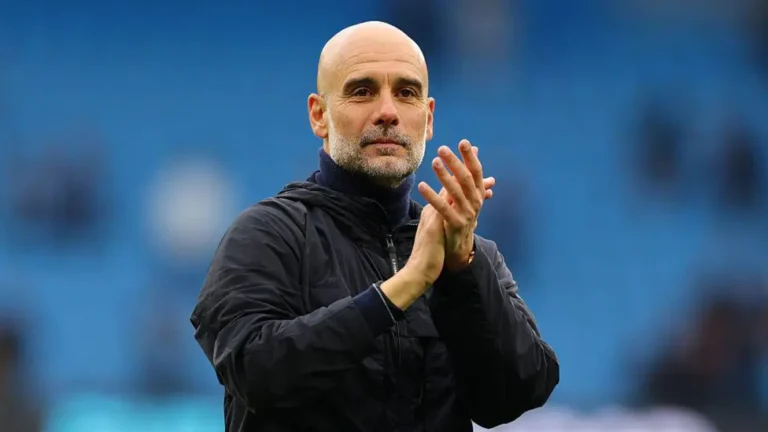
The landscape of modern association football has rarely witnessed a partnership as dominant, or as intensely scrutinized, as the one forged between Manchester City and manager Pep Guardiola. Since the Catalan coach arrived at the Etihad Stadium in the summer of 2016, transforming the club into a domestic juggernaut and a European champion, his tenure has operated against a persistent backdrop of regulatory tension. At the epicenter of this ongoing narrative is a monumental legal battle: the Premier League’s sprawling investigation into Manchester City’s alleged breaches of financial regulations, punctuated by the landmark announcement of 115 charges in February 2023. Throughout years of intense public speculation, regulatory pushback, and shifting legal horizons, Guardiola has maintained an unyielding, vocal defense of the club’s hierarchy, repeatedly championing the presumption of innocence while navigating one of the most complex legal inquiries in the history of professional sport.
The Anatomy of the Investigation: Context and Background
To understand the weight of Guardiola’s public defense, one must examine the origins and trajectory of the financial scrutiny facing Manchester City. The Premier League’s charges, formally issued in February 2023 after a four-year investigation that began in December 2018 following explosive leaks published by the German magazine Der Spiegel, accuse the club of failing to provide accurate financial information regarding sponsorships, revenue, manager remuneration, and player compensation between the 2009–10 and 2017–18 seasons. Furthermore, the club was alleged to have failed to cooperate with Premier League investigations from December 2018 onwards.
These allegations struck at the core of the financial model that propelled Manchester City from traditional underachievers to the summit of the global game following their acquisition by the Abu Dhabi United Group, led by Sheikh Mansour bin Zayed Al Nahyan, in 2008. The overarching framework of these regulations—primarily the Premier League’s Profit and Sustainability Rules (PSR), alongside UEFA’s Club Licensing and Financial Fair Play (FFP) Regulations—was designed to ensure clubs operate within their means, curbing hyper-inflationary spending by wealthy owners to maintain competitive balance and financial stability across the football ecosystem.
For Guardiola, who has consistently operated at the elite tier of European management with Barcelona, Bayern Munich, and Manchester City, the allegations presented a profound professional challenge. Yet, rather than distancing himself from the administrative operations of the club, the manager chose a path of absolute alignment with Chairman Khaldoon Al Mubarak, Chief Executive Officer Ferran Soriano, and the broader executive leadership team.
Chronology of Defense: From Early Rumors to the 115 Charges
The friction between Manchester City’s off-field financial practices and public perception did not begin in 2023; it has been a recurring theme throughout Guardiola’s tenure.
As early as May 2019, following a historic domestic treble that saw City secure the Premier League, FA Cup, and League Cup in a single campaign, Guardiola reacted angrily to persistent media inquiries concerning alleged irregular payments outside official channels. Confronted by reporters, the manager defended his integrity and that of the club, asserting that they operated within legal boundaries and declaring, "We are not guilty until it’s proven." He emphasized that his trust rested entirely on the assurances given to him by Al Mubarak and Soriano, noting that when executive leadership assured him the club followed every rule meticulously, he chose to believe them.
The pressure intensified dramatically in February 2020 when UEFA imposed a two-season ban from European club competitions and a €30 million fine upon Manchester City for alleged serious breaches of FFP regulations between 2012 and 2016. In the immediate aftermath, Guardiola delivered a steadfast expression of solidarity. While acknowledging that the club’s administration would handle the legal appeals, he insisted that his focus remained squarely on the pitch, declaring that he would not abandon his post unless dismissed by the club’s leadership.
That gamble paid off in July 2020 when the Court of Arbitration for Sport (CAS) overturned UEFA’s ban, ruling that many of the alleged breaches were either time-barred or unproven. Following the verdict, Guardiola voiced deep frustration regarding the reputational damage sustained by the club during the interim period. He argued that the fundamental principle of the presumption of innocence had been abandoned by critics and media outlets who prematurely branded the club as dishonest.
Despite the CAS ruling, the regulatory landscape shifted again in May 2022 amid reports of ongoing Premier League investigations. Guardiola doubled down on his rhetoric, explaining that his public defense was rooted in direct, daily operational experience with the club’s executives. He remarked that if he discovered the leadership had deceived him, his tenure would end the very next day.
When the Premier League formally announced its 115 charges in February 2023, Guardiola’s response was characterized by a mixture of defiance and a call for swift institutional justice. He reiterated his belief that the club had effectively already been judged in the court of public opinion before any independent panel had heard the evidence. Comparing the situation to the earlier UEFA ordeal, he maintained that Manchester City were once again facing a presumption of guilt rather than innocence, though he stressed his willingness to accept whatever legally binding verdict the independent commission would ultimately reach.
As the months progressed through late 2023 and into 2024, Guardiola repeatedly voiced a desire for expedition. In May 2023, he remarked that he wished the proceedings could be concluded immediately—suggesting that an afternoon resolution would be preferable to waiting until the morrow. When questioned about his personal future if the club were found guilty and subjected to severe sporting sanctions such as relegation, Guardiola remained resolute, asserting that his commitment was independent of the division in which the club competed, though he declined to speculate on hypothetical sentencing before an official verdict was rendered.
By the time the independent commission’s hearings commenced in late 2024, Guardiola continued to project an attitude of professional detachment from the legal maneuvering. He maintained that his daily focus was strictly confined to sporting performance—managing squad fitness, tactical preparation, and recovering from on-field defeats—leaving the legal complexities to specialized counsel. Finally, in May 2026, as Guardiola announced his eventual decision to step down from his role as Manchester City manager, his parting reflections on the investigation remained entirely consistent with his opening remarks: an abiding trust in the integrity of the club’s leadership and the manner in which they governed the institution through its most turbulent administrative crisis.
Supporting Data and Regulatory Precedents
The scale of the Manchester City case is unprecedented in English football history, dwarfing previous disciplinary actions taken against top-flight clubs. To contextualize the 115 charges, sports finance analysts and legal experts have frequently compared the proceedings to recent, swift enforcement actions taken by the Premier League against other clubs under updated Profit and Sustainability Rules.
Between 2023 and 2024, clubs such as Everton and Nottingham Forest faced immediate points deductions ranging from four to ten points (later adjusted on appeal) for single-season breaches of PSR thresholds, which limit clubs to maximum allowable losses of £105 million over a rolling three-year assessment period (reduced for seasons spent in the English Football League). In stark contrast, Manchester City’s charges span nearly a decade, encompassing complex allegations of disguised equity funding, non-compliant reporting of executive and player compensation, and obstruction of regulatory inquiries.
The complexity of the evidentiary burden explains why the independent commission’s process has required years of document review, expert testimony, and legal argument. While swift punishments were handed down in simpler, single-season PSR cases, the sheer volume and historical breadth of City’s alleged breaches necessitated an exhaustive judicial framework, managed by an independent panel operating outside the direct control of the Premier League executive.
Stakeholder Reactions and Industry Implications
The broader footballing ecosystem has maintained a polarized view of the investigation and Guardiola’s staunch defense of his employers.
Rival clubs, managers, and supporters’ trusts have frequently expressed frustration at the prolonged timeline of the case, arguing that the protracted uncertainty casts a shadow over the integrity of Premier League title races spanning the past decade. Figures across European football have noted that the financial supremacy enjoyed by City—bolstered by commercial revenues that frequently outpace traditional European powerhouses like Real Madrid, Barcelona, and Manchester United—demands rigorous regulatory oversight to preserve competitive equilibrium.
Conversely, supporters of Manchester City and defenders of the club’s executive model argue that the relentless media focus constitutes an institutional bias against a nouveau riche club that successfully disrupted the established footballing hierarchy. They point to the successful overturning of the UEFA ban at the Court of Arbitration for Sport as proof that complex financial structures and related-party sponsorships can be entirely legitimate under international corporate law, provided they withstand rigorous judicial scrutiny.
Pep Guardiola’s role in this dynamic has been unique. Rather than acting as a neutral intermediary who neatly separates technical coaching from corporate governance, Guardiola elected to position himself as a primary defender of the institution. By staking his professional reputation on the integrity of Al Mubarak and Soriano, he effectively raised the stakes: any adverse finding by the independent commission would not only impact Manchester City’s trophy cabinet and league status but would also cast a definitive judgment on the credibility of one of football’s most celebrated modern managers.
Broader Impact and Conclusion
The eventual resolution of the Premier League’s investigation into Manchester City will mark a watershed moment for the governance of professional sports. The implications extend far beyond the Etihad Stadium, establishing vital legal precedents regarding the enforcement capacity of sports regulators, the limits of state-backed ownership models, and the standard of proof required to substantiate complex financial allegations in the modern era.
For Pep Guardiola, his legacy at Manchester City will forever be dual-tracked: defined on one side by an extraordinary collection of Premier League titles, domestic cups, and a historic UEFA Champions League triumph, and on the other by his unwavering, defiant defense of the club during its darkest administrative hour. Whether the independent commission’s final verdict vindicates his absolute trust or shatters the defensive wall he maintained for years, Guardiola’s tenure will remain an indelible chapter in the history of global football—a testament to sporting brilliance shadowed by the relentless machinery of financial regulation.