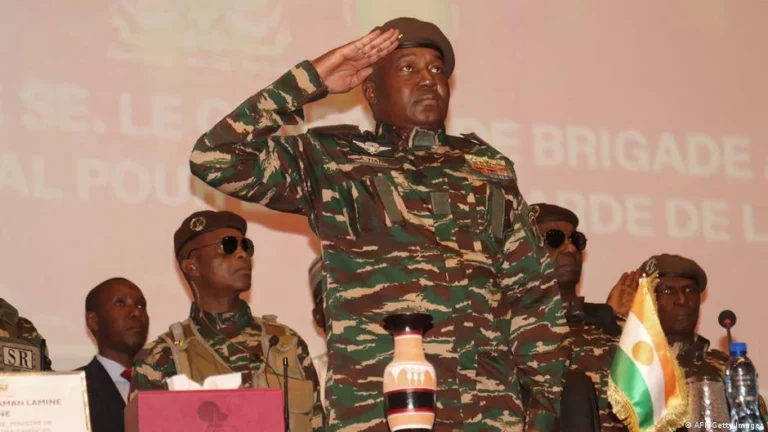
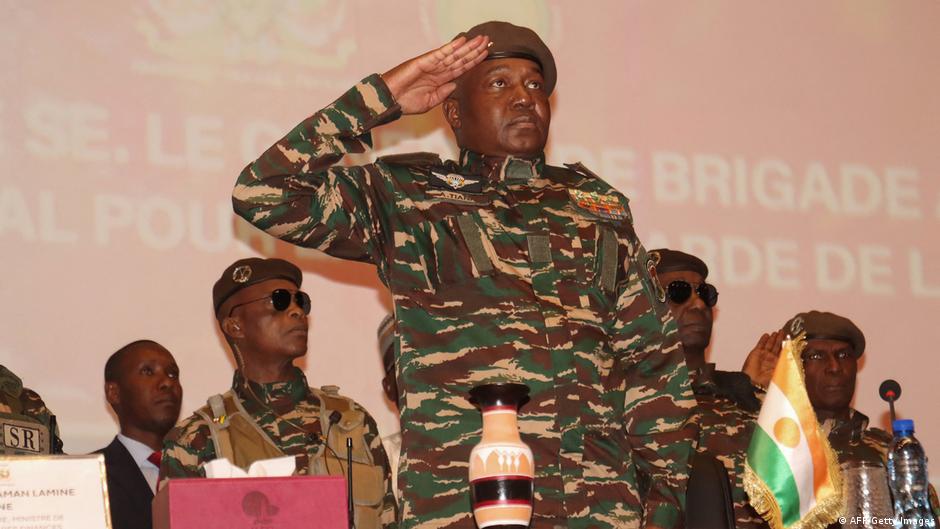
One year has passed since the military junta, led by General Abdourahamane Tchiani, seized power in Niger on July 26, 2023, overthrowing the democratically elected President Mohamed Bazoum. The coup, which sent shockwaves across West Africa and the international community, was justified by its orchestrators on the grounds of a deteriorating security situation that, they claimed, persisted despite substantial international support. However, as Niger marks this somber anniversary, the promises of enhanced security, economic revitalization, and a swift return to civilian rule remain largely unfulfilled, casting a long shadow over the future of the Sahelian nation. Instead, the transitional government has consolidated its grip on power, while the security landscape has worsened dramatically, particularly in the southwestern Tillabéri region, plunging thousands into a severe humanitarian crisis and challenging the very fabric of stability in a volatile region.
The Coup and Its Immediate Aftermath: A Nation in Turmoil
The events of July 26, 2023, unfolded rapidly, beginning with the detention of President Bazoum by members of the Presidential Guard. General Abdourahamane Tchiani, the head of the guard, soon emerged as the new leader, declaring himself head of the National Council for the Safeguard of the Homeland (CNSP). His televised address cited "the continuing deterioration of the security situation" and "poor economic and social governance" as primary motivations for the takeover. This narrative quickly faced international condemnation, with the Economic Community of West African States (ECOWAS), the African Union (AU), the United Nations, the European Union, and the United States unanimously demanding the immediate restoration of constitutional order and President Bazoum’s release.
In the weeks following the coup, the military government announced a transitional period, initially suggesting a maximum duration of three years. This timeline was met with skepticism by international bodies, particularly ECOWAS, which imposed stringent sanctions, including border closures, asset freezes, and a halt to financial transactions. These measures were intended to pressure the junta into restoring democracy, but they also severely impacted Niger’s economy and its civilian population, exacerbating existing vulnerabilities. Niger, a landlocked country, relies heavily on its neighbors for trade and access to ports, making the ECOWAS sanctions particularly biting.
Unfulfilled Promises: A Look at Governance Under the Junta
The military government, upon seizing power, made sweeping promises to address the nation’s most pressing challenges. Beyond security, General Tchiani pledged to combat corruption, improve governance, and boost the economy. Yet, one year on, these commitments appear largely rhetorical. The transitional government has not only failed to usher in a democratic transition but has also maintained a firm hold on all levers of power, with no clear roadmap or credible timeline for elections. The advisory commission, purportedly established to include young people in decision-making, has done little to assuage concerns about the junta’s authoritarian tendencies or its genuine commitment to inclusive governance.
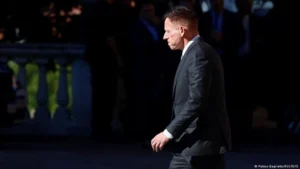
Tahirou Garka, a close ally of the ousted President Bazoum and spokesperson for the G25, a movement advocating for a return to constitutional order, paints a grim picture of the junta’s performance. "They have failed economically and socially," Garka asserted, highlighting severe shortages of basic necessities. "People are struggling to find drinking water; there is no water, no electricity, no fuel." This perspective resonates with many urban dwellers and those dependent on formal economic sectors, who have felt the brunt of both the sanctions and the government’s inability to deliver on its pledges.
However, some dissenting voices, such as Hamani Oumarou of LASDEL, a social sciences research institute in Niamey, offer a more nuanced view. Oumarou suggests that for a significant portion of Niger’s low-income households, particularly those outside the middle class or elite, the socioeconomic situation has, paradoxically, seen some improvement. He argues that with reduced bureaucratic hurdles and perhaps a more direct approach to resource distribution in certain areas, "households with low incomes have more money left over to feed their families." This perspective, while not universally shared, underscores the complex and often contradictory experiences of the populace under military rule, particularly in a country with deep-seated structural inequalities. Nevertheless, Niger’s reliance on food imports, which often face price spikes due to regional instability and supply chain disruptions, remains a critical vulnerability for all segments of the population.
Escalating Insecurity: The Sahelian Crucible
The primary justification for the coup – the deteriorating security situation – has ironically seen a significant worsening since the military took power. The Tillabéri region, located in southwestern Niger and bordering Mali and Burkina Faso, has become the epicenter of this escalating violence. This volatile zone has long been a battleground for various jihadist groups, but the past year has witnessed a marked increase in the frequency and intensity of attacks targeting both security forces and civilian populations.
According to the independent conflict monitor ACLED (Armed Conflict Location & Event Data Project), the security situation in Niger has demonstrably deteriorated since the 2023 coup. The Tillabéri region remains the main hotspot for clashes between two rival Islamist groups: Jama’at Nusrat al-Islam wal-Muslimin (JNIM), an al-Qaeda affiliate, and the so-called Islamic State in the Sahel Province (ISGS), formerly known as the Islamic State in the Greater Sahara. The brutal rivalry between these factions, coupled with their assaults on state forces and local communities, has resulted in a staggering number of casualties among soldiers and civilians alike.
Heni Nsaibia, an ACLED staff member, underscored the severity of the crisis, stating, "The situation in Niger has worsened, particularly in the Tillabéri region, where the death toll is the highest in the central Sahel." In 2023 alone, nearly 1,200 deaths were recorded in the region, a figure that starkly illustrates the scale of the crisis. This violence has not abated. A recent major attack on July 17 claimed the lives of at least 16 soldiers and 15 terrorists, according to Niger’s state media, ANP, highlighting the ongoing and deadly nature of the conflict.
Local residents corroborate these grim assessments. Maiga, a resident of Tera, a city of 30,000 in Tillabéri, who requested anonymity for security reasons, told DW, "Today, attacks on the armed forces and the civilian population are significantly more frequent and violent than they were three years ago." He recounted how life was once more manageable "despite the insecurity," with weekly markets functioning and supplies arriving regularly. Now, however, "entire villages have fled and schools are closed," painting a picture of widespread displacement and disrupted daily life.

Humanitarian Crisis Deepens
The escalating insecurity has precipitated a severe humanitarian crisis, particularly in the Tillabéri region and other affected areas. Thousands of people have been forced to abandon their homes and livelihoods, seeking refuge in safer zones or internally displaced persons (IDP) camps. These displaced communities often find themselves in precarious situations, living in makeshift shelters with limited access to basic necessities.
"We live in makeshift shelters and are defenseless against the elements; we take on small odd jobs to survive," one displaced woman told DW, highlighting the daily struggle for existence. A local herder echoed these sentiments, lamenting the loss of dignity and the challenges of survival: "I used to be able to live with dignity from my work, but right now it’s very difficult; even drinking water is a problem for us."
The humanitarian crisis extends beyond displacement. Food insecurity is rampant, exacerbated by disrupted agricultural activities, blocked supply routes, and the economic sanctions. Access to clean water, healthcare, and education has been severely hampered, leaving vulnerable populations, particularly women and children, at heightened risk. International aid organizations have faced challenges in delivering assistance due to the volatile security environment and logistical hurdles, further compounding the suffering. The United Nations Office for the Coordination of Humanitarian Affairs (OCHA) estimates that millions of Nigeriens are in need of humanitarian assistance, a figure that has only grown since the coup.
Geopolitical Realignments: A Shift in Alliances
The coup in Niger did not merely trigger internal political and security crises; it also reshaped regional alliances and international partnerships. In the immediate aftermath, Niger, alongside Mali and Burkina Faso – both of which have also experienced military coups in recent years – announced their withdrawal from ECOWAS in January 2024. This move marked a significant blow to regional integration and stability, signaling a deliberate distancing from the West African bloc’s democratic principles.
Concurrently, these three Sahelian nations formed the Alliance of Sahel States (AES) in September 2023, a mutual defense pact aimed at collective security and economic cooperation. The AES has explicitly sought to distance itself from traditional Western partners, particularly France, which had a significant military presence in the region for counter-terrorism operations. This pivot has seen a growing alignment with Russia, which has actively sought to expand its influence in Africa, offering security assistance and military cooperation. Reports indicate the presence of Russian military instructors and equipment in Niger, mirroring similar developments in Mali and Burkina Faso. This shift has raised concerns among Western nations about the erosion of democratic governance and the potential for increased regional instability.

Path Forward: Rebuilding Regional Ties and Future Prospects
Despite the current geopolitical realignments, there are nascent signs of potential rapprochement between the AES member states and ECOWAS. Pape Ibrahima Kane, an expert on international organizations, sees a positive development in the recent election of former Guinean Prime Minister Lansana Kouyate as chief negotiator for ECOWAS. Kouyate, known for his diplomatic experience, appears to have gained acceptance from the AES, which could pave the way for renewed dialogue.
"We are at the beginning of a promising process, as both sides are truly on the same page when it comes to starting talks," Kane observed, expressing cautious optimism. He emphasized the critical role of economic negotiations, highlighting Niger’s reliance on access to the port of Benin and its electricity supply from Nigeria and Benin – both ECOWAS member states. The economic interdependence of these nations could serve as a powerful incentive for de-escalation and the resumption of diplomatic ties. Re-establishing these vital economic lifelines would be crucial for alleviating the humanitarian suffering and fostering any semblance of economic recovery in Niger.
However, the path to stability and democratic governance in Niger remains fraught with challenges. The military government’s unwillingness to commit to a clear transition timeline, the continued detention of President Bazoum, and the deepening security crisis pose formidable obstacles. The international community, while advocating for a return to constitutional order, must also contend with the complex geopolitical dynamics at play and the increasing influence of new external actors. For the people of Niger, caught between unfulfilled promises, escalating violence, and economic hardship, the hope for a stable and prosperous future seems increasingly distant, hinging on the ability of regional and international stakeholders to forge a constructive path forward. The next year will be critical in determining whether Niger can pull back from the brink and navigate towards a more secure and democratic future.