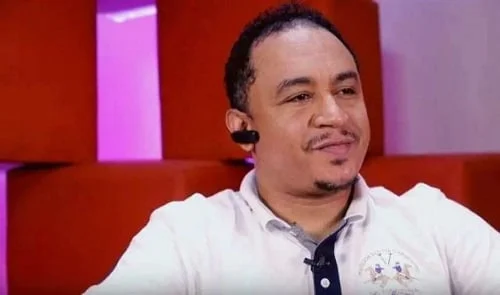
Media personality Ifedayo Olarinde, widely known as Daddy Freeze, has vocally challenged the veracity of allegations purporting to link the President’s Chief of Staff, Femi Gbajabiamila, to a contentious fake Federal Government agency. Olarinde’s stance, articulated through a video disseminated on his Instagram platform, centers on the apparent absence of publicly accessible evidence substantiating these grave claims. He emphasized the critical need for verifiable proof when making accusations of such magnitude, arguing that substantial allegations, particularly those involving high-profile public officials, demand robust evidentiary support to avoid baseless speculation.
The Call for Evidentiary Rigour
Olarinde underscored a fundamental principle of financial and legal investigations: significant official transactions and high-value financial dealings inherently generate documentary or electronic trails. These trails, he posited, are typically discoverable and verifiable by investigators, ranging from bank statements and communication logs to official records and digital footprints. His intervention comes amidst an intensifying public debate surrounding Prince Matthew Adeyemi, who is currently facing accusations of operating an illicit Federal Government agency.
"For me, I may be wrong, but it just looks like accusing an innocent man. He might not be innocent in every matter, but in this matter… make I ask you, how una see am?" Olarinde remarked in his video, inviting public discourse while maintaining a cautious, evidence-first approach. This statement highlights a key aspect of public discourse where initial accusations often gain traction before a thorough examination of facts can occur. Olarinde’s position advocates for a pause, urging a return to the fundamentals of investigation and due process. He stressed that investigators should meticulously pursue factual evidence rather than succumb to speculative narratives when determining culpability in such sensitive matters.
Unfolding Allegations and Public Reactions
The controversy at the heart of the matter involves allegations against Prince Matthew Adeyemi for allegedly establishing and operating a purported fake Federal Government agency. While specific details about the nature and scope of this alleged agency remain under investigation, the accusations typically involve impersonation of government authority, potential fraud, and misrepresentation, all of which carry severe legal penalties and erode public trust in legitimate institutions.
The gravity of the situation is compounded by the alleged involvement of high sums of money. A social media user, Raymond, known by the handle @princeraymond15, echoed Olarinde’s call for thoroughness, specifically urging investigators to trace the source of an alleged N400 million, reportedly offered as a bribe in connection with the case. Raymond argued that a comprehensive financial background check on Adeyemi is imperative. Such an examination would typically involve scrutinizing any declared businesses, investments, or previous employment that could reasonably account for the capacity to raise such a substantial sum. "N400 million is an enormous amount, and if such an allegation is being made, the source of those funds should be examined as part of any thorough investigation," Raymond asserted, highlighting the pivotal role of financial forensics in uncovering the truth behind complex fraud schemes.
Background and Context of the Accused Official
Femi Gbajabiamila holds the critical position of Chief of Staff to the President of Nigeria, a role that places him at the nexus of presidential policy formulation and implementation. Before his current appointment, Gbajabiamila served as the Speaker of the House of Representatives, one of the most powerful legislative offices in the country, from 2019 to 2023. His extensive career in public service has seen him hold various leadership positions within the National Assembly, earning him a significant public profile. Given his prominent and influential role, any allegations linking him to illicit activities naturally attract intense public and media scrutiny, necessitating a rigorous and transparent investigative process to either validate or refute such claims. The office of the Chief of Staff is central to the operations of the presidency, making the integrity of its occupant paramount for public confidence in government.
The Role of Media Personalities in Public Discourse
Daddy Freeze, as a prominent media personality and social commentator, often leverages his platform to engage in public discourse on governance, societal issues, and current events. Known for his outspoken nature and critical analysis, his intervention in this particular case underscores the evolving role of social media influencers in shaping public opinion and advocating for accountability. His emphasis on evidence and due process reflects a broader concern about the potential for unverified information to proliferate, especially in the digital age, leading to premature judgments and potentially damaging reputations without fair hearing. Such interventions can serve as a check on hasty conclusions, reminding the public and authorities alike of the importance of procedural fairness and empirical validation in investigations.
Chronology of Events (Inferred from Public Discourse)
While a precise, officially sanctioned timeline of events is yet to be released, the public discourse suggests a sequence:
- Initial Allegations Emerge: Reports and claims begin to circulate, primarily on social media, regarding the existence of a "fake Federal Government agency" and the alleged involvement of Prince Matthew Adeyemi.
- Allegations Expand to Include Public Officials: Subsequently, claims surface, linking the President’s Chief of Staff, Femi Gbajabiamila, to the alleged scheme, possibly implying complicity or association.
- Daddy Freeze’s Intervention: Ifedayo Olarinde (Daddy Freeze) releases a video on his Instagram, questioning the allegations against Gbajabiamila due to a perceived lack of publicly available evidence, advocating for due process and verifiable proof.
- Public Reaction and Calls for Deeper Investigation: Other social commentators, such as Raymond (@princeraymond15), join the discourse, specifically calling for investigators to trace the alleged N400 million bribe and examine Adeyemi’s financial background.
- Alleged Denials from Key Figures: Fresh claims circulating online purport that Adeyemi, in an interview, denied any meeting or communication with Gbajabiamila, further stating an absence of call records, documents, or other evidence linking the Chief of Staff to the alleged scheme.
- Questioning of Documentary Authenticity: These online claims also contend that a purported engagement letter, allegedly issued by the Office of the Chief of Staff in relation to the matter, is not authentic.
This sequence highlights the dynamic and often rapidly unfolding nature of public controversies, particularly when sensitive allegations involve high-ranking government officials.
Broader Implications and The Imperative of Due Process
The allegations surrounding the fake Federal Government agency and the purported involvement of high-profile individuals carry significant implications for governance, public trust, and the integrity of national institutions. The establishment of a fraudulent agency not only defrauds citizens or entities but also undermines the very fabric of legitimate government operations, creating confusion and eroding confidence in official processes.
For a public official of Gbajabiamila’s stature, mere allegations, even if unproven, can cast a long shadow, potentially impacting public perception of the presidency and the government as a whole. This underscores the critical importance of a thorough, impartial, and transparent investigation. The principle of "innocent until proven guilty" is a cornerstone of justice systems worldwide, and in high-profile cases, adherence to due process is essential to ensure fairness to the accused and maintain the credibility of the legal system.
The call for verifiable evidence by Daddy Freeze and others is not merely a procedural formality but a safeguard against defamation and trial by public opinion. In an era dominated by social media, where information (and misinformation) can spread instantaneously, the demand for concrete proof becomes even more pertinent. Without it, public discourse risks descending into rumour-mongering, potentially harming individuals and diverting attention from legitimate issues.
Furthermore, the alleged N400 million bribe figure, if substantiated, points to a sophisticated financial crime operation. Such a sum would necessitate extensive money laundering and illicit financial flows, demanding a multi-agency investigative approach involving financial intelligence units, anti-graft agencies, and law enforcement. Tracing the origin and destination of such funds is crucial not only for prosecuting those responsible but also for understanding the broader networks of corruption that might be at play.
Moving Forward: The Path of Investigation
Ultimately, the resolution of this complex issue hinges on the diligent work of investigative agencies. Their mandate will be to meticulously gather all available evidence, including financial records, communication data, witness testimonies, and forensic analyses of any purported documents. The findings of such an investigation, when made public through appropriate channels, will be critical in establishing the truth, ensuring justice, and restoring public confidence. The ongoing public dialogue, while at times speculative, serves as a vital democratic function, holding power to account and demanding transparency from those entrusted with public office. The focus must remain on the facts, allowing the investigative and judicial processes to run their course unimpeded by premature conclusions or unfounded accusations.