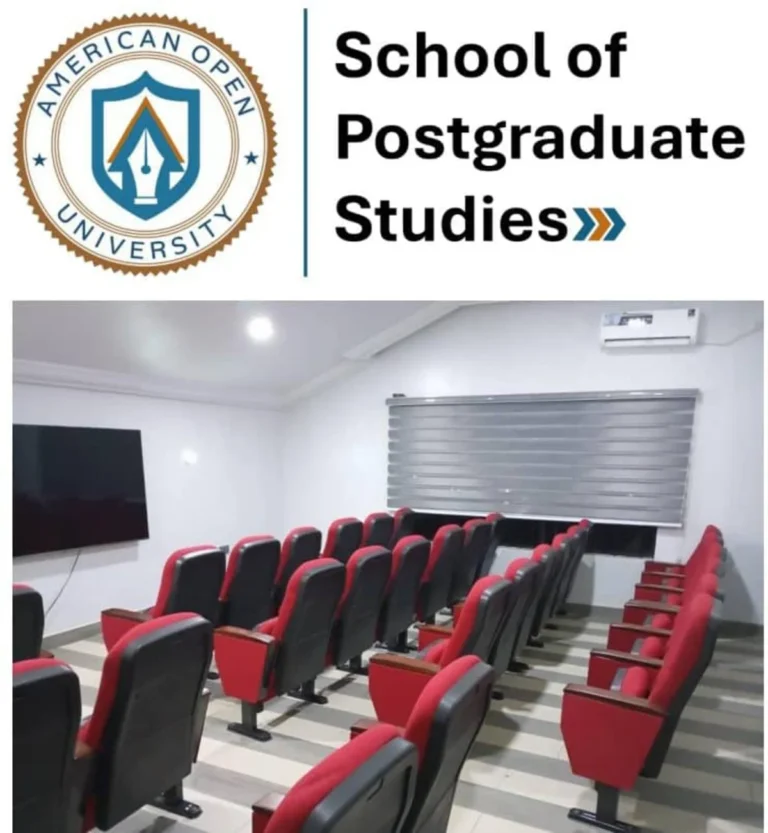
The National Universities Commission (NUC) has officially authorized the commencement of three pioneering postgraduate programmes at the American Open University Nigeria, popularly known as A-Global, marking a transformative shift in the nation’s distance learning landscape. The approval, formalized in a communication from the Office of the Executive Secretary of the Commission dated June 19, 2026, paves the way for the institution to admit its inaugural cohort of master’s degree students for the 2026/2027 academic session. This regulatory milestone grants the university the mandate to offer full-time Master of Business Administration (MBA), Master of Information Technology (MIT), and Master of Public Administration (MPA) degrees, all of which feature a curriculum deeply embedded with Artificial Intelligence (AI) technologies.
The NUC’s decision follows a rigorous and multi-staged resource verification exercise conducted by a high-level panel of academic experts and regulatory assessors. During the evaluation, the panel scrutinized the university’s institutional capacity, focusing on the quality of its academic staff, the robustness of its digital and physical infrastructure, its governance structures, and the availability of specialized human and material resources. The successful outcome of this audit underscores A-Global’s readiness to deliver advanced education that meets both national standards and international benchmarks for open and distance learning (ODL).
A Milestone for Digital Higher Education in Nigeria
Reacting to the regulatory breakthrough, the Founder and President of American Open University, Prof. David S. Akanbi, characterized the approval as a defining moment in the institution’s history. He emphasized that the NUC’s endorsement is a testament to the university’s unwavering commitment to academic excellence and its vision of providing industry-aligned education.
"This approval is the culmination of years of strategic planning and a rigorous independent assessment of our faculty, systems, and academic governance," Prof. Akanbi stated. "We express our profound appreciation to the National Universities Commission for their thoroughness and for the confidence they have placed in our ability to deliver high-quality postgraduate education. Our goal is not just to issue degrees but to cultivate a new generation of leaders who are proficient in the tools of the future."
The approval comes at a time when Nigeria is intensifying efforts to expand access to higher education through non-traditional models. With the Nigerian university system facing pressure from a burgeoning youth population and limited physical space in conventional institutions, the expansion of licensed open universities like A-Global provides a critical safety valve for professional development and academic advancement.
The AI-Centric Curriculum: Preparing for the Fourth Industrial Revolution
A distinguishing feature of the newly approved programmes is the systematic integration of Artificial Intelligence across all course modules. Unlike many traditional institutions where AI is treated as an elective or a niche subject within computer science departments, A-Global has adopted a "pervasive AI" approach. This ensures that every student, regardless of their field of study, gains a functional and strategic understanding of how AI impacts their specific industry.
The university’s management explained that the curriculum was designed to address the skills gap in the global workforce. As AI continues to redefine decision-making processes, service delivery, and institutional governance, the need for AI-literate managers and administrators has become urgent.
Prof. Akanbi noted that the "AI-first" philosophy is intended to equip graduates with the practical knowledge required to lead in a world where data-driven insights are the primary drivers of competition. By embedding AI into the MBA, MIT, and MPA programmes, the university aims to ensure that its graduates are not merely observers of technological change but active architects of digital transformation.
Breakdown of the New Postgraduate Offerings
The three approved programmes are tailored to meet specific market demands, featuring specialized tracks that reflect the evolving needs of the 21st-century economy:
1. Master of Business Administration (MBA)
The MBA programme at A-Global is designed to move beyond traditional management theories, focusing instead on the intersection of technology and commerce. Students can choose from specializations including:
- Technology Entrepreneurship: Focusing on the creation and scaling of tech-driven startups.
- Human Capital Development: Utilizing data analytics and AI to optimize workforce performance and employee well-being.
- Strategic Educational Design: Preparing leaders for the growing EdTech sector and corporate training environments.
2. Master of Information Technology (MIT)
The MIT programme targets technical professionals looking to advance into leadership or specialized roles. Its focus areas include:
- AI Engineering and Deployment: Focusing on the practical application of machine learning models in business environments.
- Cybersecurity and Digital Forensics: Addressing the critical need for data protection and crime investigation in an increasingly connected world.
- Intelligent Learning Systems: Developing the next generation of adaptive educational software and platforms.
3. Master of Public Administration (MPA)
The MPA programme is reimagined for the digital age, aiming to modernize civil service and governance. Specializations include:
- Digital Governance and Security: Focusing on e-government initiatives and the protection of national digital assets.
- Public Health Policy and System Governance: Utilizing data to manage healthcare delivery and pandemic responses.
- Strategic Public Sector Leadership: Equipping officials with the skills to manage complex social systems using modern management frameworks.
The EDGE Framework and HyFlex Learning Model
Central to the delivery of these programmes is the university’s proprietary "EDGE" framework—an acronym for Educate, Develop, Grow, and Empower. This framework serves as the pedagogical backbone of the institution, ensuring that learning outcomes are focused on applied research and professional competence rather than rote memorization.
Furthermore, A-Global is implementing a "HyFlex" (Hybrid-Flexible) learning model. This approach provides students with unprecedented autonomy over how they consume their education. Students have the option to:
- Attend classes fully online, utilizing the university’s advanced Learning Management System (LMS).
- Participate in person at the university’s global campus in Ibadan, Oyo State.
- Adopt a blended approach, switching between online and on-campus modes based on their professional and personal schedules.
This flexibility is particularly beneficial for working professionals who require advanced degrees to progress in their careers but cannot afford to take a hiatus from their employment.
Context and Economic Implications
The NUC’s approval of these programmes reflects a broader trend in the Nigerian educational sector toward digitalization. According to recent data from the National Bureau of Statistics (NBS), the ICT sector remains one of the fastest-growing contributors to Nigeria’s GDP. However, industry experts have frequently pointed to a "talent mismatch," where graduates possess theoretical knowledge but lack the technical skills required by modern employers.
By focusing on AI, cybersecurity, and digital governance, A-Global is positioning itself to fill this gap. Analysts suggest that the introduction of these programmes could help mitigate the "brain drain" (popularly known as Japa) by providing high-quality, internationally relevant postgraduate education locally.
Moreover, the emphasis on AI in Public Administration (MPA) is seen as a timely intervention for the Nigerian public sector. As the federal and state governments move toward the automation of bureaucratic processes, the demand for "digital-ready" public servants is expected to surge.
Admission Process and Future Outlook
Following the NUC’s green light, the university has announced that the application portal for the 2026/2027 academic session is now open. Prospective candidates are encouraged to visit the Office of the Registrar or the university’s official website to review admission requirements, which include a relevant first degree from a recognized institution and a demonstrated aptitude for digital learning.
The institution’s global campus in Ibadan is expected to serve as a hub for research and innovation, hosting seminars and "AI labs" where postgraduate students can collaborate on real-world projects.
As American Open University Nigeria (A-Global) prepares to welcome its first set of master’s students, the eyes of the academic community will be on its HyFlex model. If successful, the institution could serve as a blueprint for how private universities in Africa can leverage technology to democratize access to high-level education while maintaining the rigorous standards demanded by national regulators.
With its strategic location in Ibadan—a city with a rich history of academic excellence—and a curriculum designed for the future, A-Global is poised to become a significant player in the regional effort to harmonize education with the demands of the global digital economy. The university’s leadership remains confident that its graduates will not only find employment but will lead the innovations that will define Nigeria’s economic trajectory in the decades to come.