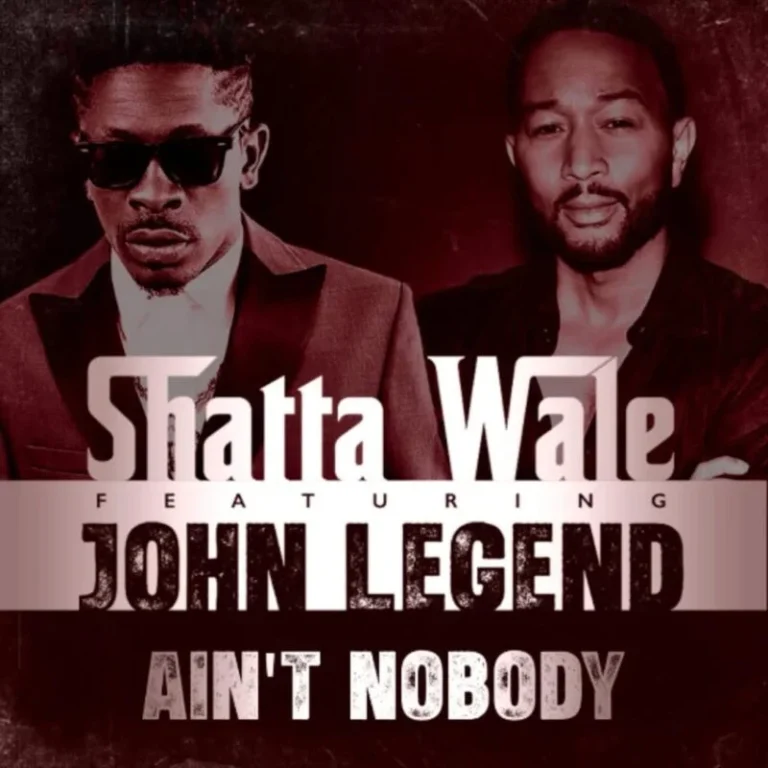
The global music landscape witnessed an unexpected and ambitious cross-continental collaboration on March 20, 2026, when Ghanaian dancehall heavyweight Shatta Wale joined forces with American R&B and soul icon John Legend for the single titled “Ain’t Nobody.” Released to digital streaming platforms and championed by African music portals, the track bridges two vastly different musical worlds: the high-energy, gritty dancehall rhythms characteristic of West Africa’s street culture and the smooth, piano-driven, emotionally resonant vocal stylings that have earned John Legend multiple Grammy Awards.
This release arrives at a time when collaborations between African artists and Western mainstream superstars have transformed from novelty events into a dominant commercial blueprint. However, pairing an uncompromising, raw dancehall exponent like Shatta Wale with a refined neo-soul artist like John Legend represents an unconventional stylistic intersection, sparking considerable discourse among music critics, industry analysts, and fans across the globe.

Chronology of the Collaboration and Release
The path to "Ain’t Nobody" reflects the shifting paradigm of modern music production, where physical distance is routinely bridged via digital file-sharing, virtual studio sessions, and international networking. While initial rumors of the collaboration began to circulate in early 2026 within Ghanaian music circles, the official rollout materialized on March 20, 2026.
- Early 2026: Industry insiders hint at a high-profile international crossover project involving Shatta Wale and a major American artist.
- March 20, 2026: "Ain’t Nobody" officially drops across major digital platforms, accompanied by promotional pushes on African entertainment blogs and global streaming playlists.
- Spring 2026: The track generates organic traction, entering regional charts and drawing comparisons to previous landmark Afrobeats-meets-Western pop pairings.
The single’s release was strategically positioned alongside concurrent projects within the West African music ecosystem, sharing news cycles with tracks from contemporary Ghanaian heavyweights such as Bisa Kdei, Medikal, Stonebwoy, and Sefa. Despite the bustling local release schedule, the Shatta Wale and John Legend collaboration immediately carved out its own narrative due to the sheer disparity in the artists’ primary musical domains.
Artistic Profiles and Contrasting Styles
To understand the weight of "Ain’t Nobody," one must examine the contrasting backgrounds of its primary architects. Charles Nii Armah Mensah Jr., professionally known as Shatta Wale, has spent over a decade cementing his status as one of Africa’s most polarizing and commercially successful dancehall artists. Emerging from the streets of Accra, Ghana, Shatta Wale built his empire on a foundation of relentless work ethic, street-level authenticity, and a distinctively gritty vocal delivery that champions resilience, hustle, and dancehall bravado. His massive fanbase, known as the Shatta Movement, operates with fierce loyalty, making him a dominant cultural force in West Africa.
Conversely, John Legend (born John Roger Stephens) represents the pinnacle of contemporary American soulful pop and R&B. With a storied career boasting a coveted EGOT (Emmy, Grammy, Oscar, Tony) status, Legend is globally renowned for his silky falsetto, emotive piano balladry, and socially conscious lyricism. His work—ranging from "Ordinary People" to collaborations with Kanye West, Alicia Keys, and Anderson .Paak—is defined by a polished, sophisticated aesthetic that appeals to adult contemporary listeners worldwide.
Merging these two sensibilities required a delicate sonic balancing act. "Ain’t Nobody" navigates this challenge by blending rhythmic percussion and dancehall-leaning grooves with lush harmonic arrangements and soaring vocal interplay, allowing both artists to operate within their comfort zones while testing new creative boundaries.
Industry Context and the Globalization of African Music
The release of "Ain’t Nobody" must be viewed through the wider lens of the globalization of African popular music. Over the past several years, genres originating from the African continent—primarily Afrobeats, but increasingly African dancehall, highlife, and alte—have experienced an unprecedented surge in global consumption. Major international labels, streaming services, and Western artists have actively sought partnerships with African talent to tap into new markets and inject fresh rhythmic textures into Western pop music.

Data from international music federations and streaming platforms consistently highlight double-digit year-on-year growth in Sub-Saharan music consumption and global streaming of African-origin tracks. Collaborations have evolved from token feature verses to fully integrated creative partnerships. While artists from Nigeria (such as Burna Boy, Wizkid, and Davido) have traditionally spearheaded these global crossovers, Ghanaian artists like Shatta Wale have increasingly asserted their presence on the international stage.
Shatta Wale’s previous high-profile international exposure includes his feature on American pop star Beyoncé’s critically acclaimed 2019 visual album The Lion King: The Gift, specifically on the track "Already." That collaboration proved that Shatta Wale’s aggressive dancehall delivery could sit comfortably alongside global pop production. "Ain’t Nobody" serves as a spiritual successor to that endeavor, demonstrating that his appeal extends beyond the Afrobeats-dominated landscape into the realm of classic American soul and R&B.
Market Reception and Fan Reactions
Upon its release, "Ain’t Nobody" elicited a broad spectrum of reactions from the global music community. Supporters praised the track as a masterclass in unexpected genre-blending, lauding Shatta Wale for his versatility and commending John Legend for stepping into a rhythmic cadence less typical of his standard repertoire. Social media platforms buzzed with user-generated content, reaction videos, and critical breakdowns analyzing how the production managed to merge dancehall’s heavy low-end with soul music’s rich harmonic depth.

However, the collaboration also drew nuanced critiques from purists on both sides. Some traditional dancehall fans expressed a desire for a more raw, hardcore production style akin to Shatta Wale’s solo street anthems, while certain contemporary R&B enthusiasts debated whether the vocal chemistry between the two artists reached the heights of their respective solo catalogs. Despite these mixed initial reviews, the single achieved significant streaming momentum, reinforcing the commercial viability of cross-genre experiments.
Broader Implications for African Artists and Western Collaborations
The pairing of Shatta Wale and John Legend points to several broader implications for the future of international music collaboration:
- Deconstruction of Genre Boundaries: As streaming algorithms continue to flatten traditional genre lines, listeners are increasingly receptive to pairings that would have seemed logistically or stylistically impossible two decades ago.
- Elevating Ghanaian Music Infrastructure: High-profile international features provide additional global visibility to the Ghanaian music industry, driving international streaming revenue, playlist placements, and tourism interest to Accra’s burgeoning creative hubs.
- Redefining Crossover Expectations: Rather than forcing African artists to dilute their native styles to fit Western pop standards, modern collaborations increasingly demonstrate a willingness to meet in the middle, preserving the linguistic, cultural, and sonic markers of the African artist.
As "Ain’t Nobody" continues to find its footing on global charts and curated playlists, it stands as a testament to the ongoing evolution of popular music—one where geographical and stylistic borders continue to dissolve in favor of cross-cultural artistic exchange.