The geopolitical landscape of the Middle East remains locked in a high-stakes confrontation as United States President Donald Trump asserts that the ongoing military engagement with Iran will reach a decisive conclusion immediately following the November 3 midterm elections. Speaking before a packed arena at the Republican midterm convention in Dallas, Texas, President Trump framed the upcoming vote as a pivotal moment for the nation, positioning the conflict not merely as a regional security operation, but as a fundamental struggle to prevent Tehran from achieving nuclear threshold capabilities. While the administration projects confidence regarding the war’s trajectory and promises a subsequent stabilization of global energy markets, the reality on the ground—marked by volatile oil prices and a recalibrated strategy of maritime containment—suggests a more complex and durable stalemate.
A Chronology of Escalation: From Deterrence to Open Hostility
The current hostilities are the culmination of a decade-long deterioration in relations, characterized by fluctuating sanctions and periodic flare-ups in the Persian Gulf. The latest chapter began in early 2026, when intelligence reports suggested a rapid acceleration in Iran’s enrichment activities.
- June 2026: Negotiators from several nations met in Islamabad to draft a Memorandum of Understanding (MoU) aimed at de-escalating tensions. The agreement, which hinged on an Israeli withdrawal from southern Lebanon and a reciprocal Iranian freeze on nuclear research, ultimately collapsed as regional stakeholders failed to reconcile their security requirements.
- August 2026: During the Shanghai Cooperation Organization (SCO) summit, Iranian President Masoud Pezeshkian expressed a willingness to return to the Islamabad framework. However, the window for diplomacy narrowed as the United States expanded its naval presence in the Strait of Hormuz.
- September 2026: The conflict entered a kinetic phase. Following a direct Iranian strike on a U.S. naval vessel, the White House authorized retaliatory strikes against Iranian oil tankers, causing global oil benchmarks to breach the $100-per-barrel threshold.
- September 10, 2026: The Islamic Revolutionary Guard Corps (IRGC) announced the seizure of an Anduril Dive-LD unmanned underwater vehicle, signaling that Iran remains capable of asymmetrical warfare despite the intensity of the U.S. air campaign.
The Economic Calculus: Energy Markets and Domestic Stakes
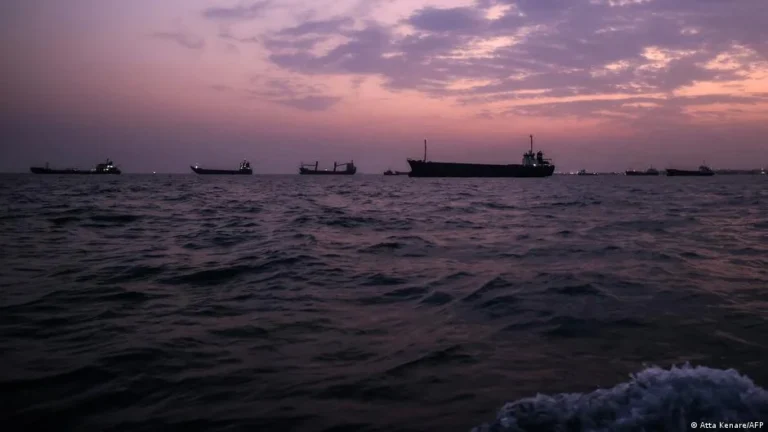
The economic implications of the conflict have moved to the center of the American political discourse. Brent crude, the global benchmark, has seen sustained upward pressure, exacerbated by the disruption of shipping lanes in the Strait of Hormuz—a narrow chokepoint through which approximately 20% of the world’s total petroleum consumption flows.
For the White House, the messaging strategy is clear: the administration maintains that the military effort is a "price of stability" that will yield lower energy costs once the threat of a nuclear-armed Iran is neutralized. However, macroeconomic analysts warn that the "war premium" on oil is likely to persist as long as the Strait of Hormuz remains a contested theater. Even if hostilities cease post-election, the physical damage to infrastructure and the regional uncertainty surrounding supply chains suggest that the inflationary impact on domestic gas prices may linger well into the next calendar year.
The political risk is palpable. Republican strategists are increasingly concerned that if the electoral results do not coincide with an immediate and tangible decline in energy costs, the party’s narrative of strength and prosperity could be undermined by the very voters they are attempting to court.
Strategic Restraint: The View from Academia and Policy Circles
While the rhetoric in Dallas remains hawkish, internal reports suggest a more measured approach within the administration. According to intelligence sources, senior White House advisers have cautioned the President against a full-scale ground invasion or an expanded bombing campaign prior to the midterms, fearing that a chaotic escalation could alienate independent voters.
Dr. Mohammad Ghaedi, a specialist in Middle Eastern security at George Washington University, describes the current situation as a "controlled instrument of coercive bargaining." According to Ghaedi, Iran is intentionally limiting its use of anti-ship missiles to prevent a totalizing American response that would threaten the regime’s survival.
"Tehran is performing a delicate tightrope walk," Ghaedi noted. "They need to demonstrate to their domestic base that they are resisting Western pressure, but they are terrified of pushing the U.S. into a ‘total war’ scenario. The limited number of attacks on naval vessels is not a lack of capability, but a deliberate choice to keep the conflict within a specific threshold."
The Dilemma of Pressure and Survival
The efficacy of economic sanctions, a cornerstone of the administration’s strategy, is also being questioned by experts. Dr. Ahmad Alavi, an economist who has tracked Iranian policy for decades, argues that the current approach may be counterproductive.
"When a regime perceives that the goal of external pressure is not a change in behavior, but a change in the regime itself, the cost-benefit analysis shifts," Alavi explained. "Survival takes precedence over economic relief. Consequently, the leadership in Tehran is more likely to prioritize national security and military posturing over the demands of the international community, unless there is a clear, institutionalized pathway to a diplomatic resolution."
Regional Diplomacy and the Search for a Buffer
As the U.S. and Iran remain deadlocked, regional powers are attempting to carve out a space for diplomacy. Oman, frequently acting as an intermediary, has been coordinating with other Gulf Cooperation Council (GCC) members to facilitate a maritime safety agreement. The proposed meeting in Salalah, Oman, is intended to secure a corridor for commercial shipping, effectively insulating the global economy from the military stalemate.
However, any such agreement faces a significant hurdle: Washington’s approval. The U.S. maintains that a comprehensive naval blockade is necessary to prevent Iran from replenishing its military supplies. Without a green light from the White House, regional efforts at de-escalation are likely to remain aspirational rather than functional.
The Domestic Political Horizon
As the October 27 Israeli elections approach, the regional dynamic is poised for further shifts. Many observers believe that the current state of "managed conflict" will hold until the results of both the Israeli and American elections are finalized. The outcome of the U.S. midterms, in particular, carries significant weight; a Democratic-controlled Congress could theoretically attempt to leverage the power of the purse to constrain the President’s war-making authority, a development that Tehran is likely monitoring closely.
The IRGC’s recent messaging, characterized by declarations that they will fight until "final victory," suggests that the regime in Tehran is digging in for a protracted struggle. By emphasizing the seizure of U.S. assets like the Anduril underwater drone, the IRGC aims to project an image of technical sophistication and tactical defiance.
Ultimately, the situation remains in a state of precarious suspension. The administration’s promise of an immediate end to the war post-election acts as a political deadline, but the historical record of conflicts in the Middle East warns against such optimism. Whether the post-November landscape brings a negotiated settlement or a transition into a more intense phase of the conflict depends on a myriad of factors, including the resilience of energy markets, the outcome of regional elections, and the willingness of both Washington and Tehran to accept a compromise that satisfies their respective security requirements. For now, the world remains in a holding pattern, waiting to see if the rhetoric of the campaign trail can withstand the unforgiving realities of regional power politics.