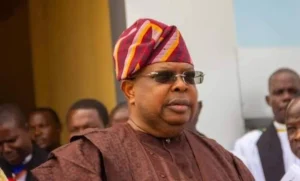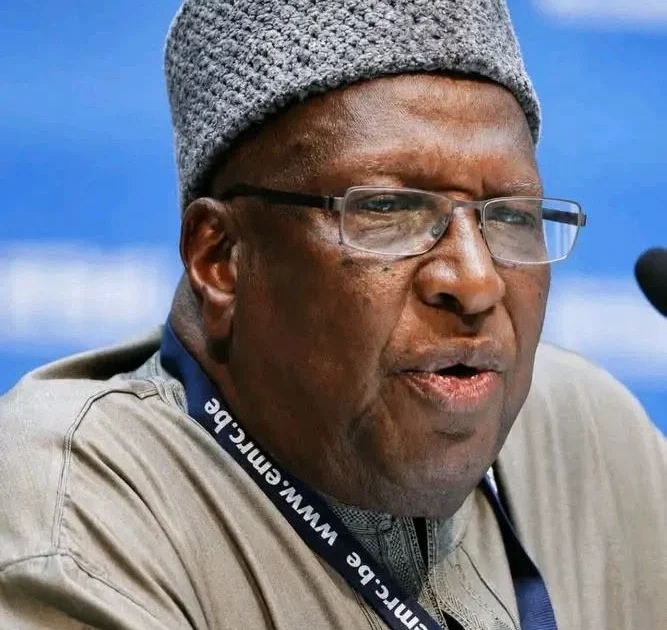
The passing of Alhaji Bamanga Tukur, a titan of Nigerian politics and industry, has triggered a wave of national mourning, with high-profile leaders including the Allied Peoples Movement (APM) presidential candidate and Oyo State Governor, Seyi Makinde, leading tributes to the nonagenarian. Tukur, who died on Saturday at the age of 90 following a prolonged battle with illness, was a multifaceted figure whose influence spanned the corridors of power, the maritime industry, and the complexities of international trade. His departure marks the end of an era for a generation of Nigerian leaders who shaped the nation’s post-independence trajectory.
In a formal statement issued by his Special Adviser on Media and Digital Communication, Anthony Ehilebo, Governor Makinde characterized Tukur as a "global torchbearer" who navigated the realms of business and governance with the precision of a colossus. The statement underscored the depth of the loss, noting that Tukur’s contributions were not merely local but had resonated across the African continent.
A Legacy Defined by Public Service
Bamanga Tukur’s career was characterized by a diverse range of responsibilities that bridged the gap between military-era administration and the transition into modern democratic governance. Born in 1932, Tukur rose to prominence through his disciplined approach to management and a keen intellect for economic policy.
His professional journey included significant milestones that helped shape the Nigerian state:
- Nigerian Ports Authority (NPA): As General Manager, Tukur was instrumental in modernizing Nigeria’s maritime infrastructure, a role that established his reputation as a technocrat capable of handling large-scale logistics.
- Gongola State Governor: During the military era, he served as the Governor of the old Gongola State (which now encompasses Adamawa and Taraba states), where he oversaw developmental projects that laid the groundwork for regional economic growth.
- Minister of Industries: His tenure as Minister allowed him to influence national industrial policy, pushing for domestic capacity building and the diversification of the economy.
- PDP National Chairman: In 2012, Tukur assumed the chairmanship of the Peoples Democratic Party (PDP) at a critical juncture in the party’s history, navigating intense internal power struggles and attempting to streamline the party’s ideological focus.
- NEPAD Business Group: His international stature was further cemented through his chairmanship of the New Partnership for Africa’s Development (NEPAD) Business Group, where he advocated for increased private sector involvement in African development.
Chronology of a Storied Life
The trajectory of Tukur’s life mirrored the evolution of the Nigerian state. From his early days in the civil service to his eventual foray into the high-stakes world of national politics, Tukur remained a constant figure.
In the late 1970s and 1980s, his leadership at the NPA was viewed as a masterclass in organizational management. Following the transition to civilian rule, he did not retreat from public life; instead, he leveraged his business acumen to advocate for greater regional integration within Africa. His appointment as Chairman of the PDP in 2012 was arguably the most controversial and high-profile phase of his late career, as he sought to instill discipline in the country’s largest political party. Though his tenure was cut short by political exigencies, his influence within the party remained significant for years thereafter.
Tributes and Official Responses
The reaction to his passing has been widespread, reflecting the cross-partisan respect he commanded. Governor Makinde’s tribute specifically highlighted Tukur’s integrity, vision, and excellence, noting that the late statesman served as a source of inspiration for contemporary political actors.
"Alhaji Tukur stood tall as an awe-inspiring personality," Makinde noted. "He played indelible roles and made immeasurable legacy contributions, dedicating his intellect, expertise, personal resources and energy to the unity, stability, and economic and democratic development of not only our dear nation, Nigeria, but of Africa and the wider world."
Political analysts suggest that the loss of Tukur represents the thinning of the ranks of Nigeria’s "old guard"—leaders who possessed a unique institutional memory of the country’s formative years. The Tukur family and the government of Adamawa State have received a deluge of condolences from various political stakeholders, including current government officials, traditional rulers, and business moguls who worked under his tutelage.
Economic and Political Implications
The death of Bamanga Tukur occurs at a time when Nigeria is grappling with significant economic shifts and political realignments. His career, which often bridged the divide between industrial development and partisan politics, offers a template for the modern Nigerian leader.
Economically, Tukur was a staunch proponent of the "private-sector-led growth" model. His work with NEPAD highlighted his belief that Nigeria’s path to prosperity was inextricably linked to the broader success of the African Continental Free Trade Area (AfCFTA) ideals—concepts he advocated for long before they became mainstream policy. His legacy in this regard remains a subject of study for current policy planners who look to his tenure at the NPA and the Ministry of Industries as examples of how to effectively manage state-owned enterprises.
Politically, his time as PDP National Chairman serves as a case study in the challenges of party administration in a heterogeneous society. Observers note that Tukur’s attempt to bring a "corporate" style of governance to a political party created friction but also forced the party to confront issues of internal democracy and constitutional adherence.
A Reflective Conclusion
Governor Makinde concluded his statement by expressing solace in the fact that Tukur lived a life of service and remained a devout Muslim until the end. "We are indeed pained that this great Nigerian left the scene at a time when his wealth of experience, wise counsel, tutelage and prayers are needed the most in the life of our nation," the Governor stated.
The Makinde/Daura Campaign organization echoed these sentiments, expressing deep sympathy for the Tukur family. As the nation prepares to lay the elder statesman to rest, the conversation has shifted toward the preservation of his legacy. Many have called for a posthumous recognition of his contributions to the maritime sector and his long-standing commitment to African development.
While the loss of a 90-year-old statesman is expected, the void left by Bamanga Tukur is felt keenly because of his continuous relevance in public discourse. He remained an "undefeated optimist," as described by Makinde, consistently offering solutions to national problems even in his twilight years. As Nigeria reflects on his life, the focus remains on the lessons he provided: that the bridge between the boardroom and the cabinet is a vital one, and that true leadership requires a blend of professional integrity and a selfless dedication to the national interest.
The passing of Alhaji Tukur is not just the end of a chapter for his family or his home state of Adamawa; it is a moment for the entire Nigerian political class to pause and evaluate the standard of service he set—a standard characterized by, as Makinde put it, "unmatched integrity, vision and excellence." As the nation moves forward, the principles Tukur championed—unity, stability, and economic development—remain the pillars upon which any future progress must be built. The life of Bamanga Tukur serves as a testament to the enduring impact of a man who gave his all to the service of his people, leaving behind a roadmap for future generations to follow.