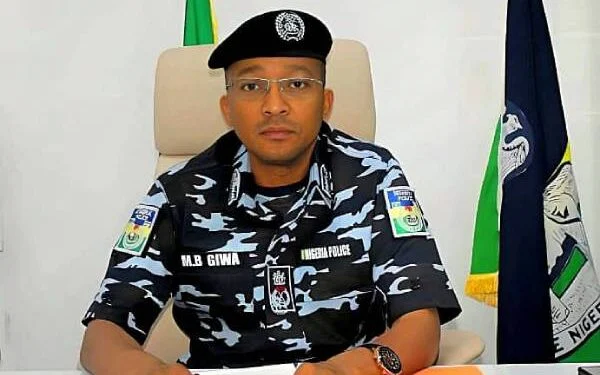
The security landscape in Enugu State has come under intense scrutiny following a wave of violent disturbances that marred political activities in Nkanu West Local Government Area on Saturday, September 12, 2026. The Enugu State Commissioner of Police, Mamman Bitrus Giwa, has formally ordered a high-level investigation into the coordinated attacks that targeted meetings of the Nigeria Democratic Congress (NDC) and the Peoples Democratic Party (PDP). These incidents, which involved armed intimidation and the destruction of campaign infrastructure, have ignited significant concerns regarding the safety of political aspirants and the sanctity of the democratic process as the nation pivots toward the 2027 general election cycle.
Chronology of the Nkanu West Incidents
The violence unfolded in two distinct locations, raising alarms about the potential for organized efforts to stifle political mobilization in the region. According to official police reports and corroborating eyewitness accounts, the first incident took place at the Ndiuno-Obuoffia community. During a ward meeting organized by the Nigeria Democratic Congress, a group of armed hoodlums arrived at the venue and began discharging firearms indiscriminately. The unprovoked aggression resulted in injuries to at least two attendees, sending participants fleeing for safety.
A video recording of the incident, circulated widely by activist Chuks Eric, captures the chilling moments when the tranquil proceedings—during which a speaker was methodically explaining the NDC’s party logo to residents—were shattered by the arrival of armed men. The footage underscores the intensity of the confrontation, as the chants of party supporters were silenced by the sound of gunfire.
The second wave of violence occurred later that same day at St. Joseph Primary School in Agbani. In this instance, the target was a scheduled rally of the Peoples Democratic Party. Witnesses reported that a group of unidentified individuals descended upon the venue, systematically destroying canopies, chairs, and other campaign logistics prepared for the rally. While no gunshot injuries were reported at the Agbani location, the destruction of property was complete, effectively preventing the political event from proceeding.
Official Police Response and Directive
Following the receipt of these reports, the Enugu State Police Command acted to secure the affected areas and restore order. Police spokesperson Daniel Ndukwe issued a formal statement on Sunday on behalf of Commissioner Mamman Bitrus Giwa, confirming that operatives had been deployed to both Ndiuno-Obuoffia and Agbani. The primary objective of these deployments was to prevent further breaches of the peace and to facilitate the apprehension of the suspects who had fled the scenes.
Commissioner Giwa has tasked the Deputy Commissioner of Police in charge of the State Criminal Investigation Department (SCID) with conducting a thorough, forensic, and intelligence-led investigation. The Commissioner has been categorical in his mandate: all those responsible for the violence, regardless of their political associations, must be identified and brought to justice.
"The Command will continue to maintain a peaceful and secure environment for lawful political activities and will deal decisively with anyone who violates the law," the statement read. The police, however, noted a critical lapse in the planning of these events. Neither the NDC nor the PDP had filed a formal notification or requested security coverage from the command prior to their respective gatherings. The police emphasized that such notifications are essential to allow the force to provide the necessary protective oversight for political rallies, particularly in a climate where political tensions are rising.
Contextualizing the Security Environment in Enugu
The incidents in Nkanu West occur against a backdrop of intensifying grassroots political mobilization. As political parties scramble to build momentum ahead of the 2027 elections, the competition for control in local government areas like Nkanu West has grown increasingly fierce. Political analysts observe that the use of "political thugs"—a recurring challenge in Nigerian electoral history—often points to a desperation among certain factions to prevent opposition parties from gaining a foothold in traditional strongholds.
While the police have not officially identified the attackers or linked them to any specific political entity, local speculation has pointed toward individuals allegedly affiliated with the ruling All Progressives Congress (APC) in the state. These allegations have added a layer of political sensitivity to the investigation. In response to the growing concern, Commissioner Giwa has reiterated the warnings he issued during a recent consultative meeting with stakeholders and leaders of all political parties in the state. He warned that acts of intimidation, the destruction of opponent property, and the use of violence are not only criminal but are significant electoral offenses punishable under the law.
The Broader Implications for Democracy
The disruption of these meetings highlights a troubling trend that could undermine the integrity of the upcoming electoral process if not addressed with urgency. In many parts of Nigeria, the "shrinking space" for political opposition is often characterized by such targeted disruptions, which serve the dual purpose of instilling fear in the electorate and preventing political parties from educating voters.
Historically, violence during the pre-election phase often correlates with higher levels of voter apathy and lower turnout on election day. When citizens feel that their safety is not guaranteed during political discourse, they are less likely to participate in the democratic process. Furthermore, the destruction of infrastructure—such as the chairs and canopies seen at the Agbani rally—imposes a financial burden on political parties, potentially forcing them to scale back their grassroots outreach.
The Enugu State Police Command’s insistence on the "prior notification policy" for political rallies serves as a mechanism to manage these risks. However, civil society groups argue that the responsibility for security should not rest solely on the parties. There is a growing call for the police to adopt a proactive, intelligence-led posture that monitors potential hotspots of political violence before they escalate, rather than reacting only after blood has been shed or property destroyed.
Data and Trends in Political Violence
Statistical data from the previous election cycles in Nigeria show that political violence frequently peaks during the early stages of party primaries and ward-level mobilizations. According to data from the Nigeria Security Tracker (NST), incidents of election-related violence often start as isolated skirmishes in local government areas before potentially escalating into wider civil unrest.
The use of non-state actors or "thugs" is a consistent variable in these reports. Experts suggest that the proximity of these incidents to the 2027 cycle indicates that the "win-at-all-costs" mentality remains deeply embedded in the political culture of the South-East. For the Enugu State Police Command, the current investigation represents a litmus test of its capacity to maintain neutrality and enforce the rule of law in an environment where the police are often accused of being co-opted by the ruling party.
Path Forward: Accountability and Prevention
To restore confidence, the investigation into the Nkanu West attacks must be transparent and yield tangible results. If the suspects are identified and prosecuted, it would serve as a significant deterrent to others considering similar tactics. Conversely, a failure to secure convictions in these cases could embolden perpetrators to carry out more daring attacks in the future.
Commissioner Giwa’s commitment to providing a secure environment for all political actors is a necessary step, but it must be coupled with sustained engagement. As political activities continue to gain momentum, the Command has signaled that it will be intensifying its patrols and intelligence-gathering operations across all 17 local government areas of Enugu State.
The political parties involved—the NDC and the PDP—have been urged to maintain decorum and cooperate with the police to ensure that future rallies are secure. While the right to freedom of assembly is enshrined in the Nigerian Constitution, this right is predicated on the maintenance of public order. As the state moves closer to the 2027 elections, the events in Nkanu West stand as a stern reminder that the path to a peaceful democratic transition requires not just the efforts of the police, but a commitment from every political stakeholder to prioritize the safety of the citizens they seek to represent.
As of the latest reports, no arrests have been confirmed, but police operatives remain stationed in the volatile areas. The public awaits further updates from the State Criminal Investigation Department, with many observers noting that the outcome of this case will be a defining moment for the security of the state’s upcoming political season.