Libya’s internationally recognized government has strongly rejected allegations that Ukrainian military personnel are utilizing its territory and maritime infrastructure to stage drone attacks against Russian vessels operating in the Mediterranean Sea. The firm denial, issued by the Ministry of Defence under the Tripoli-based Government of National Unity (GNU), represents an urgent effort by North African authorities to insulate the fractured country from the expanding geopolitical fallout of the Russia-Ukraine war.
The controversy erupted following an investigative report published by CNN, which claimed that Ukrainian naval drone operators had established a foothold at a military installation in Misrata, a vital port city in northwestern Libya. According to the report, Ukrainian forces were allegedly leveraging this strategic Mediterranean launching point to strike vessels belonging to Russia’s so-called "shadow fleet"—the network of aging tankers used by Moscow to transport crude oil in circumvention of international sanctions.
The GNU’s Ministry of Defence forcefully pushed back against these assertions, declaring that there is no agreement, arrangement, or coordination permitting the Misrata Military Base—or any other national defense facility—to serve as a staging ground for external military operations. Officials emphasized that Libya’s sovereign military assets are strictly reserved for defending the state within authorized legal frameworks and that no foreign government has been granted authorization to use Libyan land, airspace, or territorial waters for hostile actions targeting third nations.
Anatomy of the Allegations: The CNN Report and Intelligence Sources
The denial serves as a direct response to escalating international scrutiny regarding covert Ukrainian activities in North Africa. CNN’s investigative reporting featured statements from an active Ukrainian naval drone operator who claimed his tactical unit was operating out of Misrata. According to the source, the deployment was allegedly facilitated through a quid-pro-quo arrangement wherein Ukrainian specialists provided training to Libyan security forces in exchange for access to the coastal facility.
Furthermore, the network cited a Ukrainian defense intelligence source indicating that specialized Ukrainian military personnel had been deployed to northwestern Libya since late 2025. These personnel allegedly integrated into local security structures to conduct specialized maritime operations, marking a significant geographic expansion of asymmetric warfare tactics historically confined to the Black Sea theater.
The revelations have alarmed international observers, signaling that the protracted conflict between Moscow and Kyiv is increasingly finding proxy battlegrounds outside of Europe. By utilizing North African ports, Ukrainian operators could theoretically bypass heavily fortified Russian defenses in the Black Sea, striking vulnerable energy transports along vital maritime trade routes connecting the Middle East and Europe.
Chronology of an Escalating Maritime Conflict
Claims regarding a Ukrainian military presence in Libya did not emerge in a vacuum; rather, they follow a trail of maritime incidents and investigative reports spanning several months.
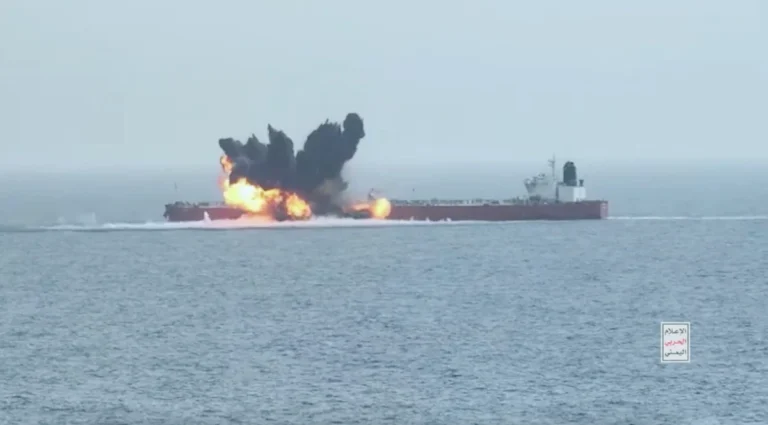
- December 2025: The first major indicator of unconventional maritime attacks in the region occurred when the Russian oil tanker Qendil sustained significant damage from an unidentified maritime drone strike in the central Mediterranean. Subsequent intelligence reports linked the attack to unacknowledged drone platforms launched from the broader Misrata area.
- March 4, 2026: Moscow formally accused Ukraine of utilizing North African infrastructure to stage maritime drone attacks following a separate incident involving the tanker Arctic Metagaz, which was severely damaged while navigating Mediterranean waters. The Russian foreign ministry condemned the action as an escalation threatening regional security.
- April 2026: French international broadcaster Radio France Internationale (RFI) published an extensive intelligence assessment claiming that more than 200 Ukrainian military officers and technical specialists were actively operating across western Libya. The report pinpointed hotspots in Misrata, Tripoli, and Zawiya, though Kyiv consistently maintained a policy of strategic ambiguity, neither confirming nor denying the deployments.
- September 12, 2026: CNN published its definitive investigative report featuring direct testimony from Ukrainian operators, prompting the immediate and categorical denial from the Libyan Ministry of Defence in Tripoli that triggered widespread diplomatic ripples.
Geopolitical Realities: A Nation Divided by Rival Powers
To fully understand the gravity of the current standoff, it is essential to examine the complex political and military fragmentation that has defined Libya since the fall of Muammar Gaddafi in 2011. The country remains sharply partitioned between rival governing authorities, creating a vacuum exploited by foreign powers pursuing competing strategic interests.
In western Libya, Prime Minister Abdul Hamid Dbeibah’s UN-backed Government of National Unity maintains administrative control over the capital, Tripoli, and key economic hubs like Misrata. The GNU relies heavily on foreign partnerships for its security and survival, with Turkey serving as its primary military and diplomatic ally. Turkish drone bases, military advisors, and training personnel have long been stationed in western Libya, creating a dense security environment where foreign technical assets operate with varying degrees of oversight.
Conversely, eastern and southern Libya are controlled by an administration backed by the House of Representatives and led by Prime Minister Osama Hammad. The true center of gravity in the east, however, rests with General Khalifa Haftar and the Libyan National Army (LNA). Haftar’s forces maintain deep, longstanding security ties with Moscow, transforming eastern Libya into a primary staging ground for Russian strategic ambitions in North Africa.
Russia’s Expanding Footprint: The Africa Corps in Libya
While reports of Ukrainian personnel have centered almost exclusively on western Libya, Russia has established a formidable, institutionalized military presence on the other side of the political divide.
A comprehensive June 2026 assessment by the U.S. National Geospatial-Intelligence Agency’s Tearline project detailed a massive expansion of Russian military infrastructure across Libya. The report confirmed the operational consolidation of the Russian Africa Corps across at least six strategic air bases: Al-Khadim, Al-Jufra, Tamanhint, Maaten al-Sarra, Al-Qardabiyah, and Brak al-Shati.
High-resolution satellite imagery analyzed by intelligence experts revealed extensive construction, renovation, and fortification efforts at these facilities. Upgrades included hardened aircraft hangars, expanded barracks, reinforced runways, and advanced air defense systems. These improvements are designed not only to support local operations but to project Russian air and logistical power deeper into the African Sahel region.
Furthermore, Moscow has actively sought to secure naval access along the Mediterranean coastline. Strategic initiatives targeting the air base and port facilities around Tobruk have accelerated, potentially granting the Russian Navy a permanent warm-water logistical hub capable of challenging NATO dominance in the central Mediterranean and protecting its critical economic shipping lanes.
Broader Implications and Strategic Analysis
The intersection of the Russia-Ukraine war and the Libyan civil conflict carries profound implications for Mediterranean security, international law, and regional stability.
First, the allegations underscore the growing vulnerability of global maritime commerce to asymmetric warfare. The "shadow fleet" utilized by Russia to export petroleum products has historically operated under the assumption that international waters—particularly far from the Black Sea—offer a safe harbor from direct military engagement. If Ukrainian asymmetric units are indeed operating out of North African ports, the operational calculus for Russian energy transport changes dramatically, potentially forcing Moscow to deploy naval escorts along international shipping corridors thousands of miles from the active warzone.
Second, the controversy places the Government of National Unity in an extremely precarious diplomatic position. Prime Minister Dbeibah’s administration is striving to maintain functional relationships with Western partners, including the United States and European Union nations, while simultaneously managing powerful domestic militias and foreign actors like Turkey. Being perceived as an active participant in proxy warfare against Russia risks provoking direct retaliatory measures from Moscow, which retains significant leverage through its military alliance with Haftar in the east.
Finally, the situation highlights the perils of a fragmented nation. When sovereign territory is divided among rival factions backed by opposing global superpowers, the host country loses the ability to enforce its own neutrality. As foreign intelligence agencies, proxy fighters, and advanced weapons systems continue to infiltrate Libyan infrastructure, the risk of miscalculation escalates, threatening to transform North Africa into an active secondary theater for a European war.
As international monitors and intelligence agencies continue to track maritime movements across the Mediterranean, the Libyan government’s rejection of the Misrata drone claims remains a vital diplomatic firewall. Whether Tripoli can successfully enforce this boundary amidst intense great-power competition remains one of the most critical security questions facing the region today.