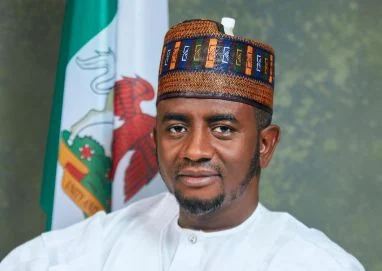
The Senator representing Bauchi South, Shehu Buba Umar, has formally submitted himself to the custody and investigative scrutiny of Nigeria’s primary intelligence and law enforcement agencies to address lingering allegations linking him to banditry, kidnapping, and terrorism financing. This move, characterized by the Senator as a proactive step to clear his name, marks a significant escalation in the ongoing political tension within Bauchi State as the nation looks toward the 2027 general elections.
Senator Buba, who currently serves as a prominent figure in the legislative chamber, has been the subject of persistent accusations since 2024. In a calculated effort to mitigate the damage caused by these claims, his legal team, headed by former Nigerian Bar Association (NBA) President Chief Yakubu Maikyau, SAN, has formally notified the Department of State Services (DSS), the Nigeria Police Force, and the Defence Intelligence Agency (DIA) of the Senator’s readiness to cooperate with any thorough and impartial inquiry.
The Genesis of the Allegations and Political Context
The accusations against Senator Buba are not entirely new; rather, they represent a resurgence of claims that have circulated in the political fringes of Northern Nigeria for nearly a decade. According to the Senator, the current wave of character assassination is a sophisticated, politically motivated campaign. He asserts that the narratives, which first surfaced in 2014, have been systematically resurrected and intensified following his recent declaration of intent to run for the governorship of Bauchi State under the banner of the Peoples Redemption Party (PRP).
The political landscape in Bauchi has become increasingly volatile. As an influential political actor, Buba’s transition to the PRP and his gubernatorial ambitions have seemingly disrupted the existing power dynamics, triggering what his camp describes as a desperate attempt by opponents to eliminate him from the electoral race through reputational destruction.
By leveraging social media platforms, anonymous actors have disseminated edited videos and unverified claims, suggesting a nexus between the Senator and non-state armed groups operating in the North-East and North-West regions. Senator Buba vehemently rejects these claims, categorizing them as fabrications designed to exploit the genuine public anxiety regarding the pervasive insecurity currently plaguing parts of Nigeria.
A Chronology of the Dispute
The timeline of these allegations reveals a pattern of accusation and rebuttal that has now reached a critical threshold:
- 2014: Initial whispers and unsubstantiated allegations regarding the Senator’s political conduct emerge, which Buba describes as the origin of the current smear campaign.
- 2024: Accusations of links to banditry gain traction in the media, prompting the Senator to initiate public denials and legal threats.
- September 5, 2025: The Department of State Services (DSS) confirms to the press that investigations into the allegations are ongoing, noting that findings will be disclosed at the appropriate time.
- Mid-August 2025: Senator Buba makes a formal, public commitment to present himself for questioning, backed by a high-profile legal team.
- Present Day: The Senator has officially submitted to security agencies, signaling a move from the court of public opinion to the chambers of legal and intelligence inquiry.
The Role of the Senate Committee on National Security
A significant portion of the controversy stems from Senator Buba’s previous tenure as the Chairman of the Senate Committee on National Security and Intelligence. In this capacity, the Senator was frequently involved in high-level security briefings, inter-agency meetings, and discussions regarding the government’s counter-terrorism strategy.
The Senator contends that his detractors have intentionally misrepresented these official duties. Activities that were legitimate components of his legislative oversight—such as engaging with stakeholders, participating in security summits, and communicating with various intelligence actors—are now being reframed by his accusers as evidence of a clandestine collaboration with criminal elements.
Political analysts observe that this strategy of conflating official legislative duty with criminal activity is a common tactic in Nigerian politics, intended to erode public trust in public officials. By casting doubt on the integrity of a high-ranking security-focused lawmaker, the accusers aim to paralyze his political effectiveness and isolate him from his constituents.
Legal Counter-Offensives
Recognizing the gravity of the accusations, Senator Buba has moved beyond mere verbal denials. His legal counsel has commenced formal defamation proceedings at the Federal High Court in Abuja. Furthermore, the Senator has taken the extraordinary step of filing a petition with INTERPOL, targeting an accuser whom he claims is operating from the Niger Republic.
This international dimension underscores the seriousness of the situation. By involving global law enforcement, the Senator is attempting to demonstrate that his accusers are not merely local political rivals but potentially part of a broader, organized network seeking to destabilize his public life. The involvement of Chief Yakubu Maikyau, a legal heavyweight, serves as a signal to the political establishment that the Senator is prepared for a protracted and rigorous legal battle.
Implications for Nigeria’s Security Landscape
The allegations against Senator Buba highlight a deeper, more systemic problem in Nigeria: the "securitization" of politics. When allegations of terrorism and banditry become standard weapons in the political arsenal, it complicates the efforts of the state to address the actual security crisis.
When security agencies are forced to expend resources investigating politically motivated petitions, their capacity to address genuine threats—such as the insurgencies in the Lake Chad basin or the banditry in the North-West—is inadvertently diminished. Moreover, the public’s perception of security agencies becomes polarized. Supporters of the accused see the investigations as a tool of political persecution, while opponents view any delay in prosecution as a sign of institutional weakness or corruption.
The DSS, in particular, faces a difficult balancing act. To maintain its institutional integrity, the agency must demonstrate that its investigations are conducted without fear or favor, irrespective of the political office held by the subject. As the agency indicated in its September statement, the public will be waiting for a conclusive and transparent outcome to ensure that justice is seen to be served.
Appeals for Calm and Future Outlook
In his address to constituents and supporters in Bauchi, Senator Buba issued a stern appeal for restraint. Fearing that the mounting tensions could lead to civil unrest or retaliatory violence, he urged his supporters to remain peaceful and avoid engaging in online harassment or physical confrontation with his opponents.
"The truth will prevail," he told those gathered, emphasizing that he welcomes a transparent, thorough, and impartial investigation by the security services. His strategy is clear: by voluntarily subjecting himself to the process, he is attempting to regain the moral high ground and force his accusers to either present substantive, admissible evidence or face the legal consequences of their claims.
As the situation unfolds, the focus will remain on the DSS and the police. The resolution of this case will likely serve as a benchmark for how the Nigerian state handles accusations of high-level complicity in criminal activities during an era of heightened political competition. For Senator Shehu Buba Umar, the next few months will be a defining period, as he seeks to transition from the shadow of these allegations toward his gubernatorial aspirations in 2027. Whether these accusations ultimately dismantle his political career or strengthen his resolve remains a matter for the investigative agencies and the courts of law to determine.