The agricultural sector in Nigeria witnessed a significant contraction in export earnings during the second quarter of 2026, according to trade data recently released by the National Bureau of Statistics (NBS). Through its Foreign Trade in Goods Statistics report, the bureau revealed that the nation generated N747.54 billion from its top ten agricultural export categories between April and June 2026. This performance marks a sharp decline when compared to previous quarters and the corresponding period of the preceding year, underscoring the inherent volatility of Nigeria’s non-oil export economy.
A closer examination of the figures indicates that the combined value of the top ten agricultural exports in Q2 2026 was 34.8 percent lower than the N1.15 trillion recorded in the first quarter of the same year. Furthermore, the earnings represent a 39 percent year-on-year drop from the N1.23 trillion achieved in the second quarter of 2025. Despite this overarching contraction, traditional cash crops such as cashew nuts, cocoa beans, and sesame seeds remained the primary drivers of agricultural foreign exchange earnings, albeit with dramatic internal shifts in volume and market grading.
Chronology and Trend Analysis: The Trajectory of Q2 2026
The trajectory of Nigeria’s agricultural trade throughout the first half of 2026 has been marked by erratic fluctuations. In the first quarter, high-value shipments—particularly superior-quality cocoa beans—bolstered aggregate figures. However, Q2 experienced a sudden reversal driven by seasonal harvesting patterns, global market corrections, and domestic supply chain realignments.
The transition from Q1 to Q2 saw profound reclassifications within the export basket. Most notably, superior-quality cocoa beans, which reigned supreme as the country’s highest-earning agricultural export in the first quarter at N596.90 billion, suffered a staggering 90.1 percent decline, plummeting to N58.82 billion and slipping to fourth place. Conversely, standard-quality cocoa beans experienced an exponential surge, climbing more than 6,320 percent from a modest N2.40 billion in Q1 to N154.31 billion in Q2.
This dramatic shift within cocoa categories suggests a possible alteration in bean grading, international buyer preferences, or domestic processing capacities during the mid-year cycle. Meanwhile, perennial heavyweights like raw cashew nuts managed to retain their top spot despite facing a year-on-year reduction in overall valuation.
Breakdown of the Top Ten Agricultural Exports
The National Bureau of Statistics data provides a granular view of the commodities that sustained Nigeria’s agricultural export sector in the second quarter of 2026, ranked from the tenth position to the market leader:
- Soya beans seed: Generating N11.44 billion, this segment showed notable resilience, more than doubling the N5.20 billion recorded in the first quarter.
- Crude Shea oil: Bringing in N12.66 billion, crude shea oil registered a steady upward tick from the N9.14 billion posted in Q1 2026.
- Natural cocoa butter: Valued at N27.60 billion, this processed cocoa derivative witnessed a contraction from its Q1 earnings of N41.69 billion and fell drastically short of the N105.07 billion recorded in Q2 2025.
- Other cut flowers and flower buds: This niche export category rebounded strongly to N31.43 billion in Q2, up from N12.23 billion in Q1, though it remained slightly below the N33.41 billion generated in the same period of 2025.
- Soya bean flours and meals: Accounting for N36.41 billion, exports here dipped from Q1’s N53.20 billion but recorded a solid 76.4 percent year-on-year increase compared to Q2 2025’s N20.64 billion.
- Soya beans excluding seeds: Surging into the top tier with N50.22 billion, this category nevertheless registered a 61.2 percent decline from the N129.27 billion realized in Q1 2026.
- Superior quality cocoa beans: Once the undisputed leader of the export ledger, this category fell to fourth place with N58.82 billion, down sharply from Q1 and below the N277.02 billion posted in Q2 2025.
- Sesamum seeds: Generating N96.03 billion, sesame maintained its stronghold as the third-largest agricultural export, dropping 37.6 percent from Q1’s N153.78 billion but rising 23.1 percent year-on-year against Q2 2025.
- Standard quality cocoa beans: Experiencing one of the most remarkable intra-year rebounds, this category surged to N154.31 billion, securing the runner-up position.
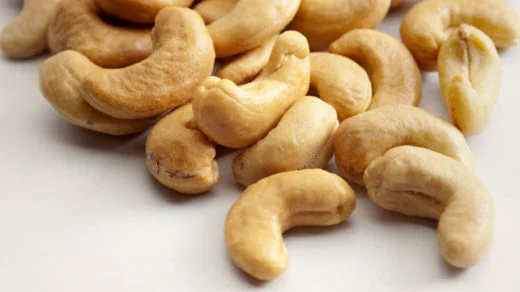
- Cashew nuts in shell: Cementing its status as Nigeria’s most lucrative agricultural export for the quarter, raw cashew nuts in shell raked in N268.62 billion. Although this represents a 23.8 percent decline from the N352.67 billion recorded in Q2 2025, it comfortably outpaced all competing commodities.
Sectoral Diversification: Beyond the Cocoa Monopoly
A deeper analysis of the Q2 2026 trade data reveals vital structural dynamics within Nigeria’s agro-industrial export framework. While cocoa has historically dominated national discourse regarding agricultural trade, recent quarters demonstrate a growing reliance on a diversified portfolio of non-oil commodities.
During the quarter under review, the combined earnings from three distinct cocoa categories—standard quality beans, superior quality beans, and natural cocoa butter—totaled N240.73 billion. While substantial, this aggregate figure is significantly lower than the N590.56 billion generated by the same group of products in the corresponding quarter of 2025.
In contrast, the synergistic performance of cashew and soybean products proved critical in cushioning the overall revenue fall. Cashew nuts in shell (N268.62 billion) combined with the three leading soybean categories within the top ten (yielding a collective N98.07 billion) amounted to a staggering N366.69 billion. This combined valuation accounts for nearly half—approximately 49 percent—of the entire N747.54 billion generated by the top ten agricultural exports.
Agricultural economists and trade analysts note that this distribution demonstrates that Nigeria’s agricultural export earnings are no longer entirely tethered to the fortunes of the cocoa value chain. The robust performance of cashew nuts and soybean derivatives highlights an expanding export footprint that provides a necessary buffer against commodity-specific price shocks.
Market Concentration and Structural Vulnerabilities
Despite the resilience shown by select crops, the overarching structure of Nigeria’s agricultural trade continues to exhibit high market concentration. The top three commodities alone—cashew nuts in shell, standard quality cocoa beans, and sesamum seeds—cumulatively generated N518.96 billion. This single metric accounts for roughly 69.4 percent of the total N747.54 billion recorded across the top ten export categories.
This heavy reliance on a narrow basket of primary agricultural products exposes the economy to systemic vulnerabilities. Stakeholders in the agricultural value chain point out that while strong international demand for Nigerian cashew, sesame, and cocoa can yield substantial foreign exchange windfalls, any domestic supply disruptions, adverse weather conditions, phytosanitary challenges, or sudden shifts in global commodity prices can severely compromise national export performance.
Furthermore, the sharp variance observed between the first and second quarters of 2026 underscores the cyclical and volatile nature of the export market. Exporters and farming cooperatives face persistent challenges ranging from logistical bottlenecks at major ports to financing constraints and inadequate post-harvest storage infrastructure, all of which inhibit consistent quarterly output.
Policy Implications and Expert Perspectives
The release of the Q2 2026 trade statistics has prompted renewed calls from industry groups, trade associations, and economic analysts for aggressive structural reforms within the agricultural sector. Experts argue that to insulate the economy from external shocks and seasonal revenue slumps, Nigeria must transition systematically from the export of raw, unprocessed agricultural commodities to value-added finished goods.
While raw cashew nuts and unrefined sesame seeds continue to command high export volumes, industry observers emphasize that establishing domestic processing plants would retain a greater share of economic value within the country, create employment opportunities, and generate more stable foreign exchange revenues. The decline in raw-to-processed ratios in certain sectors highlights the urgent need for targeted industrial policies that support local agro-processors.
Federal trade authorities and agricultural promotion agencies have previously reiterated their commitment to enhancing quality control standards to meet stringent international regulatory requirements, particularly within the European Union and Asian markets. Ensuring compliance with global sanitary and phytosanitary standards remains paramount to preventing trade rejections and maintaining the competitiveness of Nigerian agro-allied products abroad.
As the country looks toward the second half of 2026, policymakers, farmers, and exporters alike face the dual challenge of stabilizing production yields and broadening the export base. Navigating these complexities will be critical in determining whether Nigeria can transform its vast agricultural potential into a reliable, predictable, and shock-resistant pillar of sustainable economic growth.