The controversy surrounding the future management of one of Nigeria’s most prestigious educational institutions has taken a definitive turn following a high-level intervention by the Federal Government. The Federal Government has firmly maintained that there is no going back on the planned concession of the historic King’s College, Lagos, to the King’s College Old Boys Association (KCOBA). This definitive policy stance was coupled with a sweeping government assurance designed to assuage the fears of anxious labor unions: no worker at the 117-year-old institution will face dismissal or arbitrary redeployment as a result of the structural transition.
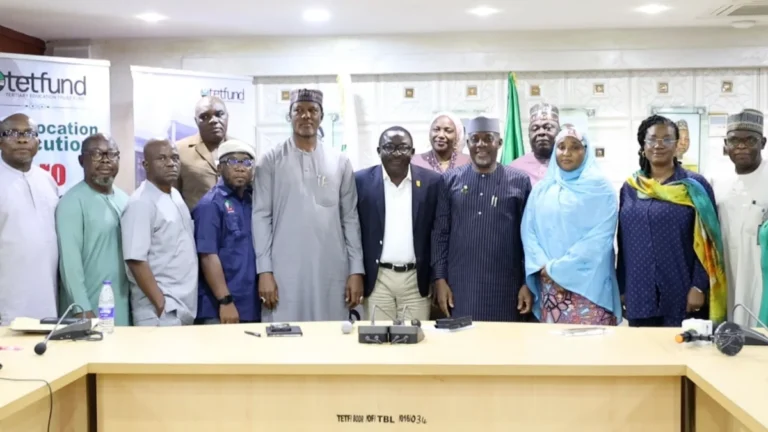
The pronouncement was delivered on Monday by the Minister of Education, Dr. Tunji Alausa, during an emergency stakeholder engagement in Abuja. The crucial meeting brought together the leadership of the Federal Ministry of Education and key labor organizations, including the Trade Union Congress (TUC) and the Association of Senior Civil Servants of Nigeria (ASCSN). The assembly was convened to address a simmering industrial dispute that had paralyzed academic activities across several Federal Unity Colleges nationwide. The official position of the ministry was subsequently broadcast to the public via a formal media statement issued by Ikharo Attah, the Special Adviser on Media and Communications to the Minister of Education.
Despite confirming that the foundational framework of the agreement with KCOBA will proceed as planned, the Federal Government demonstrated a willingness to compromise on operational specifics. Minister Alausa announced the immediate formation of a seven-member high-level review committee tasked with examining outstanding grievances raised by the labor unions. This committee has been mandated to review existing policy documents, incorporate valid stakeholder recommendations into the master agreement, and submit a comprehensive report within a tight operational window of one to two weeks.
Chronology of the Dispute and Escalation
The events leading up to Monday’s resolution reflect a rapid escalation of tensions between organized labor and federal educational authorities. The conflict originated from deep-seated anxieties regarding the privatization or outright sale of public educational assets. The term "concessioning" triggered widespread alarm among academic and non-academic staff unions, who feared that transferring management responsibilities to a private alumni association would erode public ownership, jeopardize civil service protections, and alter the operational status of the historic institution.
The friction intensified following a formal communiqué issued by the ASCSN on September 10, following an emergency national executive meeting. In the document, the union categorized the proposed concession arrangement as an "assault and affront" on the unity and public heritage of Nigeria’s educational architecture. Concurrently, parents, guardians, and various civil society stakeholders staged localized protests outside the premises of King’s College, Lagos, threatening legal action to stall the implementation of the partnership.
As resistance mounted, the labor unions escalated their strategy by directing their members across Federal Unity Colleges to initiate a total work stoppage. This industrial action severely disrupted academic calendars, compelling the Federal Ministry of Education to convene an emergency reconciliation meeting to avert a prolonged nationwide school shutdown.
Structure and Mandate of the High-Level Review Committee
To bridge the gap between government policy objectives and labor union demands, the newly constituted seven-member committee has been granted a specific, time-sensitive mandate. According to the structural framework outlined by Dr. Alausa, the panel comprises a balanced representation of key stakeholders to ensure transparency and equity.
The committee includes two high-ranking representatives from the Federal Ministry of Education—specifically the Minister of State for Education and the Acting Permanent Secretary—alongside a designated official from the Federal Ministry of Labour and Employment. To ensure the direct representation of worker interests, the TUC has contributed two senior-level officials to the panel. Similarly, the KCOBA is represented by two delegates who will provide institutional context and clarify the technical parameters of the concession agreement.
Operating under a strict one-to-two-week timeline, the committee is expected to review the entire scope of the concession document. Their primary objective is to reconcile the modernization goals of the alumni association with the job security and professional welfare of the civil servants currently deployed at the college.
Government Assurances on Worker Welfare and Civil Service Status
A central pillar of the government’s communication during the emergency meeting was the absolute protection of the workforce. Labor unions had expressed profound fears that a private management entity would introduce performance metrics, retrench personnel, or strip workers of their established civil service benefits.
Dr. Alausa countered these anxieties by issuing explicit, categorical guarantees regarding staff retention and protection. He affirmed that every academic and non-academic staff member currently stationed at King’s College will retain their positions. Furthermore, all personnel will continue to be governed strictly by the provisions of the Public Service Rules. The minister explicitly promised that there would be no arbitrary deployments, punitive transfers, or administrative demonization of any worker who participated in the recent labor agitation.
"There will be no demonisation or punishment of any member of staff arising from these issues," Dr. Alausa assured the labor leaders, emphasizing that the state remains committed to upholding the constitutional rights and employment stability of public servants.
The Rationale Behind the Concession: Infrastructure and Funding Realities
To contextualize the government’s unwavering stance on the concession, officials reiterated the dire financial and infrastructural challenges facing King’s College. Founded in 1909, the institution has produced generations of prominent Nigerian leaders, intellectuals, and professionals. However, decades of bureaucratic bottlenecks, constrained national budgets, and systemic underfunding have left several of the college’s historic facilities in a state of severe disrepair.
Government representatives explained that the concession model does not constitute a sale or privatization of public property. King’s College remains firmly under public ownership and federal oversight. Instead, the arrangement empowers KCOBA to inject substantial private capital into the institution under a "finance, rehabilitate, modernize, operate, and maintain" framework.
As part of this comprehensive modernization strategy, KCOBA previously announced a monumental N100 billion endowment fund. This financial commitment is earmarked for structural overhauls, the upgrade of science laboratories, the renovation of student hostels, the integration of modern digital learning technologies, and the overall enhancement of the campus learning environment—improvements that the federal budget alone could not immediately sustain.
Labor Reaction and Suspension of Industrial Action
The leadership of the Trade Union Congress welcomed the federal government’s conciliatory approach and the establishment of the review committee. Speaking to journalists after the conclusion of Monday’s meeting, TUC General Secretary Comrade Nuhu Toro described the negotiations as "fruitful and robust," noting that the grievances of the workforce were evaluated with mutual respect and good faith.
In light of the concessions made by the government, the TUC announced the immediate suspension of the nationwide industrial action directed against its affiliates in Federal Unity Colleges. Toro confirmed that academic activities would resume without delay, allowing the newly formed committee sufficient space to deliberate on the policy documents and integrate worker-centric recommendations.
However, the labor leadership maintained a cautious stance, inserting a conditional clause into the resolution. Toro stated that the unions reserve the legal and industrial right to resume the suspended strike action should the committee fail to satisfactorily address their core concerns within the stipulated timeframe.
Despite this caveat, the TUC leadership acknowledged the undeniable urgency of addressing the infrastructural decay plaguing King’s College. Toro conceded that maintaining the status quo was no longer viable given the deteriorating physical state of the campus facilities, characterizing the final outcome of the emergency talks as a "win-win" situation that safeguards worker welfare while opening the door for much-needed infrastructural renewal.
Broader Implications for Public Education and Public-Private Partnerships in Nigeria
The resolution of the King’s College dispute carries profound implications for the broader landscape of public education and infrastructure management in Nigeria. For decades, Federal Unity Colleges have served as symbols of national integration and academic excellence, yet they have suffered immensely from recurrent budgetary shortfalls and infrastructural decay.
The utilization of alumni associations and private sector partnerships to revitalize public schools represents an evolving paradigm in Nigerian public administration. While model concessions can unlock immense capital and administrative efficiency, they frequently ignite ideological battles regarding the commercialization of public education and the security of labor rights.
By navigating this delicate intersection through structured dialogue, the Federal Government has established a potential blueprint for future public-private partnerships within the social sector. The success of the King’s College concession will likely be scrutinized by policymakers, labor unions, and educational stakeholders as a litmus test for whether private philanthropic capital can be successfully integrated into public institutions without compromising their public ethos or destabilizing the civil service workforce.
As the seven-member committee commences its deliberations, attention now shifts to the panel’s forthcoming recommendations. The ultimate test of this agreement will lie in its implementation—balancing the urgent necessity of infrastructural modernization with the preservation of institutional heritage and the absolute protection of worker rights.