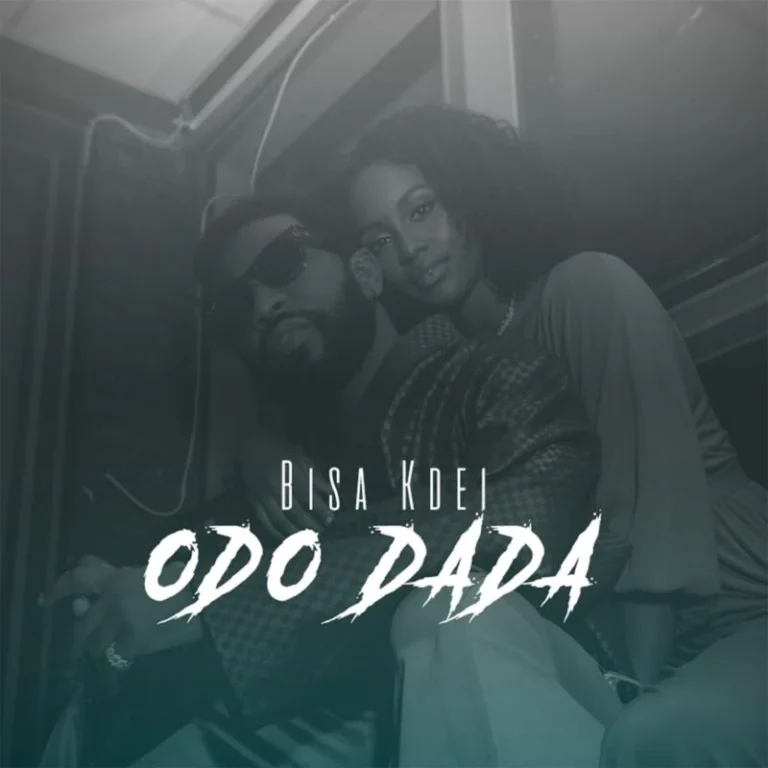
The contemporary African music landscape continues to experience a vibrant resurgence of highlife and Afro-fusion sounds, spearheaded by some of the genre’s most enduring and decorated acts. Ronald Kwaku Dei Appiah, globally recognized by his stage moniker Bisa Kdei, has once again captured the attention of music critics and fans alike with the release of his latest musical project, titled "Odo Dada." Dropping in mid-November 2025, this release marks another significant chapter in a career defined by soulful lyricism, traditional highlife rhythms, and a modern production aesthetic that resonates across borders.
Known widely as one of Ghana’s premier singer-songwriters and record producers, Bisa Kdei has consistently bridged the gap between golden-era highlife and contemporary pop sensibilities. "Odo Dada" arrives on the heels of intense anticipation from the African music community, further solidifying the artist’s reputation as a reliable hitmaker who remains deeply rooted in authentic storytelling. Alongside the single release, recent promotional updates and industry leaks have revealed an upcoming collaborative pipeline that sees Bisa Kdei working alongside some of the most prominent female powerhouses in the Ghanaian music scene, including Adina, Sefa, and Yaa Jackson. This strategic rollout underscores a broader industry trend toward high-profile collaborations designed to maximize cross-demographic appeal and dominant airplay.
Background and Context of the Release
To understand the weight of Bisa Kdei’s latest offering, one must examine his trajectory within the global music ecosystem. Emerging prominently in the early 2010s, Bisa Kdei initially carved out a niche as an elite sound engineer and hook-master before transitioning into a formidable solo artist. His breakthrough came with chart-topping movie soundtrack contributions and subsequent smash hits such as "Mansa" and "Brother Brother," tracks that fundamentally revitalized mainstream appreciation for authentic highlife music during an era heavily saturated with localized dancehall and hip-hop influences.
Over the past decade, the global appetite for African music has undergone a seismic shift, with Afrobeats taking center stage on international charts. However, artists like Bisa Kdei have maintained a steadfast commitment to preserving the acoustic warmth and rhythmic cadence of highlife, infusing it with contemporary percussive elements to stay competitive. "Odo Dada" embodies this artistic evolution. The track explores deep themes of romance, vulnerability, and nostalgia—hallmarks of Bisa Kdei’s songwriting portfolio—while benefiting from crisp, modern engineering that meets international mixing and mastering standards. The song’s thematic exploration of love ("Odo Dada," translating loosely to timeless or profound love) strikes a resonant chord with listeners navigating modern relationships against a backdrop of traditional values.
Chronology of Recent Musical Rollouts
The deployment of Bisa Kdei’s late 2025 and early 2026 musical strategy showcases a calculated approach to audience engagement and digital footprint expansion.

The campaign gained significant momentum in November 2025 with the official launch of "Odo Dada," which quickly climbed streaming playlists across West Africa and diaspora hubs in London and North America. Rather than resting on the organic traction of the single, the artist’s management team orchestrated a coordinated release schedule. This schedule seamlessly tied into adjacent promotional activities, including high-profile music video drops and cross-platform artist features.
Shortly following the premiere of "Odo Dada," promotional teasers emerged concerning a massive collaborative effort bringing together Bisa Kdei, vocal powerhouse Adina Thembi, Afro-dancehall sensation Sefa, and multi-talented entertainer Yaa Jackson. This upcoming collective project—teased heavily across digital media platforms in late 2025 and early 2026—demonstrates a deliberate effort to blend diverse vocal textures and fan bases. Industry insiders note that assembling artists from varying stylistic backgrounds—Adina’s soulful R&B-infused delivery, Sefa’s rhythmic versatility, and Yaa Jackson’s vibrant pop-culture presence—creates a multifaceted sonic product capable of dominating diverse radio formats simultaneously.
Supporting Data and Industry Metrics
The commercial viability of Bisa Kdei’s recent releases is anchored by robust digital consumption patterns across major streaming platforms such as Spotify, Apple Music, Boomplay, and YouTube. In recent years, Ghanaian highlife and highlife-fusion genres have witnessed a steady upward trajectory in streaming volume, driven largely by increased internet penetration in sub-Saharan Africa and a burgeoning diaspora audience in the United States, the United Kingdom, and Germany.
According to preliminary streaming telemetry following the release of "Odo Dada," the track achieved top-tier placement on several regional editorial playlists, registering significant day-one streams that outpaced several of the artist’s previous mid-cycle releases. Furthermore, engagement metrics on digital video platforms indicate strong replay value, with lyric videos and visualizers generating substantial user interaction within the first week of publication.
The impending collaborative tracks featuring Adina, Sefa, and Yaa Jackson are projected to capitalize on an even broader aggregate audience. Combined, these four artists command a multi-million-follower footprint across social media channels, providing a formidable marketing engine that virtually guarantees cross-pollination of fan bases. Music economists point out that multi-artist collaborations of this caliber typically experience a 30 to 45 percent spike in initial playlist adds compared to solo releases, heavily mitigating the financial risks associated with high-budget video production and pan-African radio promotion campaigns.
Reactions from Industry Observers and Peers
The broader Ghanaian entertainment industry has responded to Bisa Kdei’s recent moves with widespread acclaim and anticipation. Veteran music producers, radio executives, and cultural critics have lauded the artist for his refusal to passively chase transient micro-trends, choosing instead to anchor his longevity in superior vocal delivery and authentic instrumentation.

Speaking on the cultural importance of "Odo Dada," prominent Accra-based radio pundits highlighted how the track serves as a masterclass in modern highlife arrangement. "Bisa Kdei understands the psychological connection that the African listener has with highlife music," noted one prominent entertainment analyst. "When you listen to ‘Odo Dada,’ you hear the evolution of a genre that refuses to die. He takes the sorrow and the joy of traditional highlife and packages it for a twenty-first-century global audience without losing its soul."
Reactions to the teased collaborations with Adina, Sefa, and Yaa Jackson have been equally enthusiastic. Collaborations bridging male highlife mainstays with versatile female vocalists have historically produced some of the most enduring anthems in contemporary Ghanaian music history. Peers within the industry have taken to social media to express excitement, with several producers and artists publicly endorsing the creative direction of the project. The inclusion of Yaa Jackson, in particular, has been praised as an inspired choice that bridges the gap between mainstream pop culture and traditional melodic composition.
Broader Impact and Market Implications
The release of "Odo Dada" and the accompanying collaborative slate arrive at a critical juncture for the African music economy. While Nigerian Afrobeats and South African Amapiano currently dominate continental export metrics, Ghanaian artists are increasingly leveraging strategic collaborations and sonic diversification to carve out sustainable global market shares.
Bisa Kdei’s approach offers a viable blueprint for legacy artists seeking to maintain relevance in a hyper-fast digital consumption age. By balancing solo artistic statements that reinforce his core identity ("Odo Dada") with high-energy, collaborative pop experiments (the upcoming joint tracks with Adina, Sefa, and Yaa Jackson), he effectively hedges against market saturation while continuously refreshing his creative palette.
Furthermore, these releases carry positive implications for the valuation of highlife music intellectual property. As streaming platforms increasingly categorize African music into broad umbrella genres, the deliberate preservation and commercialization of distinct sub-genres like highlife ensure cultural continuity. The financial success of projects like "Odo Dada" signals to investors and record labels that traditional African rhythms, when executed with modern production standards, possess immense commercial longevity and cross-border viability.
As Bisa Kdei continues to roll out accompanying visuals and promotional dates for his upcoming slate, stakeholders across the entertainment supply chain will be watching closely. If initial streaming numbers and critical reception are any indication, "Odo Dada" and its star-studded successor projects are well-positioned to define the sonic landscape of the upcoming release cycle, further cementing Bisa Kdei’s legacy as a pillar of modern African music.