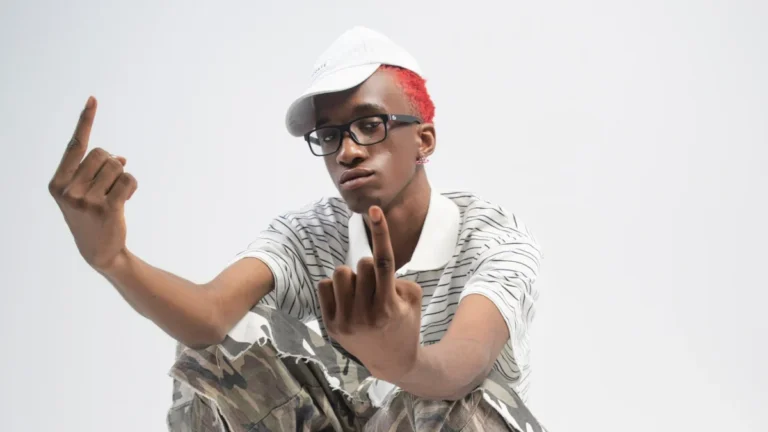
The Nigerian music industry, known for its vibrant online culture and highly engaged fan bases, has found itself at the center of a social media reckoning. Mavo, a rising artist in the Afrobeats landscape, recently took to his official social media channels to issue a public apology for a series of disparaging tweets that resurfaced from his undergraduate years. The posts, which contained critical commentary regarding high-profile industry figures such as Davido and Ayra Starr, ignited a firestorm of debate regarding the accountability of artists for their digital footprints.
The Anatomy of the Digital Controversy
The controversy began when internet users—often referred to as "archaeologists" in the digital age—began digging into the historical social media activity of various public figures. Mavo’s profile was flagged for remarks he made as an undergraduate, a time when he frequently engaged in the contentious world of "stan twitter" and entertainment criticism.
At that stage in his life, Mavo admitted that his online persona was defined by a critical, often cynical, view of the music industry. He frequently scrutinized the creative output, personal lives, and public appearances of established stars. While such behavior is common among casual social media users, the stakes changed significantly once Mavo transitioned from a spectator to an active participant in the professional music scene.
A Chronology of the Incident
The timeline of this incident reflects the permanence of the internet.
- The Formative Years (Circa 2020-2023): During his time in university, Mavo was a vocal participant in online entertainment discourse. His tweets frequently targeted established industry leaders.
- The Professional Pivot: Upon entering the music industry as a professional recording artist, Mavo reportedly shifted his focus toward his own creative endeavors, effectively abandoning his role as a critic.
- The Resurgence (September 2026): Archived screenshots of his early tweets were circulated by social media users, creating a narrative that painted the singer as hypocritical or hostile toward his peers.
- The Formal Apology (September 24, 2026): Following the mounting pressure and the viral spread of these screenshots, Mavo issued a comprehensive, conciliatory statement via his official account, seeking to close the chapter on his past behavior.
The Psychology of Online Criticism
In his statement, Mavo reflected on the shift in his perspective, noting that his earlier hostility was born out of a misunderstanding of how the industry operates. "I was a bad entertainment critic when I started uni until I realized superstars don’t really care about Twitter," he wrote.
This observation highlights a growing trend in the music industry: the disconnect between the hyper-critical online echo chamber and the reality of professional artists who are often too busy navigating the demands of global tours, studio sessions, and brand management to engage with individual detractors. By choosing to focus on his own craft, Mavo claims he has reached a state of professional "bliss," suggesting that the energy once spent on criticism was detrimental to his own creative growth.
Implications for Modern Artists
The case of Mavo serves as a cautionary tale for emerging talents in the digital age. In an era where every tweet, post, or comment is archived, the barrier between a private individual’s musings and their future public image is non-existent.
Public relations experts and talent managers have increasingly advised artists to "sanitize" their social media histories before reaching a level of fame where their pasts are subjected to public scrutiny. However, as Mavo’s situation demonstrates, even when an artist does not delete their past, the act of owning it—and providing context—can serve as a powerful tool for reputation management. By addressing the issue head-on rather than ignoring it, Mavo successfully controlled the narrative, framing his previous actions as a symptom of youth and ignorance rather than professional malice.
The Value of Professional Maturation
One of the most compelling aspects of Mavo’s apology was his admission regarding his real-life encounters with the individuals he once criticized. He noted that upon meeting these artists in professional settings, his prior judgments were dismantled by the reality of their character.
"I have met most of these people and they actually turn out to be amazing people," he stated. This underscores a vital truth about the entertainment industry: the personas presented to the public—and the caricatures constructed by social media critics—are often vastly different from the actual human beings behind the music. His willingness to admit to "misjudgment" suggests a level of maturity that is often demanded of public figures but rarely practiced with such transparency.
Industry Reactions and Public Sentiment
While no official statements have been released by the management teams of the artists mentioned in the tweets, the public reaction has been largely nuanced. Some segments of the internet remain skeptical, questioning whether an apology is sufficient for years of online vitriol. Others have praised the artist for his vulnerability and his willingness to break the cycle of negativity that often plagues the Nigerian music community.
The broader impact of this event is a renewed conversation about the toxicity of social media discourse. In the Nigerian music industry, where rivalries and fan wars are common, Mavo’s decision to "let love lead" acts as a counter-narrative to the prevailing culture of antagonism. It highlights a shift in industry standards where collaboration and mutual respect are being prioritized over the divisive, engagement-driven rhetoric that characterized the early 2020s.
Analyzing the "Digital Footprint" Phenomenon
Statistically, the impact of such controversies on an artist’s career can be significant. Studies on digital reputation management suggest that "cancellation" or intense backlash usually subsides within 72 hours if the individual provides a sincere, non-defensive apology. By taking responsibility within a relatively short window after the posts resurfaced, Mavo effectively mitigated the risk of a long-term boycott or professional fallout.
Furthermore, the data suggests that audiences are increasingly forgiving of past transgressions when they perceive a clear "arc of growth." Mavo’s transition from a vocal critic to a focused artist creates a compelling narrative of personal development. This arc allows his current fan base to separate the version of him that existed years ago from the artist he is today, thereby protecting his brand equity.
Future Outlook
As Mavo continues to develop his career, this incident will likely be viewed as a formative moment of professional maturation. The music industry is a small, interconnected world; burning bridges through social media commentary is rarely a sustainable strategy. By proactively closing the chapter on his past, Mavo has cleared the path for potential future collaborations and has demonstrated a commitment to professional integrity.
Moving forward, the focus for the artist will likely shift back to his music. The lesson learned—that public criticism of peers is ultimately counterproductive—is one that many young creators are currently navigating. In a fast-paced, high-pressure environment, the ability to maintain composure and respect for one’s colleagues is as important as vocal talent or songwriting ability.
Ultimately, Mavo’s experience highlights the evolving nature of celebrity in the 21st century. It is a reminder that the internet never forgets, but it also provides a platform for redemption. Through his apology, Mavo has not only addressed the specific grievances of his critics but has also contributed to a more positive, professional discourse within the Nigerian entertainment space. Whether this will lead to tangible professional outcomes remains to be seen, but the initial response suggests that the industry is ready to move past the incident and focus on the music itself.