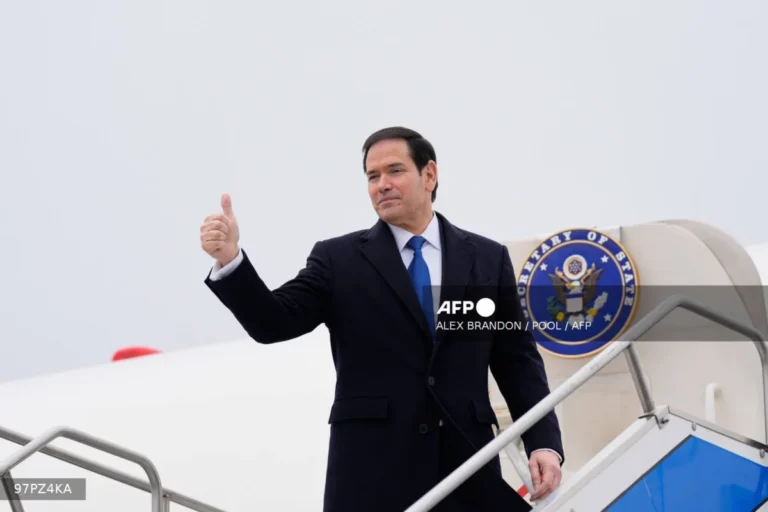
The United States government has officially escalated its diplomatic and economic pressure on Pretoria, rolling out a sweeping new visa restriction policy targeted at foreign nationals deemed responsible for or complicit in race-based discrimination, the incitement of violence, and uncompensated land seizures in South Africa. The announcement, delivered by US Secretary of State Marco Rubio, represents a significant hardening of Washington’s foreign policy stance toward the democratic African nation and underscores deep ideological and policy fractures between the two countries regarding land reform, minority rights, and the rule of law.
The newly minted punitive framework is enacted under Section 212(a)(3)(C) of the United States Immigration and Nationality Act. This statutory provision grants the Secretary of State broad discretionary authority to bar the entry of foreign nationals whose presence or activities in the United States could reasonably be expected to have serious adverse foreign policy consequences. According to the State Department, the policy does not only apply to the primary architects of the contested policies but extends to certain immediate family members, effectively raising the personal stakes for targeted officials, lawmakers, and political actors in South Africa.
Background Context: The Roots of US-South Africa Friction
The origins of this diplomatic confrontation are deeply rooted in long-standing domestic debates within South Africa concerning post-apartheid economic transformation, historical land dispossession, and minority demographic anxieties. Following the end of apartheid in 1994, successive South African administrations have grappled with the severe racial disparities in land ownership, where the vast majority of commercial agricultural land remained concentrated within the hands of the white minority population, who make up a small fraction of the country’s total demographic profile.
To address these historical inequities, the ruling African National Congress (ANC) and coalition partners have pursued various legislative and constitutional avenues to redistribute wealth and property. Central to this platform has been the contentious debate over Expropriation Without Compensation (EWC). Proponents of the policy argue that true economic emancipation and social justice are impossible without structural land reform that corrects centuries of colonial and apartheid-era theft.
However, these measures have faced fierce resistance from conservative political factions, agricultural unions, and minority advocacy groups—most notably organizations representing Afrikaners, the Afrikaans-speaking population primarily descended from Dutch settlers. Critics of the land reform agenda, both domestic and international, argue that uncompensated expropriation threatens private property rights, risks undermining the nation’s agricultural productivity and food security, and fosters an environment of economic instability. Over recent years, these domestic grievances found a receptive audience among conservative policymakers in Washington, who increasingly framed the plight of Afrikaners through the lens of targeted systemic discrimination and rising racially motivated crime.
Chronology of Escalation: From Executive Orders to Visa Sanctions
The trajectory leading to the current visa restrictions has developed through a series of escalating diplomatic signals and executive actions by the United States government:
- Pre-2026 Policy Alignment: Conservative lawmakers and advocacy groups in the United States steadily built a narrative alleging that South African minority populations were facing systemic state-sponsored discrimination and rising rates of racially motivated violent crime, particularly farm attacks targeting white landowners.
- Issuance of Executive Order 14204: Prior to the current announcement, United States President Donald Trump signed Executive Order 14204, titled "Addressing Egregious Actions of the Republic of South Africa." This foundational directive formally codified Washington’s official policy concerns regarding South Africa’s land expropriation initiatives, minority rights, and public political rhetoric involving racial polarization.
- Diplomatic Engagements and Impasse: Throughout late 2025 and early 2026, American diplomatic channels communicated these concerns to Pretoria, urging a recalibration of certain legislative measures and public rhetoric. According to the US State Department, the South African government failed to take adequate steps to address or mitigate these concerns.
- February 16, 2026: US Secretary of State Marco Rubio visited Budapest, Hungary, where international diplomacy consultations foregrounded global nationalist and sovereignty debates. Shortly following this trip, Secretary Rubio finalized and formally announced the new visa restriction directive targeting individuals linked to South African land and racial policies.
- February 17, 2026: The State Department officially published the policy declaration, operationalizing the visa restrictions under Section 212(a)(3)(C) of the Immigration and Nationality Act and placing the international community on notice regarding Washington’s enforcement priorities.
Official Statements and Declarations
In his public statement detailing the policy, Secretary Rubio left little room for ambiguity regarding the motivations and gravity of the American position. He emphasized that the United States administration remains profoundly troubled by what it views as a deterioration of constitutional protections for minority populations in South Africa.

"As stated in President Trump’s Executive Order 14204, ‘Addressing Egregious Actions of the Republic of South Africa,’ the United States remains gravely concerned about racially motivated crime and government-sponsored discrimination occurring against the Afrikaners and other minority populations in South Africa, including race-based discriminatory legislation, threats of land expropriation without compensation, and incitement of racial violence through dehumanising chants and slogans," Rubio declared.
The Secretary of State explicitly tied the actions of South African policymakers to broader international principles of governance, arguing that the legislative direction pursued by Pretoria is fundamentally incompatible with global economic stability and the rule of law.
"The South African government has not adequately addressed the previously laid out concerns and so today, I am announcing a new visa restriction policy under Section 212(a)(3)(C) of the Immigration and Nationality Act targeting foreign nationals who are responsible for, or complicit in, the enactment or implementation of laws or policies that enable uncompensated land seizures, race-based discrimination, and/or the incitement of imminent violence against members of minority ethnic or racial groups in South Africa," Rubio stated. "The United States will not allow such behaviour to go unchecked. These actions directly undermine peace, economic stability, and the rule of law, and they are incompatible with the pillars of America’s foreign policy."
Implications for Bilateral Relations and Trade
The imposition of these visa restrictions carries profound implications for the bilateral relationship between the United States and South Africa, two nations that have historically maintained complex trade, security, and diplomatic ties. South Africa is a major beneficiary of the African Growth and Opportunity Act (AGOA), a vital trade pact granting duty-free access to the US market for thousands of African products. Diplomatic analysts note that the introduction of targeted visa sanctions could serve as a precursor to broader economic reviews, potentially endangering South Africa’s standing within AGOA and dampening foreign direct investment from Western partners.
Furthermore, the policy is expected to provoke sharp domestic political fallout within South Africa. The ruling coalition and nationalist parties are likely to condemn the move as an unwarranted and paternalistic infringement upon national sovereignty. For decades, South Africa has fiercely guarded its domestic legislative independence, viewing land reform not as an optional political maneuver, but as an existential moral imperative required to heal the deep wounds of apartheid. Critics of the US policy argue that Washington is selectively adopting narratives pushed by conservative minority lobbies while ignoring the complex socioeconomic realities of redressing historical injustices in a developing democracy.
Conversely, minority rights organizations, commercial farmers’ unions, and opposition political factions inside South Africa may view the US intervention as a powerful external check on government overreach. These groups have consistently argued that international pressure is necessary to hold the government accountable to constitutional safeguards, property rights, and the protection of minority populations against inflammatory rhetoric.
Broader Geopolitical Analysis and Global Impact
Beyond the immediate bilateral friction, this policy shift illustrates a growing trend in modern American foreign policy where domestic cultural, racial, and ideological grievances are increasingly operationalized as tools of international diplomacy and immigration enforcement. By linking visa eligibility directly to foreign domestic policies on land reform and minority treatment, the United States is establishing a controversial precedent for extraterritorial accountability.
As the international community monitors the unfolding situation, the onus now rests on diplomatic channels in both Washington and Pretoria to manage the fallout. Whether the South African government will alter its legislative trajectory in response to American pressure, or whether Pretoria will double down on its sovereign right to enact land and economic reforms, remains one of the most critical storylines in contemporary international relations. What is certain, however, is that the delicate balance between historical redress and property rights has transformed from a domestic constitutional debate into a major flashpoint of global diplomacy.