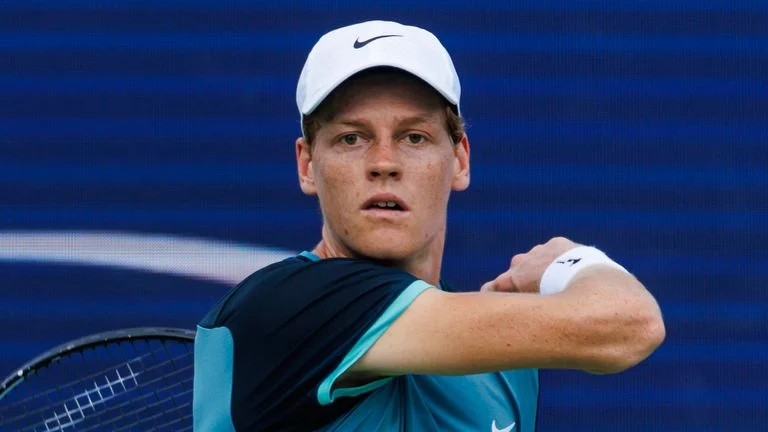
The convergence of global sporting icons often highlights the evolving nature of athletic fandom, and the recent commentary from Brazilian football legend Ronaldo Nazario regarding Italian tennis sensation Jannik Sinner is no exception. In a candid interview with SuperTennis, the two-time Ballon d’Or winner revealed that his personal interest has drifted away from the football pitches that defined his career, shifting instead toward the baseline, where he finds himself captivated by the rise of the current world number one.
Ronaldo, often referred to as "O Fenômeno," articulated a sentiment that resonates with many observers of the contemporary Italian sporting landscape: while the nation’s football infrastructure faces a period of structural stagnation and inconsistent results, its individual sporting disciplines—tennis in particular—are currently enjoying a renaissance of historic proportions.
The Shift in Sporting Allegiance
For a man who revolutionized the striker position, Ronaldo’s admission that he follows tennis more closely than football is a significant departure from his public persona. His comments underscore a broader trend where aging legends of team sports find the individual brilliance and high-stakes intensity of professional tennis more engaging than the tactical grind of modern club football.
"I am in love with tennis. I follow tennis more than football," Ronaldo remarked during the interview. This statement carries weight not just for its personal nature, but for the contrast he draws between two of Italy’s most storied athletic sectors.
The current state of Italian football has been a topic of intense debate among pundits and executives alike. Despite a rich history, the national team’s recent performances and the lack of consistent success in major international tournaments have left fans disillusioned. In direct juxtaposition, Italian tennis has experienced an unprecedented surge, spearheaded by Sinner, who has successfully navigated the pressures of the ATP Tour to claim the top spot in the world rankings.
Jannik Sinner: A Catalyst for Italian Tennis
Jannik Sinner’s ascent to the world number one position is not merely a statistical anomaly; it is the culmination of a decade-long investment in youth development and a fundamental change in the Italian approach to professional tennis. Since breaking onto the scene, the South Tyrolean has demonstrated a level of composure and technical precision that has drawn comparisons to the sport’s greatest icons.
Ronaldo’s "incredible sympathy and admiration" for Sinner stems from observing the 23-year-old’s discipline. In a sport where psychological fortitude is tested every point, Sinner has maintained a consistent trajectory of improvement. His ability to handle the weight of being the first Italian man to hold the world number one ranking in the ATP era has been the subject of significant acclaim, not just from tennis analysts, but from cross-disciplinary legends like Ronaldo.
A Chronology of Success and Setbacks
To understand the magnitude of Sinner’s rise, one must look at his trajectory over the past three years.
- 2021-2022: Sinner established himself as a top-10 mainstay, demonstrating consistency on various surfaces but struggling to overcome the "Big Three" barrier in major Grand Slam tournaments.
- 2023: A breakout year for the Italian. He reached his first Masters 1000 final in Miami and captured the title in Toronto, signaling his readiness for the elite tier of the sport.
- Early 2024: Sinner achieved his maiden Grand Slam title at the Australian Open, overcoming a two-set deficit against Daniil Medvedev in a match that solidified his status as a mental titan.
- Mid-2024: Following his success in Melbourne and subsequent performances, Sinner ascended to the world number one spot, becoming the first Italian to achieve the feat.
- Late 2024: The current period has been marked by a minor hiatus, as Sinner dealt with a right knee injury that necessitated his withdrawal from the US Open. His recovery remains a focal point for the ATP, as fans and observers wait to see if he can maintain his ranking lead through the indoor hard-court season.
The Contrast: Football vs. Tennis
Ronaldo’s critique of the Italian football sector serves as a lens through which to view the current state of European sports. The disparity in "wonderful periods" between the two sports is measurable. While Italian football clubs have struggled to compete financially with the Premier League or the state-backed entities of the Middle East, Italian tennis has flourished through a decentralized model that emphasizes specialized coaching and early professional exposure.
Experts argue that tennis provides a clearer pathway for individual growth, whereas the systemic issues in Italian football—such as aging infrastructure, financial fair play complexities, and stagnant youth academy outputs—have hindered progress. By praising Sinner, Ronaldo is effectively highlighting a success story that Italian football officials might do well to emulate in terms of player management and strategic growth.
The Global Appeal of Sinner
Beyond his technical prowess, Sinner’s stoicism has made him a darling of the sport. Unlike some of his contemporaries who court controversy, Sinner’s approach is defined by a professional "all-business" demeanor. This is a trait that resonates with Ronaldo, who navigated the immense pressures of being a global superstar in the late 1990s and early 2000s.
Ronaldo’s desire to watch Sinner play live is more than a casual wish; it represents the crossover appeal that top-tier tennis players are currently enjoying. As tennis looks to expand its demographic reach, endorsements from figures like Ronaldo provide a bridge to football fans who may not otherwise engage with the ATP Tour.
Broader Implications and Future Outlook
The implications of Ronaldo’s support are multifaceted. Firstly, it elevates the status of the ATP Tour within the South American and European markets, where football usually dominates the media cycle. Secondly, it places additional focus on Sinner’s return to the court. Having missed the final Grand Slam of the year due to injury, the pressure on Sinner to defend his ranking and points total in the final months of the season is immense.
However, the medical perspective on Sinner’s right knee injury remains optimistic. Physiotherapists note that in modern tennis, where the physical demands are significantly higher due to the speed of the game, managing "load and rest" is part of the professional lifecycle. Sinner’s decision to prioritize recovery over an appearance at the US Open is widely viewed as a prudent, long-term strategic move.
Conclusion
As the sporting world continues to evolve, the intersection of football and tennis provides a fascinating narrative of shifts in interest and admiration. Ronaldo’s public appreciation for Jannik Sinner serves as a testament to the Italian’s impact on the sport, not just as a competitor, but as a cultural figure capable of transcending the confines of the tennis court.
As Sinner prepares for his return to competition, the sporting community remains attentive. Whether it is a football icon watching from the stands or millions of fans tracking his progress, the narrative remains clear: Sinner is the beacon of a new generation, and his influence is only beginning to be felt across the wider sporting spectrum. The "wonderful period" mentioned by Ronaldo is, in many ways, just the prologue to what many expect to be a historic career. For the Italian faithful, the hope remains that the lessons learned from the tennis court might eventually find their way back to the football pitches, bringing a similar era of success to the nation’s most popular sport.