Africa’s wealthiest individual, billionaire industrialist Aliko Dangote, has signaled a willingness to surrender a larger share of his ownership in the multi-billion-dollar Dangote Petroleum Refinery. Speaking in an exclusive, wide-ranging interview broadcast by ARISE News, the Nigerian tycoon stated that he is open to increasing the volume of shares available to the public if overwhelming demand leaves everyday investors unable to secure sufficient allocations in what has already shaped up to be the continent’s largest-ever initial public offering (IPO).
The unprecedented public offering, which has captured the imagination of retail investors across Nigeria and the broader African continent, has faced immense subscription pressure. Dangote’s remarks open the door to a potentially much larger transfer of equity in Africa’s most monumental industrial asset into public hands, aligning with his stated vision of democratizing wealth and fostering widespread economic participation.
Unprecedented Market Response and Retail Priorities
The massive public offering officially opened on September 14, putting forth 4.1 billion new shares priced at N525 each. This translates to an aggregate value of approximately $1.6 billion, or N2.15 trillion. These shares represent roughly 3.3% of the company’s newly enlarged share capital, placing a staggering valuation of approximately $49 billion on the refinery. This valuation marks a significant upward revision from the $40 billion price tag attached to its $2.5 billion private placement conducted earlier in July.
From the onset, the IPO was billed as a "People’s IPO," designed intentionally to court ordinary citizens who have traditionally been excluded from owning stakes in major capital-intensive industrial projects. To achieve this, the company established an exceptionally low entry barrier, permitting investors to apply for as few as 10 shares at a modest cost of roughly $4, or N5,250.
This low threshold, combined with the immense prestige and public trust associated with the Dangote brand, ignited a frenzy of retail interest. Investment platforms and brokerages across Nigeria reported unprecedented traffic spikes and log-in surges as millions of citizens scrambled to submit their applications.
However, this staggering wave of demand has created logistical hurdles. Investment analysts have warned that valid applications could vastly outstrip the available quantity of shares, leading to scaled-down allocations where investors receive only a fraction of what they initially requested. Recognizing this potential shortfall, Dangote addressed the public directly, assuring them that smaller retail applications would receive prioritized treatment during the allotment phase.
"I don’t mind to be diluted as much as possible because I want people to actually be part of this good journey," Dangote said during the ARISE News interview. "We’ll give up more shares. This business does not belong to Mr. Dangote; it belongs to all of us."
While publication reports, such as those from BusinessDay, have occasionally cited figures like a prospective "30 per cent more" share release, Dangote himself refrained from specifying a hard numerical target, a strict timeline, or a minimum ownership threshold he is willing to accept. Nevertheless, his willingness to explore deeper dilution emphasizes a strategic shift toward broad-based public ownership.
Chronology and Timeline of the Mega-Refinery Project
The journey of the Dangote Petroleum Refinery from an ambitious greenfield project to a commercial powerhouse has been marked by scale, vision, and strategic execution.
- 2013–2016: Aliko Dangote announces plans to build the world’s largest single-train petroleum refinery, selecting the Lekki Free Zone near Lagos, Nigeria, as the strategic site. Initial cost projections are set around $9 billion, later expanding significantly due to global supply chain disruptions, inflationary pressures, and the sheer scale of engineering required.
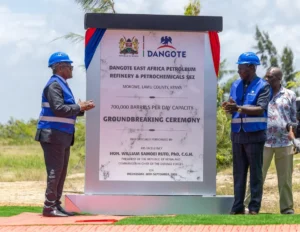
- 2023: Construction and mechanical completion of the mega-refinery are finalized. The facility is officially commissioned in May 2023 in the presence of several African heads of state, drawing global attention as a potential solution to Nigeria’s heavy reliance on imported refined petroleum products.
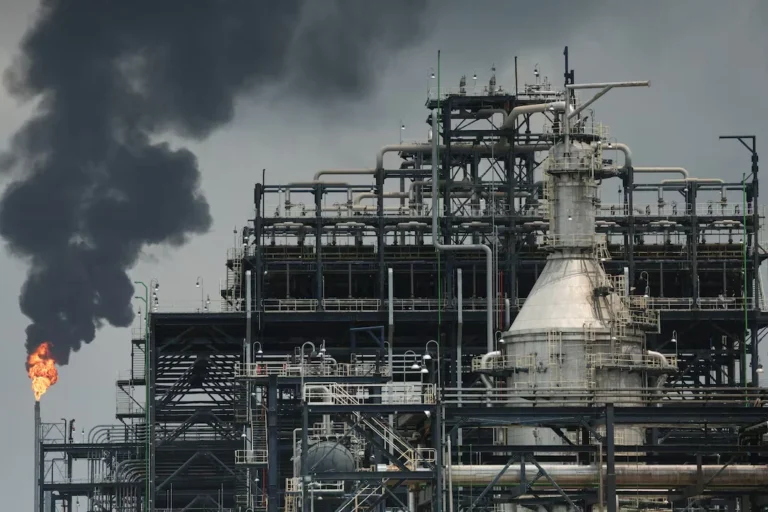
- Early 2024: The refinery commences active production, gradually scaling up its operations to process roughly 700,000 barrels of crude oil per day, cementing its status as a critical node in West Africa’s energy security architecture.
- July 2024: The company secures a $2.5 billion private placement, which pegs its corporate valuation at approximately $40 billion, setting the stage for public capital-raising initiatives.
- September 14, 2024: The historic IPO officially opens to the public, offering 4.1 billion shares at N525 each and aiming to onboard at least 10 million new shareholders across the African continent.
- October 13, 2024: The subscription window for the public offer is slated to close, after which allotment processes and verification will take place.
- November 2024 (Projected): Official trading of the refinery’s shares is scheduled to commence on the Nigerian Exchange (NGX), pending final regulatory approvals from the Securities and Exchange Commission (SEC).
Strategic Analysis: Implications of Further Dilution
Dangote’s openness to diluting his stake further carries profound economic, financial, and corporate governance implications for both the enterprise and the broader Nigerian capital market.
From a liquidity perspective, expanding the public float would fundamentally transform the depth and maturity of the Nigerian Exchange. The infusion of retail and institutional capital deepens market liquidity, enhances price discovery, and provides a benchmark valuation for future industrial endeavors on the continent. By allowing millions of retail investors to hold a physical stake in a critical national asset, the initiative serves as an unprecedented wealth-distribution mechanism in a nation historically plagued by wealth concentration.
However, increasing the share offering beyond the current prospectus requires careful navigation of corporate and regulatory frameworks. Any expansion of the share pool necessitates formal regulatory clearance, revised allotment agreements, and explicit consensus from existing major shareholders—particularly if existing equity, rather than newly authorized unissued stock, is made available.
Despite the billionaire’s willingness to reduce his stake, market analysts note that Dangote will retain overwhelming control of the enterprise even if additional tranches of shares are released. Dilution on the scale being discussed would broaden the shareholder base and enhance public share supply without immediately stripping him of managerial control or strategic oversight.
Expansion Plans and Capital Requirements
The timing of this capital-raising exercise coincides with aggressive long-term growth targets mapped out by the management team. Having successfully initiated operations at a processing capacity of 700,000 barrels of crude oil per day in 2024, the refinery has cast its gaze toward the horizon with an ambitious expansion roadmap.
The company has formally announced plans to double its refining capacity to an astonishing 1.4 million barrels per day by the year 2029. Achieving this milestone will require massive capital expenditures, with current internal projections estimating a required investment of approximately $14.3 billion over the next five years.
By tapping into public equity markets through phased offerings and retail-focused IPOs, the Dangote Group is strategically positioning itself to finance this heavy capital expenditure without over-reliance on traditional debt financing, thereby safeguarding the company’s balance sheet against macroeconomic shocks and high interest rate environments.
As the October 13 closing date for the current IPO approaches, market watchers and everyday citizens alike remain glued to developments. Whether the company ultimately chooses to activate over-allotment options or pursue a secondary public offering to satisfy unmet demand will depend heavily on the final tally of subscriptions. Yet, one reality remains clear: the boundaries of African corporate ownership are shifting, and Aliko Dangote’s willingness to share the equity burden marks a watershed moment in the economic history of the continent.