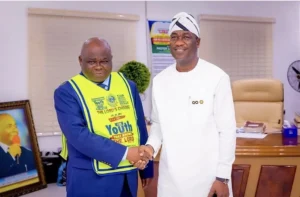
The Lagos State Environmental and Special Offences Enforcement Unit, widely recognized as the State Taskforce, has announced a decisive and uncompromising escalation of its enforcement operations targeting traffic infractions, environmental degradation, and activities that compromise public safety across the metropolis. This renewed strategic offensive was officially made public by the Chairman of the Taskforce, CSP Adetayo Akerele, during the agency’s high-profile 2026 Stakeholders’ Engagement Programme, which convened security chiefs, transport union executives, community leaders, and civil society representatives at the Safety Arena located in the Bolade-Oshodi district of Lagos.
Delivering a comprehensive keynote address centered on the theme, Promoting Public Safety and Environmental Best Practices in Lagos State, Akerele underscored the administration’s intolerance toward flagrant disregard for urban planning laws and traffic management guidelines. The agency’s renewed mandate addresses critical urban bottlenecks, notably the persistent resurgence of commercial motorcycle operators—commonly known as Okada—operating illegally along restricted transit corridors and highways, unauthorized mechanic workshops occupying major thoroughfares, extortionist illegal ticketing syndicates, and the encroachment on dedicated Bus Rapid Transit (BRT) lanes. Beyond transit-related infractions, the expanded enforcement scope extends to severe environmental sanitation defaults, the unchecked activities of criminal miscreants, and commercial ventures that directly threaten the structural and social safety of millions of residents.
Strategic Enforcement Grounded in Compliance and Education
Addressing the core philosophy driving the agency’s actions, CSP Akerele clarified that the primary objective of the Lagos State Taskforce is not inherently punitive, but rather developmental, aiming to institutionalize a culture of compliance with state legislation. While strict enforcement remains a non-negotiable instrument of governance, the Taskforce leadership emphasized that sustainable urban order requires an integrated approach combining lawful deterrence with aggressive public education and community sensitisation.
Public safety, according to the Taskforce chairman, transcends traditional metrics of crime prevention. It encompasses holistic environmental hygiene and infrastructure preservation. Unchecked phenomena such as blocked urban drainage systems, indiscriminate and hazardous waste disposal, illegal structural developments, chaotic street trading, the reckless appropriation of public road shoulders, proliferation of shanties, and unregulated industrial activities collectively generate systemic hazards. These vulnerabilities directly threaten the collective wellbeing, public health, and physical security of the state’s populace.
Residents and commercial entities were strongly admonished to internalize and strictly abide by the prevailing environmental statutes of Lagos State, with specific reference to the Lagos State Environmental Reform Law, as amended. Compliance with these legislative frameworks is deemed mandatory for anyone operating within the commercial capital, as the state government seeks to transform Lagos into a modern, resilient, and aesthetically appealing mega-city capable of supporting sustainable economic activities.
Evolution of the Taskforce Mandate and Historical Context
The latest strategic directive highlights the continuous evolution of the Lagos State Environmental and Special Offences Enforcement Unit since its establishment. Originally founded in 1991 under military administration, the Taskforce was conceptualized primarily as a specialized intervention unit to combat deteriorating sanitary conditions, eradicate indiscriminate settlements, and clear proliferating urban slums and shanties that threatened public health in the burgeoning commercial hub.
However, as the socio-economic landscape of Lagos evolved rapidly over the decades, transitioning into a vibrant megacity of over twenty million inhabitants, the operational scope of the agency underwent necessary transformations. Today, the Taskforce operates as a multi-dimensional enforcement body addressing contemporary urban challenges. Its modern portfolio encompasses robust collaborations with critical state entities, most notably the Lagos Metropolitan Area Transport Authority (LAMATA), to protect multi-billion-naira mass transit investments like the BRT corridors from vehicular encroachment and commercial sabotage.
The chairman noted that the agency’s current posture is deeply informed by extensive grassroots consultations. Earlier in the year, the Taskforce conducted localized stakeholder engagement sessions across all five administrative divisions of Lagos State—Ikeja, Badagry, Ikorodu, Lagos Island, and Epe. These community-level dialogues served as vital feedback loops, enabling the agency to evaluate its operational efficiency, refine its Standard Operating Procedures (SOPs), and tailor its enforcement frameworks to the unique socio-geographical realities of diverse neighborhoods.
Call for Civic Partnership and Vigilance Against Impostors
Recognizing the logistical limitations of state machinery, CSP Akerele issued a passionate appeal to the citizenry, emphasizing that the government cannot maintain a permanent presence on every street corner or monitor every residential community simultaneously. Consequently, responsible civic participation and community intelligence-gathering remain indispensable to effective urban governance.
The Taskforce urged residents to actively report environmental infractions, illegal roadside commercial activities, and suspicious operational behaviors to the appropriate authorities. In a stern warning addressing the menace of administrative corruption, Akerele cautioned members of the public against unscrupulous individuals masquerading as Taskforce operatives. He stressed that impostors routinely exploit the agency’s name to harass innocent citizens, extort unwarranted monetary fees, or promise fraudulent legal immunity against genuine infractions.
Citizens were advised to demand proper identification from enforcement personnel and report anyone demanding cash payments on the streets or offering illegal protection under the guise of the Taskforce. Institutional transparency and accountability remain paramount, and the agency reiterated its commitment to prosecuting any internal or external bad actors undermining public trust.
Transport Union Pledges Absolute Compliance
Providing an immediate industry reaction to the government’s policy declarations, the National Union of Road Transport Workers (NURTW), Lagos State Council, offered strong assurances of collaboration and adherence to state directives. Representing the State Chairman, Alhaji Mustapha Adekunle (widely known as Sego), the State Confidential Secretary, Comrade Omowunmi Aliu, affirmed that commercial transport operators in Lagos recognize the imperatives of environmental sanity and public order.
Aliu highlighted the proactive measures already implemented by the transport union to ensure strict compliance with state sanitation policies. Specifically, she noted that the union successfully regulated commercial vehicle movements during the historical monthly environmental sanitation exercises prior to the government’s administrative adjustments, ensuring that members’ vehicles remained safely parked within designated garages rather than contributing to road congestion or violating restriction windows.
"We have been complying. Being law-abiding citizens, NURTW is a very law-abiding organisation. Concerning this environmental problem, we are complying," Aliu stated firmly during her presentation. She elaborated that the union has established internal monitoring committees tasked with auditing member compliance across various motor parks and transit hubs, ensuring zero tolerance for unauthorized vehicular movement during restricted periods.
However, seizing the opportunity presented by the stakeholders’ forum, the NURTW leadership tabled a critical infrastructural appeal before the Lagos State Government. Aliu formally requested the state administration to allocate and construct additional motor parks and organized garages across strategic locations within the metropolis. She explained that the current shortage of designated spaces for commercial transport operators creates logistical challenges, frequently forcing drivers to resort to unauthorized roadside loading bays, which inadvertently contributes to the street obstructions the Taskforce is sworn to eliminate.
Broader Socio-Economic Implications and Urban Analysis
The aggressive enforcement stance articulated by the Lagos State Taskforce carries profound implications for the socio-economic and spatial dynamics of Nigeria’s commercial nerve center. Urban planning analysts note that while stringent enforcement of traffic laws and environmental sanitation codes is essential for attracting foreign direct investment, boosting tourism, and improving urban productivity, the human element of these interventions requires delicate balancing.
The sustained clampdown on commercial motorcycles (Okada) along restricted corridors addresses a critical public safety crisis. Over the past decade, unrestricted motorcycle operations have been linked to alarming rates of traffic fatalities, traumatic orthopedic injuries, and vehicular congestion. Furthermore, criminal syndicates frequently exploit motorcycles for rapid transit during urban crimes, making the strict enforcement of restricted routes a vital security imperative for the state government.
Simultaneously, the collateral impact of clearing roadside mechanics, shanties, and informal street traders underscores the persistent socio-economic friction between urban modernization and informal sector livelihoods. Millions of urban dwellers rely on the informal economy for daily subsistence. Therefore, experts argue that sustainable urban management cannot rely solely on punitive enforcement measures. It must be complemented by holistic structural solutions, such as the provision of affordable alternative trading spaces, structured light-industrial clusters for roadside artisans, and expanded public transport infrastructure, as correctly requested by transport unions like the NURTW.
As the Lagos State Taskforce rolls out its intensified enforcement protocols for 2026, the success of the initiative will ultimately depend on the synergy between uncompromising law enforcement, transparent institutional accountability, and genuine public-private collaboration. If sustained with empathy and structural foresight, this campaign promises to steer Lagos significantly closer to its vision of becoming a clean, safe, orderly, and globally competitive megacity.