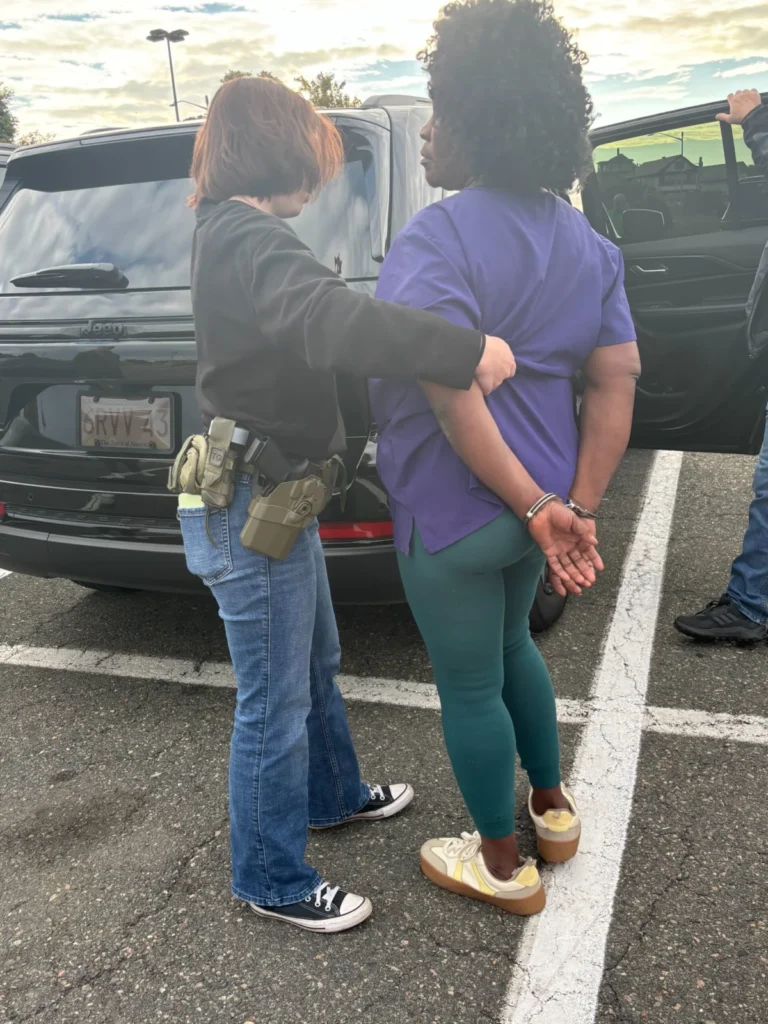
The United States Department of Justice (DOJ) announced a sweeping series of federal indictments on Friday, September 18, 2026, targeting 16 individuals accused of participating in various election-fraud schemes, including illegal voter registration and unauthorized voting in federal elections. Among those facing charges are three Nigerian nationals, whose cases have brought renewed attention to the intersection of immigration status, citizenship requirements, and the integrity of the American electoral process.
These charges, which span multiple jurisdictions, involve a complex array of allegations, ranging from non-citizens casting ballots in federal contests to the fabrication of documents to facilitate naturalization and passport acquisition. The investigation, led by federal prosecutors in coordination with the Department of Homeland Security and the Federal Bureau of Investigation, underscores an intensifying commitment by the U.S. government to police the boundaries of voter eligibility.
Breakdown of the Cases Against Nigerian Nationals
The federal indictments identify three individuals of Nigerian descent, each accused of distinct violations of U.S. federal law regarding voting and citizenship status.
Helen Sayen Adams, a 67-year-old lawful permanent resident who achieved that status in May 2024, faces severe charges, including Voting by an Alien in a Federal Election and making a False Statement of Citizenship to register to vote. Federal prosecutors allege that Adams, despite her status as a non-citizen, bypassed legal restrictions to participate in federal electoral activity. Her case highlights the legal peril for permanent residents who attempt to exercise voting rights reserved exclusively for U.S. citizens.

Joshua Nmelichukwu Akpom, 27, who has held lawful permanent resident status since 2016, is facing charges centered on the naturalization process. According to the DOJ, Akpom allegedly provided false statements in relation to his application for citizenship. While the charges against Akpom differ from the direct voting charges brought against others, they reflect a broader federal focus on "naturalization fraud," which is often a precursor to illegal voter registration.
Gladys Adaeze Okafor, 56, also a lawful permanent resident, was apprehended earlier in the investigative cycle. Prosecutors have charged Okafor with illegally casting ballots in the 2022 midterm elections and subsequently allegedly participating in the 2024 general election. Her case is particularly significant as it suggests a multi-cycle pattern of behavior, which federal authorities have prioritized as they work to preserve the sanctity of the ballot box.
The Scope of the DOJ Crackdown
The charges against the three Nigerian nationals are part of a larger, coordinated national effort to address vulnerabilities in the voter registration system. The 16 individuals charged include a diverse array of defendants from various international backgrounds, reflecting a wide-reaching federal investigation into election integrity.
The offenses listed in the DOJ press release are multifaceted. Beyond the fundamental charges of illegal voting and false claims of citizenship, the investigation unearthed a web of related illicit activities. These include:
- Wire Fraud: Often associated with the use of electronic communications to facilitate fraudulent registration or document procurement.
- Naturalization Fraud: The deliberate misrepresentation of facts during the application process for citizenship.
- Passport Fraud: The creation or use of falsified documents to misrepresent identity or legal status.
- Unlawful Firearm Purchases: Identified as a collateral offense during the background investigations of certain defendants.
This broad investigative sweep suggests that federal agencies are utilizing data-sharing agreements between the Social Security Administration, the Department of Motor Vehicles, and state election boards to identify discrepancies between citizenship status and voter registration rolls.

Contextualizing Illegal Voting in the United States
The integrity of the American electoral process is a pillar of its democratic stability, and federal law is explicit regarding who may participate. Under 18 U.S. Code § 611, it is a federal crime for a non-citizen to vote in a federal election. Furthermore, the National Voter Registration Act (NVRA) requires states to maintain accurate and current voter registration lists, which includes the removal of individuals who are ineligible due to citizenship status.
While instances of non-citizen voting are statistically rare when compared to the hundreds of millions of votes cast in federal cycles, these cases are treated with extreme severity by the Department of Justice. The focus on such cases serves a dual purpose: the enforcement of existing statutory law and the maintenance of public confidence in election outcomes.
Official Responses and Legal Implications
The Department of Justice has maintained a firm stance on the necessity of these prosecutions. While the DOJ rarely comments on the specifics of ongoing litigation beyond the initial indictment, the announcement on September 18 signals a proactive stance from the current administration to demonstrate that the U.S. legal system is monitoring electoral participation with high vigilance.
Legal experts note that for lawful permanent residents, or "green card holders," a conviction for illegal voting or naturalization fraud carries life-altering consequences. Beyond the potential for incarceration, federal law mandates that individuals found guilty of such offenses face immediate revocation of their legal residency status and permanent deportation from the United States. Furthermore, they are rendered permanently ineligible for future naturalization, effectively closing the door to U.S. citizenship.
Broader Impact on Immigration and Election Policy
The indictment of these 16 individuals, including the three Nigerian nationals, has reverberated through political and legal circles, sparking a renewed debate over the security of voter registration systems. Critics of the current system point to these indictments as proof that existing safeguards are insufficient and that stricter proof-of-citizenship requirements at the point of registration are necessary.

Conversely, civil rights advocates and some legal scholars argue that while the law must be enforced, these cases should not be used to justify broad-based restrictions that could disenfranchise eligible, naturalized citizens. They highlight that the vast majority of lawful permanent residents are deeply invested in their communities and follow the legal path to citizenship, which is a rigorous, multi-year process.
Chronology of the Investigation
The investigation leading to these indictments did not happen in a vacuum. It represents the culmination of a multi-year effort to cross-reference electoral data with immigration records.
- 2022: Gladys Adaeze Okafor allegedly casts an illegal ballot in the midterm elections, triggering the initial scrutiny that would later lead to broader investigative efforts.
- 2024: Following the general election, federal authorities intensified their review of voter rolls, identifying discrepancies that linked Okafor and others to illegal voting activities.
- May 2024: Helen Sayen Adams obtains her lawful permanent resident status, a period during which federal authorities were already heightening their surveillance of suspicious registration patterns.
- September 18, 2026: The Department of Justice officially unseals the indictments for the 16 defendants, marking a major milestone in the federal crackdown on election-related fraud.
Future Outlook
As these 16 cases move through the federal court system, they will likely serve as a litmus test for how the U.S. handles election-related crimes in an era of heightened polarization. Each defendant, including Adams, Akpom, and Okafor, is entitled to due process and the presumption of innocence. However, the scale of the DOJ’s intervention indicates that the government intends to pursue these matters with the full weight of federal resources.
For the international community, these developments serve as a stark reminder of the strict separation between the rights of citizens and the obligations of non-citizens within the United States. As the legal proceedings unfold, the cases will likely continue to inform the ongoing legislative debates regarding election integrity, voter identification protocols, and the broader immigration framework that defines life for millions of foreign nationals residing in the United States.
The outcome of these trials will be watched closely not only for the sentences handed down but for the precedent they set regarding the standard of evidence required to prosecute election-fraud cases of this nature in the future.