In a landmark decision that highlights the complex intersection of national sovereignty, human rights, and social welfare policy in East Asia, Japan’s Supreme Court has delivered a final ruling against Siaw Johnson Kwaku, a 36-year-old Ghanaian national undergoing intensive treatment for chronic kidney failure. The court’s Second Petty Bench dismissed Kwaku’s ultimate appeal, effectively upholding lower court judgments that denied him access to public assistance on the grounds that his foreign status places him outside the statutory framework of the nation’s social safety net.
The ruling closes a multi-year legal battle that began when local authorities in Chiba City rejected Kwaku’s application for welfare benefits under the Public Assistance Act. Kwaku, who arrived in Japan and subsequently developed severe renal illness, argued that the blanket exclusion of non-citizens from welfare programs—particularly for individuals rendered completely unable to work due to critical medical conditions—violates constitutional guarantees of human dignity and equality. However, the apex court’s decision leaves intact a legal precedent established a decade prior, asserting that foreign nationals do not possess an enforceable statutory right to state welfare benefits under Japanese law.
The case has reignited a fierce national debate among legal scholars, human rights advocates, and policymakers regarding the obligations of host nations toward vulnerable foreign residents. While Japan’s population of foreign nationals continues to reach historic highs, crossing the four-million threshold, the mechanisms governing their access to emergency social support remain rigidly tied to citizenship, creating acute vulnerabilities for non-citizens facing catastrophic health crises.
A Struggle for Survival: The Case of Siaw Johnson Kwaku
The legal odyssey of Siaw Johnson Kwaku traces back to 2019, when he developed severe chronic kidney failure while residing in Japan. Unable to sustain employment due to the debilitating nature of his condition and the rigorous schedule of dialysis treatments required to maintain his life, Kwaku found himself destitute and incapable of covering his basic living expenses or medical costs.
Recognizing his medical vulnerability, Japanese immigration authorities granted him a "Designated Activities" residence status specifically tailored for medical treatment. This administrative designation allowed Kwaku to remain legally in the country to pursue life-saving care, but it contained a restrictive caveat: it explicitly prohibited him from engaging in labor. Stripped of the ability to earn an income and ineligible for standard employment-based social insurance, Kwaku turned to the local government in Chiba City, filing a formal application for public assistance under Japan’s Public Assistance Act.
Chiba City officials promptly rejected the application, citing a foundational administrative interpretation that welfare benefits under the statute are exclusively reserved for Japanese nationals. Refusing to accept the denial, Kwaku initiated legal proceedings, contending that the city’s decision was unconstitutional and violated the fundamental humanitarian principles enshrined in domestic and international law. He argued that denying basic sustenance to a legally resident individual undergoing critical medical treatment effectively jeopardized his survival.
The Chronology of Judicial Rejections
Kwaku’s legal challenge wound its way through the Japanese judicial system over several years, encountering consistent resistance from the judiciary at every level:
- January 2024: The Chiba District Court delivered its verdict, ruling against Kwaku. The presiding judges held that the decision to extend welfare eligibility to foreign nationals falls entirely within the discretionary purview of the legislative branch, thereby finding the Public Assistance Act’s restriction constitutional.
- August 2024: The Tokyo High Court reviewed the case upon appeal and affirmed the district court’s ruling, reinforcing the stance that non-citizens hold no inherent legal entitlement to taxpayer-funded public assistance.
- Late 2024 to 2025: The legal team elevated the matter to the Supreme Court of Japan, framing the issue around constitutional protections for human survival.
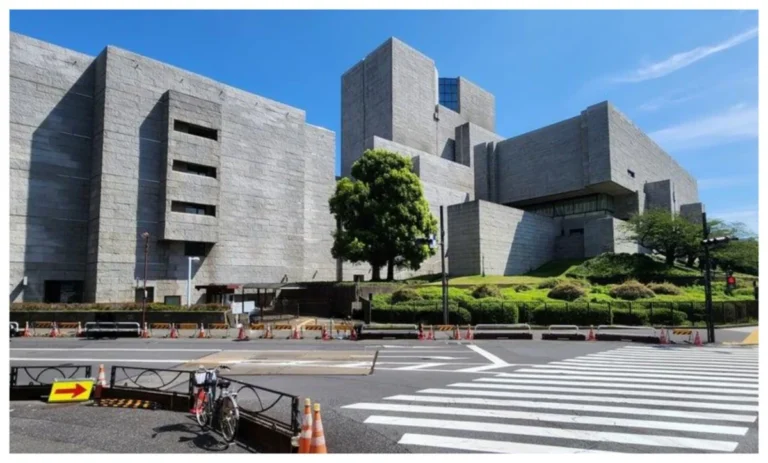
- The Final Ruling: The Supreme Court’s Second Petty Bench dismissed the final appeal. With three of the four justices concurring, the court refused to overturn the lower rulings, cementing the legal barrier that prevents non-citizens on medical visas from accessing state welfare.
A Rare Judicial Dissent
Despite the finality of the dismissal, the Supreme Court’s ruling was not unanimous, drawing a sharp and impassioned dissenting opinion from Presiding Justice Mamoru Miura. A former prosecutor, Miura was the sole member of the four-judge panel to argue in favor of Kwaku’s position.
In his written dissent, Justice Miura asserted that the exclusion of foreign nationals undergoing essential medical treatment from public assistance frameworks is both unconstitutional and legally invalid. He emphasized the immediate, life-threatening implications of the policy, writing, "If foreign nationals undergoing medical treatment who are unable to work cannot maintain a minimum standard of living in Japan, it is difficult for them to avoid danger to their survival."
Miura maintained that individuals legally permitted to stay in Japan for medical reasons should automatically qualify for basic public assistance to ensure human survival. He argued that the high court’s previous ruling should have been annulled and the case remanded for further proceedings to protect Kwaku’s fundamental rights. Legal analysts noted that while dissenting opinions in Japan’s Supreme Court rarely alter the immediate outcome of a case, they often lay the intellectual groundwork for future legal reforms and signal shifting internal debates within the judiciary.
Legal Foundations of Japan’s Public Assistance System
To understand the court’s majority decision, legal experts point to the structural underpinnings of Japan’s welfare framework. The Public Assistance Act is fundamentally rooted in Article 25 of the Constitution of Japan, which guarantees all citizens the right to maintain "minimum standards of wholesome and cultured living." Because the constitutional text explicitly references "citizens," successive legislative and judicial interpretations have interpreted the statute as an obligation owed solely to Japanese nationals.
This interpretation was decisively reinforced by a landmark 2014 Supreme Court ruling, which established that foreign nationals do not possess a constitutional or statutory right to receive benefits under the Public Assistance Act.
However, the reality on the ground is more nuanced. Japanese authorities have long practiced a form of de facto, discretionary welfare administration. On humanitarian grounds, the central government permits local municipalities to extend livelihood assistance to specific categories of foreign residents. These include permanent residents, long-term residents, their spouses, special permanent residents (primarily historical Korean residents), and officially recognized refugees.
Data from government agencies indicates the scale of this discretionary support: in fiscal 2024, an average of 47,332 households headed by foreign nationals received monthly public assistance under these administrative exceptions. Kwaku’s legal strategy heavily relied on historical precedents, citing a 1954 notice issued by the former Ministry of Health and Welfare that suggested administrative measures could be used to assist foreigners in need.
Nevertheless, the courts ruled that these administrative exceptions are tightly bound to specific residential statuses and do not apply to foreign nationals admitted temporarily on medical visas or those without permanent legal ties to the country. Following the Supreme Court’s dismissal, Kwaku’s defense attorney condemned the verdict, characterizing the judicial reasoning as "bound by outdated thinking" that fails to address the humanitarian realities of an increasingly globalized Japan.
Broader Socio-Economic Implications and Foreign Demographics
The Supreme Court ruling unfolds against a backdrop of sweeping demographic changes across Japan. Facing a rapidly aging and shrinking domestic population, the Japanese government has steadily expanded pathways for foreign workers, students, and residents to sustain its economy.
According to data compiled by the Japan International Cooperation Agency (JICA) and immigration authorities, Japan’s foreign population has experienced unprecedented growth, surpassing 4.13 million individuals by the end of 2025—representing a notable 9.5% increase from the previous year. Within this expanding demographic, African nationals constitute a relatively small fraction, numbering approximately 23,788 residents as of mid-2024, or roughly 0.7% of the total foreign populace. The largest African communities in the country are led by Nigerian nationals (4,126 residents), followed closely by Ghanaians (2,996 residents) and Egyptians (2,299 residents).
As the foreign community diversifies and embeds itself deeper into the fabric of Japanese society, cases involving long-term medical emergencies, chronic illnesses, and indigence among non-citizens are expected to rise. Experts in social policy warn that the stark dichotomy between Japan’s reliance on foreign labor and residents and its exclusionary social safety net creates profound ethical and humanitarian dilemmas.
Human rights organizations argue that leaving non-citizens without access to financial or medical safety nets—particularly when those individuals are legally barred from working—creates precarious underclasses vulnerable to severe destitution and preventable health tragedies. Conversely, municipal governments and conservative policymakers often express concern over the fiscal sustainability of expanding public welfare budgets, pointing to the potential strain on local resources if statutory eligibility is broadened to include all foreign temporary residents.
As Siaw Johnson Kwaku faces the immediate aftermath of the Supreme Court’s dismissal, his legal representatives and supporting advocacy groups are weighing potential next steps, including appeals to international human rights bodies. Meanwhile, the ruling stands as a definitive reaffirmation of Japan’s strict citizenship-based welfare doctrine, ensuring that the debate over the rights and protections afforded to non-citizens within the world’s fourth-largest economy will remain a contentious and urgent fixture of national discourse.