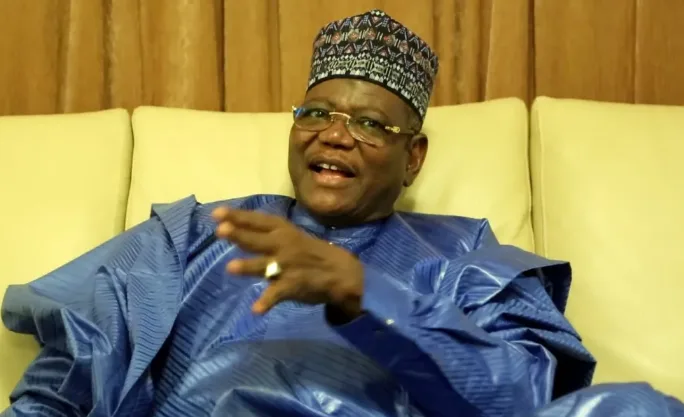
Former Jigawa State Governor and prominent Peoples Democratic Party (PDP) chieftain, Sule Lamido, has issued a stark warning to the Nigerian political class, cautioning that the systematic exploitation of the country’s youth population for partisan aggression poses an existential threat to the nation’s democratic future. Speaking at his residence in Dutse following a colloquium held in honor of his 78th birthday, the veteran politician characterized the current trend of reducing young Nigerians to "political labourers," thugs, and sycophantic praise singers as a catastrophic failure of leadership that risks plunging the country into lasting moral and socio-economic decline.
The event, which drew a significant gathering of political stakeholders, academics, and youth leaders, served as a platform for a critical reflection on the state of Nigerian politics. Lamido, who served two terms as the governor of Jigawa State between 2007 and 2015, emphasized that the trajectory of the nation’s development is inextricably linked to the quality of mentorship provided to its younger generation.
The Historical Context of Political Mentorship
To understand the gravity of Lamido’s concerns, one must examine the evolution of political socialization in Nigeria. During the First and Second Republics, the political landscape was largely defined by ideological blocs. Figures such as Aminu Kano, Shehu Shagari, and Obafemi Awolowo were not merely party leaders but ideological mentors who fostered a culture of service and rigorous debate among their youthful followers.
In that era, young activists were groomed through study circles, grassroots mobilization based on policy platforms, and a commitment to national unity. Lamido noted that this period of institutionalized mentorship provided the backbone for the nation’s early developmental strides. The shift away from this model toward a system dominated by personality cults and transactional politics has, according to observers, left a vacuum that is now being filled by opportunism and violence.
A Pattern of Exploitation: The Mechanics of Youth Misuse
The phenomenon of "political thuggery" is not a new development in Nigeria, but its scope and intensity have evolved with the advent of social media and the increasing financialization of electoral contests. Modern political campaigns frequently employ youths not to formulate policy or canvass for ideas, but to execute campaigns of harassment against opponents on digital platforms and to act as muscle during election cycles.
According to data from various civil society organizations monitoring Nigerian elections, there is a direct correlation between the rise of "stomach infrastructure" politics—a term popularized to describe the distribution of food and cash in exchange for votes—and the decline in youth participation in substantive governance. When the youth are treated as mere instruments for achieving electoral victory, the incentive to invest in their education, skill acquisition, and professional development diminishes among the political elite.
Highlights from the Dutse Colloquium
The colloquium, titled "Guiding Youths on Political Ideology for Building a New Nigeria," served as the focal point for these discussions. Senator Ahmed Makarfi, former Governor of Kaduna State and the chairman of the event, echoed Lamido’s sentiments, stressing that politics without a foundational ideology is "empty." Makarfi’s call to action urged young Nigerians to resist the temptation of becoming foot soldiers for desperate politicians, advocating instead for a long-term vision rooted in personal sacrifice and collective progress.
Dr. Auwal Anwar, who delivered the keynote lecture, provided a sobering analysis of the current landscape. He argued that without a return to ideological conviction, Nigeria’s political culture would remain trapped in a cycle of short-termism, where the primary objective of any administration is the maintenance of immediate patronage networks rather than the implementation of structural reforms.
Perspectives from the Academic and Religious Communities
The event featured a diverse panel of experts who examined the issue from multiple angles. Professor Kamilu Fagge of Bayero University, Kano, emphasized the need for a shift in how the state approaches youth development. He argued that the youth are the "engine of any nation" and that the current strategy of neglecting their intellectual potential while facilitating their involvement in violent activities is tantamount to state-sponsored self-destruction.
Dr. Akilu Indabawa, also of Bayero University, proposed the institutionalization of political education as a formal requirement to counter the influence of political manipulators. He suggested that by providing young people with a framework to understand their rights and responsibilities, the country could build a barrier against the culture of manipulation that currently pervades the political scene.
Meanwhile, Professor Nu’uman Habib linked the rise in drug abuse and social vices directly to the collapse of moral and political leadership. He posited that when leaders fail to provide a roadmap for prosperity and dignity, the resultant despair leaves the youth vulnerable to substances and radicalization. Complementing this view, Malam Ibrahim Khalil, a renowned Islamic cleric and 2027 gubernatorial candidate for the Action Democratic Congress (ADC) in Kano, called for a spiritual and moral rebirth. He argued that "politics without morality will not take us anywhere," suggesting that the decay in the political system is a reflection of a broader crisis of character in the country’s leadership.
Analysis: Implications for the 2027 Election Cycle
As Nigeria approaches the next general election cycle in 2027, the rhetoric coming out of the Dutse colloquium takes on added significance. With a demographic profile where over 60% of the population is under the age of 25, the potential for either national transformation or further destabilization is immense.
The implications of Lamido’s warnings are twofold:
- Structural Risk: If the trend of employing youths for political warfare persists, the risk of civil unrest and the erosion of democratic institutions increases. History shows that political structures that rely on violent mobilization eventually lose the capacity to govern effectively, as the "foot soldiers" become difficult to control once the elections are concluded.
- Economic Stagnation: A workforce that is conditioned to survive on electoral stipends rather than productive labor is a workforce that cannot contribute to the nation’s Gross Domestic Product (GDP). The emphasis on "stomach infrastructure" over economic policy hampers the long-term potential for industrialization and sustainable development.
The Way Forward: A Call for Reform
The consensus emerging from the event was clear: the onus lies with the current generation of leaders to pivot from short-term electoral maneuvering to long-term nation-building. This requires a multipronged approach:
- Mentorship Programs: Political parties must move beyond using youth wings for campaign rallies and start establishing academies that teach governance, policy formulation, and administrative law.
- Moral and Civic Education: Integrating robust civic education into the national curriculum could help young Nigerians discern between genuine political engagement and exploitative manipulation.
- Economic Inclusion: As long as poverty remains a primary driver of youth participation in negative political activities, programs focused on job creation and entrepreneurship are essential to providing a viable alternative to the "political labourer" economy.
In his closing remarks, Sule Lamido expressed a sense of urgency. He warned that if the country continues to fail its youth, it is effectively "mortgaging the future of this country politically and in all endeavours." His message served as a reminder that the health of a democracy is measured not by the success of its individual candidates, but by the extent to which it empowers the next generation to take up the mantle of responsible leadership. As the political landscape in Nigeria continues to shift, the debate sparked in Jigawa may prove to be a crucial turning point in the discourse surrounding youth empowerment and the future of the Nigerian project.