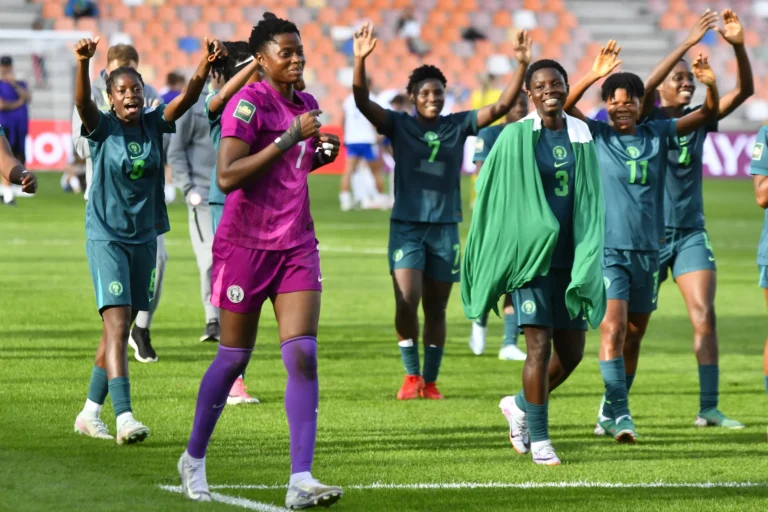
The dream of a maiden FIFA U-20 Women’s World Cup title for Nigeria’s Falconets came to a heartbreaking conclusion on Sunday at the Stadion LKS in Łódź, Poland. In a tightly contested quarter-final encounter, a late defensive lapse and a numerical disadvantage saw the Nigerian side succumb to a 1-0 defeat against a resilient Colombian outfit. The loss marks the end of an impressive campaign for coach Moses Aduku’s squad, which had arrived at this stage of the tournament with significant momentum following a commanding victory in the previous round.
The deciding moment arrived in the 92nd minute when Valerin Loboa exploited a gap in the Nigerian defense to slot home the winner, dashing hopes of an extra-time reprieve. For Nigeria, the defeat is a bitter pill to swallow, particularly given their dominance for large swathes of the contest.
/https%3A%2F%2Fmedia.soccernet.ng%2Fmain%2F2026%2F09%2Fimago1083443718h-1.jpg)
A Campaign Defined by Promise and Grit
The 2026 FIFA U-20 Women’s World Cup has been a tournament of high stakes and intense physical demand. Entering the quarter-finals, the Falconets were widely considered one of the tournament favorites, especially after their tactical masterclass against England in the Round of 16. That 3-0 victory over the English side had signaled Nigeria’s intent and proficiency, showcasing a blend of technical flair and defensive discipline that had previously gone untested in such a high-pressure environment.
However, international youth tournaments are notorious for their unforgiving nature, where a single moment of individual error or tactical indiscipline can undo weeks of preparation. Nigeria’s journey in this tournament was marked by a steady rise in confidence, but the quarter-final against Colombia proved to be the ultimate test of their psychological and physical resilience.
Chronology of the Quarter-Final Clash
The match began with Nigeria asserting authority early on. Maintaining a commanding 64% ball possession, the Falconets dictated the tempo of the first half. The tactical approach employed by coach Aduku focused on quick transitions and utilizing the pace of their wingers to stretch the Colombian defensive line. By the end of the first period, Nigeria had registered seven attempts on goal, testing the Colombian goalkeeper on two occasions.
/https%3A%2F%2Fmedia.soccernet.ng%2Fmain%2F2026%2F09%2Fimago1083443718h-1.jpg)
The second half mirrored the first in terms of territorial control, with Janet Akekoromowei acting as the primary catalyst for Nigeria’s offensive efforts. Her persistent presence in the final third caused significant agitation for the Colombian center-backs, yet the clinical finish remained elusive. Despite creating three high-quality scoring opportunities, the Falconets failed to capitalize on their dominance, a failure that would eventually prove fatal.
The turning point occurred in the 74th minute. Kafayat Mafisere, who had been a stalwart in the Nigerian defense throughout the tournament, was issued a red card following a mistimed tackle. The resulting expulsion fundamentally altered the game’s geometry. With Nigeria reduced to ten players, the tactical balance shifted decisively in favor of Colombia. As the Falconets were forced to adopt a more conservative, defensive posture, Colombia began to grow in confidence, pushing their defensive line higher and testing the Nigerian goalkeeper, Christiana Uzoma, with increased frequency.
As the clock ticked toward the final whistle, it appeared as though Nigeria would successfully navigate the remaining minutes to force extra time. However, in the 92nd minute, a lapse in concentration allowed a through ball from the Colombian midfield to bypass the defensive screen. Valerin Loboa capitalized on the space, coolly dispatching a low drive past Uzoma to secure the narrow 1-0 victory for her nation.
/https%3A%2F%2Fmedia.soccernet.ng%2Fmain%2F2026%2F09%2Fimago1083443750h.jpg)
Statistical Breakdown and Performance Analysis
The statistics from the match paint a picture of a game that Nigeria likely felt they should have won. Controlling the majority of the possession (64%) against a side that had just eliminated the host nation, Poland, is a testament to the tactical preparation of the Nigerian coaching staff. However, the conversion rate of shots to goals remains a recurring theme for the youth set-up.
In the 2026 tournament cycle, the Falconets displayed high levels of individual skill, but the inability to convert pressure into a tangible lead in the final third has been a consistent hurdle. Against Colombia, Nigeria registered double the number of goal attempts as their opponents in the first hour, yet the inability to breach the Colombian goal allowed the South American side to remain within striking distance until the dying moments of the match.
The loss also underscores the fragility of defensive structures in youth football. Mafisere’s red card was the first of its kind for Nigeria in the knockout stages of this tournament, and it effectively neutered the team’s ability to counter-attack during the final quarter of the match. When a team is reduced to ten players, the fatigue that accumulates in the final minutes is magnified, often leading to the exact type of defensive breakdown that occurred in the 92nd minute.
/https%3A%2F%2Fmedia.soccernet.ng%2Fmain%2F2026%2F09%2Fimago1083427039h.jpg)
The Broader Impact and Future Implications
The exit of the Falconets carries significant implications for the development of women’s football in Nigeria. While the team showcased immense talent, the loss highlights the need for continued investment in tactical maturity and situational awareness at the youth level.
Coach Moses Aduku, in his post-match reflections, emphasized the heartbreak of the result while acknowledging the effort of his players. "We dominated the game, we controlled the ball, and we created chances," a source close to the team indicated. "Football is cruel sometimes. One mistake at this level is the difference between a semi-final appearance and going home."
For the Nigerian Football Federation (NFF), the task now shifts to evaluating the trajectory of this age-grade group. Many of the current squad members are expected to graduate to the Super Falcons, the senior national team, within the next two years. The experience gained in Poland, even in defeat, serves as a crucial learning curve for these young athletes. Understanding how to manage a game with ten players, how to maintain focus in the final minutes of a knockout match, and how to deal with the pressure of a quarter-final environment are intangible skills that cannot be replicated in training.
/https%3A%2F%2Fmedia.soccernet.ng%2Fmain%2F2026%2F09%2Fimago1083443751h.jpg)
Furthermore, the loss serves as a reminder of the rising parity in international women’s football. Colombia’s victory is not an anomaly; it is part of a global trend where South American and European youth academies are investing heavily in tactical systems that prioritize defensive structure and late-game efficiency. Nigeria’s ability to compete with these nations is not in question, but their ability to close out tight matches against disciplined defensive blocks remains an area for improvement.
Conclusion
The 2026 FIFA U-20 Women’s World Cup will be remembered as a missed opportunity for a generation of Nigerian players who demonstrated that they belonged on the world stage. While the scoreline will show a 1-0 defeat, the narrative of the match was one of dominance followed by a singular, crushing error.
As the Falconets return home, the focus will undoubtedly shift to the next cycle. The talent pool within the Nigerian youth system remains deep, and the lessons learned in Łódź will be instrumental in shaping the next iteration of the team. For now, however, the disappointment is palpable, as a team that looked destined for a deep run in the tournament sees its ambitions curtailed at the quarter-final stage. The quest for that elusive first title continues, but the path forward will require the same technical prowess seen on Sunday, paired with the tactical steel necessary to survive the final moments of a World Cup knockout clash.