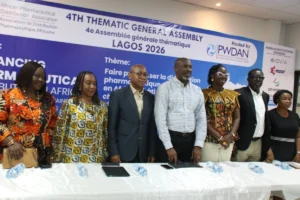
In a significant diplomatic and operational push to stabilize the nation’s crumbling medical infrastructure, Federal Minister of Health Dr. Haitham Mohamed Ibrahim chaired a pivotal session of the High-Level Joint Health Mechanism this past Sunday. The assembly, which brought together high-ranking government officials, international humanitarian agencies, and regional health directors, was dedicated to tackling the existential threat facing healthcare delivery in Sudan’s most isolated and conflict-affected zones, specifically the Darfur, Blue Nile, and Kordofan regions.
The meeting featured key figures, including the Undersecretary of the Ministry of Health, Dr. Ali Babiker Sid Ahmed, and the Minister of Health for the Darfur Region, Dr. Babiker Hamadein. Their presence, alongside directors-general from the five Darfur states and representatives from the UN and various international NGOs, underscored the gravity of the situation. As the conflict in Sudan continues to displace millions and shatter local supply chains, this gathering served as a critical platform to synchronize emergency interventions and address the severe resource depletion currently paralyzing the country’s health sector.
A Landscape of Crisis: The Humanitarian Context
The ongoing conflict between the Sudanese Armed Forces (SAF) and the Rapid Support Forces (RSF) has created a catastrophic humanitarian landscape. Since the outbreak of hostilities in April 2023, the healthcare system has been systematically dismantled. Hospitals in Khartoum and the western regions have been subjected to looting, occupation by armed groups, and severe shortages of life-saving medical supplies.
The regions of Darfur, Blue Nile, and Kordofan have been disproportionately affected. In these areas, the "hard-to-reach" designation is not merely a logistical challenge but a direct consequence of security threats and infrastructural collapse. The RSF’s control over specific territories has effectively severed the supply lines that previously allowed for the distribution of vaccines, surgical equipment, and essential pharmaceuticals. The Ministry of Health’s decision to prioritize these areas reflects a growing recognition that without centralized, high-level coordination, these regions risk becoming complete "medical deserts," where preventable diseases and untreated injuries are leading to a massive increase in mortality rates.
Financial Desperation: The Funding Gap
One of the most sobering aspects of the Sunday meeting was the presentation of the current financial reality. Dr. Ibrahim disclosed that the humanitarian response plan for the health sector is facing a severe fiscal shortfall. Out of a required $325 million needed to sustain basic health operations for the remainder of the fiscal year, only $125 million—or 38%—has been secured.
This funding deficit is not merely a line-item concern; it translates to the closure of health centers, the inability to pay frontline medical staff, and the expiration of cold-chain capabilities required for routine childhood immunizations. Dr. Ibrahim issued an urgent appeal to the international donor community, noting that a target of 70% funding is required by the end of the year to avert a complete collapse of primary healthcare services. The Minister emphasized that the current reliance on intermittent international aid is insufficient to manage the public health burden of a nation facing systemic displacement and malnutrition.

Chronology of Health System Erosion
To understand the urgency of the recent meeting, one must look at the timeline of the degradation of Sudan’s health services:
- April 2023: Initial outbreak of conflict leads to the immediate closure of major tertiary hospitals in Khartoum.
- Late 2023: Health services in Darfur and Kordofan begin to fail as logistics routes are blocked by active frontlines and checkpoints.
- Early 2024: The WHO reports that over 70% of health facilities in conflict-affected areas are non-functional.
- Mid-2024: Increasing reports of disease outbreaks, including cholera and measles, emerge in camps for the internally displaced (IDPs), exacerbated by a lack of sanitation and medical intervention.
- August 2024: The High-Level Joint Health Mechanism convenes to formulate a unified strategy to bridge the gap between regional authorities and international donors.
Strategic Coordination: Bridging the Gap
Undersecretary Dr. Ali Babiker Sid Ahmed emphasized that the core objective of the meeting was to establish a "unified implementation mechanism." Historically, aid delivery in Sudan has suffered from a lack of synergy between the federal government, regional ministries, and international humanitarian organizations. By aligning these actors under a single, centralized strategy, the Ministry of Health hopes to eliminate the duplication of efforts and ensure that medical resources are distributed based on objective data rather than proximity to accessible logistics hubs.
The Darfur Region Minister of Health, Dr. Babiker Hamadein, provided a firsthand account of the challenges, noting that while the World Health Organization (WHO) and various international partners have been instrumental in keeping some facilities operational, the disparity between urban centers and rural localities remains vast. He called for a decentralized approach that empowers local health centers to function as the primary point of contact for the population, moving away from a reliance on large, vulnerable hospital networks that are frequent targets in the current conflict.
Implications and Future Outlook
The implications of the meeting are far-reaching. If the government and its partners fail to secure the necessary funding, the health crisis will likely exacerbate the ongoing displacement crisis. People unable to access treatment for chronic conditions or maternal health needs are forced to migrate further, seeking care in already overcrowded and under-resourced regions.
Furthermore, the focus on "hard-to-reach" areas suggests a shift in government strategy toward localized health security. By coordinating directly with the directors-general of the five Darfur states, the Federal Ministry of Health is attempting to bypass the bottlenecks that have historically hampered the response in the west. However, the success of this strategy is contingent upon the security situation. Humanitarian access remains the most significant variable; as long as the RSF and other armed actors continue to restrict the movement of medical supplies, even the most well-funded and well-coordinated plans will face significant hurdles.
The meeting concluded with a renewed commitment from all stakeholders to maintain the coordination mechanism. While the atmosphere was one of grim necessity, the willingness of international partners to engage in this high-level dialogue offers a glimmer of hope that the humanitarian sector can remain functional despite the geopolitical volatility. The coming months will be critical, as the Ministry attempts to scale up its funding requests and translate the agreements reached on Sunday into physical medical supplies delivered to the most vulnerable corners of the nation.
Ultimately, the crisis in Sudan is as much a health emergency as it is a political one. As Dr. Ibrahim noted in his closing remarks, the aspiration for peace and security remains the only long-term solution to the country’s health woes. Until that peace is realized, the High-Level Joint Health Mechanism remains the primary bulwark against total collapse, serving as the essential link between a suffering population and the dwindling resources available to sustain them. The international community’s response to the Minister’s appeal for the remaining 32% of required funding will likely serve as a litmus test for global commitment to Sudan’s survival in the face of one of the 21st century’s most complex humanitarian disasters.