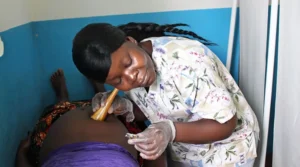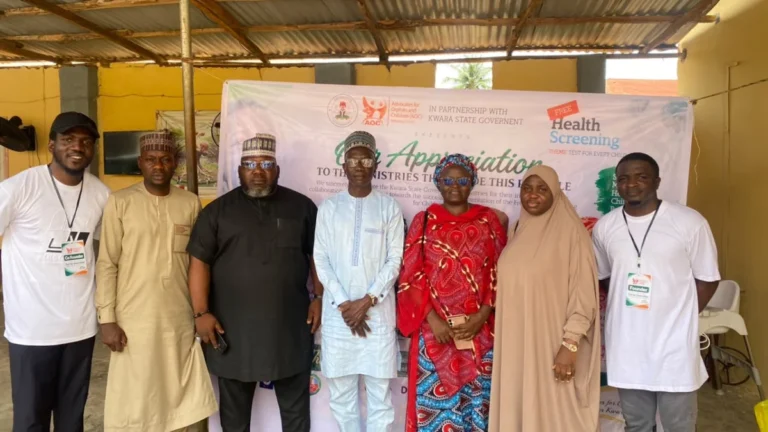
The Advocates for Orphaned Children (AOC), a non-governmental health initiative, has successfully completed a large-scale medical outreach program across residential care facilities in Kwara State. The initiative, branded under the banner Test for Every Child, marks a significant effort to bridge the gap in healthcare accessibility for children and caregivers living in orphanage environments. Over a intensive two-day deployment, the organization facilitated 339 screening procedures, identifying potential health risks and ensuring that those requiring medical intervention were immediately connected to formal clinical support systems.
The outreach served as a critical intervention in a region where children in residential care often face systemic barriers to regular health checkups. By focusing on infectious diseases such as HIV, Hepatitis B, and Hepatitis C, the AOC aimed to provide a safety net for a demographic that is frequently marginalized. The program combined diagnostic testing with essential health education, counseling, and direct referral services to secondary healthcare facilities.
Chronology and Operational Execution
The planning phase for the outreach began several months prior to the implementation, involving coordination with the Kwara State Ministries of Health, Social Development, and Women Affairs. The actual execution took place over two days, with teams of medical professionals and volunteers deploying to various homes, including the WAAFAH Children’s Home, Hope Motherless Babies Home International, Future Focus, City of Refuge, and the AGAPE Home.
However, the field operation was not without logistical complications. During the course of the outreach, organizers encountered significant challenges that hampered the efficiency of the screening process. These included outdated records regarding the current physical addresses of some orphanages, which led to delays, and unexpected transportation constraints exacerbated by fuel shortages. Furthermore, the organization faced a critical deficit in the supply of diagnostic kits for Hepatitis B and C.
Due to these logistical hurdles, the AOC was unable to complete screenings for all targeted beneficiaries during the initial two-day window. Consequently, the organization has scheduled a follow-up session for September 19. This supplemental outreach is designed not only to cover the remaining children but also to reconcile data registers and confirm that individuals who tested reactive in the initial phase are successfully enrolled in long-term care.
Analysis of Diagnostic Findings
The 339 procedures performed by the AOC represented a mix of screenings across the targeted population. It is important to note that this figure represents the total volume of tests conducted rather than the number of unique individuals, as many participants underwent multiple types of diagnostic testing.

In terms of public health outcomes, the screenings yielded one reactive result for HIV and one reactive result for Hepatitis B. No reactive cases for Hepatitis C were recorded during the outreach. The AOC maintains a strict clinical protocol regarding these findings: reactive results from rapid diagnostic tests are treated as preliminary indicators rather than definitive medical diagnoses. Following the screenings, the two affected individuals were immediately facilitated for secondary confirmation and treatment at the University of Ilorin Teaching Hospital (UITH) ART Clinic.
Public health experts emphasize that these findings underscore the necessity of periodic screening in institutional settings. Viral hepatitis, in particular, is often referred to as a "silent epidemic," as it can remain asymptomatic for many years while causing progressive liver damage. By identifying these cases early, the AOC has potentially prevented long-term complications for the affected individuals, demonstrating the life-saving impact of proactive, community-based health interventions.
Official Responses and Institutional Perspectives
The success of the Test for Every Child initiative was largely attributed to a multi-stakeholder collaborative model. Dr. Tobi Babalola, founder of the AOC, characterized the event as a fundamental commitment to the rights of the child. "Today is not just another event," Dr. Babalola stated. "It is a statement that every child matters and deserves good health and an opportunity to thrive." His remarks reflected a broader organizational strategy that views healthcare not merely as a medical service but as a tool for social empowerment.
Government representatives present during the exercise reiterated the importance of these interventions. Mrs. Bilqees Alaya, the Hepatitis B Desk Officer for the Kwara State Ministry of Health, highlighted the government’s ongoing investments in the prevention of mother-to-child transmission of Hepatitis B. She emphasized that while the state has worked to equip health facilities to manage these conditions, initiatives like the one conducted by the AOC are vital for ensuring that services actually reach the most vulnerable, including those in residential care.
Dr. Mariam Imam, the Kwara State Commissioner for Social Development, echoed these sentiments. Represented by the Director of Social Welfare, Alhaji Amusat Fatai, she noted that the synergy between physical health and cognitive development cannot be overstated. "Early identification of health challenges contributes to healthier children and directly improves their ability to learn and develop," she noted.
From the pharmaceutical and professional sector, the Chairman of the Pharmaceutical Society of Nigeria (PSN) in Kwara State, Pharm. Munirat Akanbi-Bello, called for a sustained, systemic approach to health education. She argued that the prevalence of viral infections in the general population requires that screening be normalized as a routine part of child welfare, rather than being treated as an occasional charity event.
Broader Implications for Healthcare in Residential Care
The AOC’s report offers a sobering look at the challenges facing healthcare delivery in orphanages and residential care homes. The logistical difficulties encountered—ranging from outdated directories to the shortage of testing kits—highlight the precarious nature of healthcare provision for children outside traditional family units.

The reliance on private partnerships and volunteerism is a double-edged sword. While the support of entities such as Codix Pharma Ltd., Emzor Pharmaceutical Industries Ltd., the DWAC Foundation, and the Society for Family Health (SFH) was instrumental to the success of the event, the underlying need for a more robust, state-funded infrastructure for these facilities remains clear.
The fact that some children at the Islamic Foundation and Pious Foundation could not be screened due to relocation issues points to a broader systemic need for a centralized, up-to-date registry of all vulnerable children in the state. Without accurate data, outreach programs struggle to achieve universal coverage, leaving some of the most at-risk children without the benefit of preventative medicine.
Moving Forward: Scaling the Model
The AOC’s commitment to returning for a follow-up exercise on September 19 is a testament to the organization’s dedication to continuity of care. The secondary objective of this follow-up—to reconcile test-kit usage and complete home-level registers—is perhaps the most critical for the long-term sustainability of the program.
For such models to be effective on a larger scale, experts suggest several policy recommendations:
- Integrated Health Databases: Establishing a shared database between social welfare and health ministries to ensure that the locations and health records of children in residential care are accurately tracked.
- Supply Chain Reliability: Ensuring that diagnostic kits for critical infectious diseases are consistently available through government-subsidized channels, reducing the reliance on episodic donations.
- Training for Caregivers: Implementing "Train the Trainer" programs where residential home staff are educated on recognizing early symptoms of viral infections and the importance of timely vaccinations.
- Public-Private Partnerships: Standardizing the involvement of professional bodies like the PSN to provide ongoing medical oversight for these homes.
In conclusion, the Advocates for Orphaned Children’s recent outreach program serves as a pilot for a more integrated, comprehensive approach to child welfare in Kwara State. While the logistical challenges of the event highlight the limitations of current resources, the successful linkage of vulnerable children to clinical care represents a significant milestone. By fostering collaboration between government ministries, private industry, and dedicated volunteers, the AOC has laid a blueprint for a more resilient healthcare support system for the children who need it most. The upcoming September session will be a critical test of the organization’s ability to refine its operations and ensure that no child is left behind in the mission to achieve universal health coverage.